
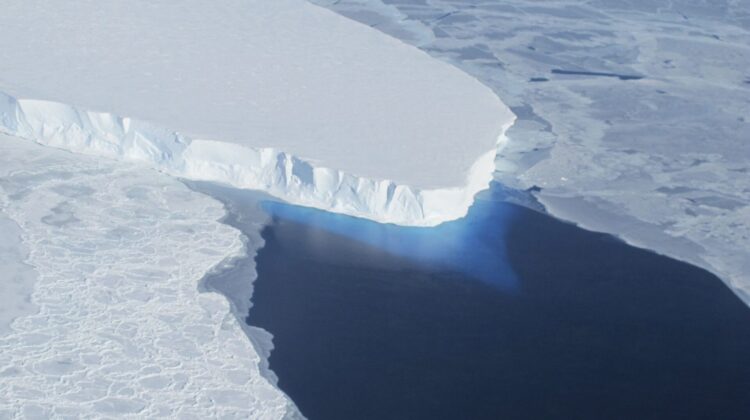
Ocean water is pushing miles beneath Antarctica’s “Doomsday Glacier,” making it more vulnerable to melting than previously thought, according to new research using radar data from space to perform an X-ray of the crucial glacier.
As the salty, relatively warm ocean water meets the ice, it’s causing “vigorous melting” underneath the glacier. This could mean global sea level rise projections are being underestimated, according to the study published Monday in the Proceedings of the National Academy of Sciences.
The Thwaites Glacier in West Antarctica — nicknamed the “Doomsday Glacier” because its collapse could cause catastrophic sea level rise — is the world’s widest glacier and roughly the size of Florida. It’s also Antarctica’s most vulnerable and unstable glacier, largely because the land on which it sits slopes downward, allowing ocean waters to eat away at its ice.
Thwaites, which already contributes 4% to global sea level rise, holds enough ice to raise sea levels by more than 2 feet. But because it also acts as a natural dam to the surrounding ice in West Antarctica, scientists have estimated its complete collapse could ultimately lead to around 10 feet of sea level rise — a catastrophe for the world’s coastal communities.
Many studies have pointed to the immense vulnerabilities of Thwaites. Global warming, driven by humans burning fossil fuels, has left it hanging on “by its fingernails,” according to a 2022 study.
This latest research adds a new and alarming factor into projections of its fate.
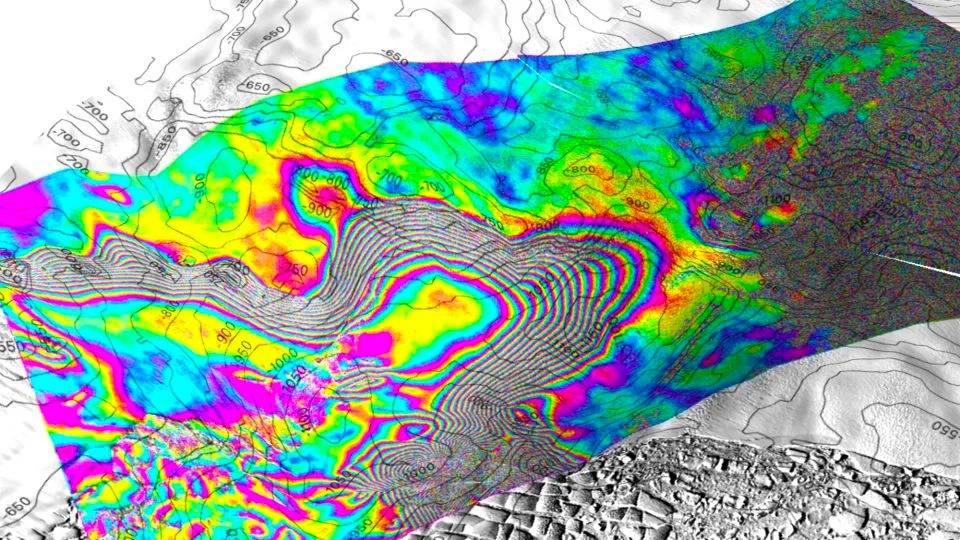
A team of glaciologists — led by scientists from the University of California, Irvine — used high-resolution satellite radar data, collected between March and June last year, to create an X-ray of the glacier. This allowed them to build a picture of changes to Thwaites’ “grounding line,” the point at which the glacier rises from the seabed and becomes a floating ice shelf. Grounding lines are vital to the stability of ice sheets and a key point of vulnerability for Thwaites but have been difficult to study.
“In the past, we had only sporadic data to look at this,” said Eric Rignot, professor of Earth system science at the University of California at Irvine and a co-author on the study. “In this new data set, which is daily and over several months, we have solid observations of what is going on.”
They observed seawater pushing beneath the glacier over many miles and then moving out again, following the daily rhythm of the tides. When the water flows in, it’s enough to “jack up” the surface of the glacier by centimeters, Rignot told CNN.
He suggested the term “grounding zone” may be more apt than grounding line, as it can move nearly 4 miles over a 12-hour tidal cycle, according to their research.
The speed of the seawater, which moves considerable distances over a short time period, increases glacier melt because as soon as the ice melts, freshwater is washed out and replaced with warmer seawater, Rignot said.
“This process of widespread, enormous seawater intrusion will increase the projections of sea level rise from Antarctica,” he added.
Ted Scambos, a glaciologist at the University of Colorado Boulder, who was not involved in the study, called the research “fascinating and important.”
“This finding gives a process that, as yet, is not factored into models,” he told CNN. And while these results only apply to certain areas of the glacier, he said, “this could speed up the pace of ice loss in our forecasts.”
One uncertainty to be unraveled is whether the rush of seawater beneath Thwaites is a new phenomenon or whether it’s been significant but unknown for a long time, said James Smith, a marine geologist at the British Antarctic Survey, who was not involved in the study.
“Either way, it’s clearly an important process that needs to be incorporated into ice sheet models,” he told CNN.
Noel Gourmelen, a professor of Earth observation at the University of Edinburgh, said the use of radar data for this study was interesting. “Ironically it’s by going to space, using our growing satellite capabilities, that we’re learning much more about this environment,” he told CNN.
There are still many unknowns on what the study’s findings mean for the future of Thwaites, said Gourmelen, who was not involved in the research. It is also unclear how widespread this process is around Antarctica, he told CNN, “although it is highly likely that this is happening elsewhere as well.”
A Regime Change
Antarctica, an isolated and complex continent, appears to be increasingly vulnerable to the climate crisis.
In a separate study, also published Monday, researchers from the British Antarctic Survey looked at the reasons for the record low levels of sea ice surrounding Antarctica last year.
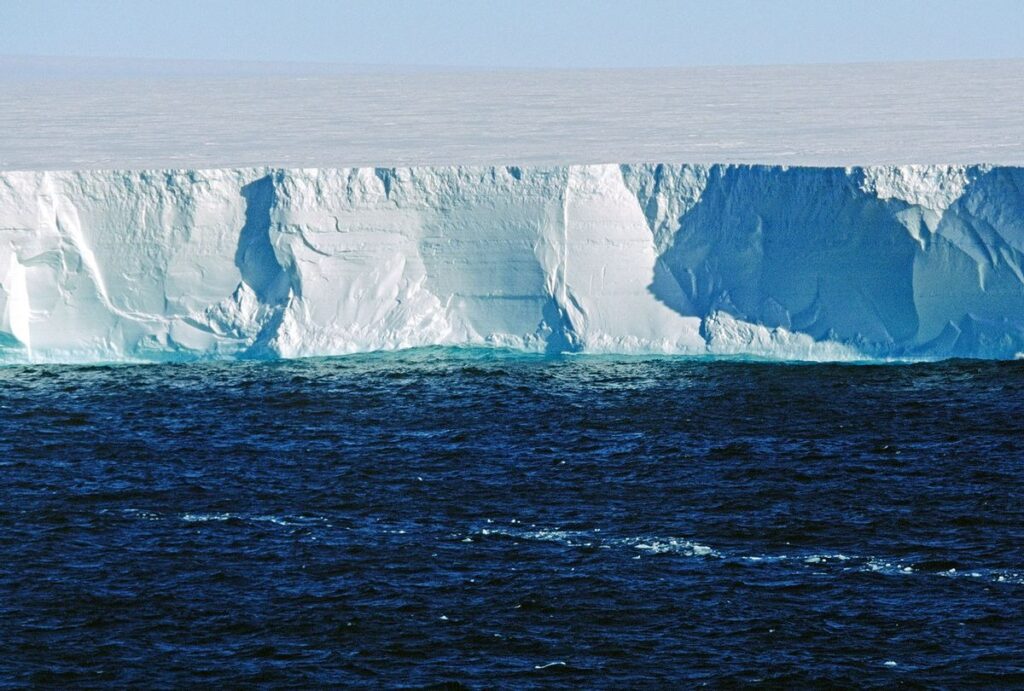
Analyzing satellite data and using climate models, they found this record low would have been “extremely unlikely to happen without the influence of climate change.”
Sea ice melting doesn’t directly affect sea level rise because it’s already floating, but it leaves coastal ice sheets and glaciers exposed to waves and warm ocean waters, making them much more vulnerable to melting and breaking up.
The researchers also used climate models to predict the potential speed of recovery from such extreme sea ice loss and found that even after two decades, not all the ice will return.
“The impacts of Antarctic sea ice staying low for over twenty years would be profound, including on local and global weather,” Louise Sime, a co-author on the BAS study, said in a statement.
The findings add to evidence over the last few years that the region is facing a “lasting regime shift,” the authors wrote.
Leave a Reply