
• Skip to main content
  • Skip to primary sidebar
  • Skip to footer
  • Home
  • About Us
  • Copyright Report
  • Submit Content
  • Terms
  • Privacy Policy
  • Legal Disclaimer

Hasan Jasim

Hasan Jasim is a place where you may get entertainment, viral videos, trending material, and breaking news. For a social generation, we are the largest community on the planet.

Orbiting: A perpetual fall that never reaches the ground

by Hasan Jasim Editorial Team Leave a Comment

ShareTweet

Imagine standing on the edge of a cliff, ready to jump. If you jump with just enough speed, you’ll fall straight down to the ground. But if you jump with more speed, you’ll start to curve away from the Earth, as if you were being pulled back by a giant invisible force.

This is exactly what happens to objects in orbit. They are constantly falling towards the Earth, but they are also moving sideways so fast that they never actually hit the ground. This perpetual fall is what keeps them in orbit.
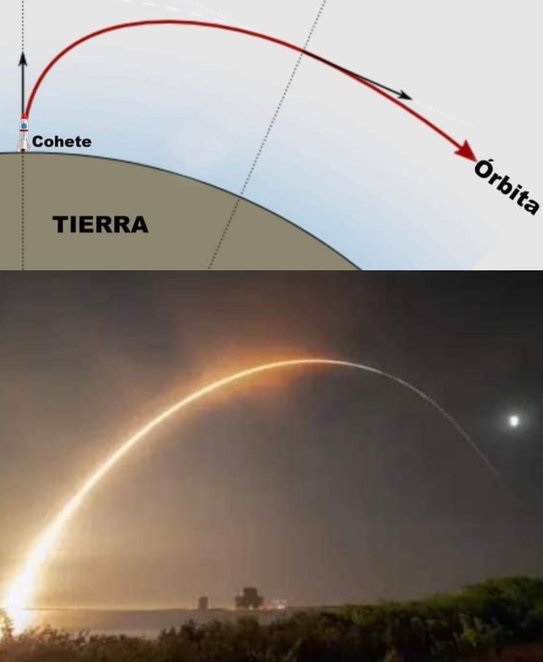
The reason why rockets don’t go straight up when they launch is also because of gravity. As a rocket lifts off, it is constantly being pulled back down by Earth’s gravity. The only way to overcome this pull is to give the rocket enough sideways speed so that it curves away from the Earth at the same rate that it is falling towards it.

Isaac Newton, the famous physicist, once imagined a cannon firing balls at different speeds. He realized that the faster the ball was fired, the farther it would travel before hitting the ground. With enough speed, a ball could travel so far that it would actually curve around the Earth and end up back where it started.
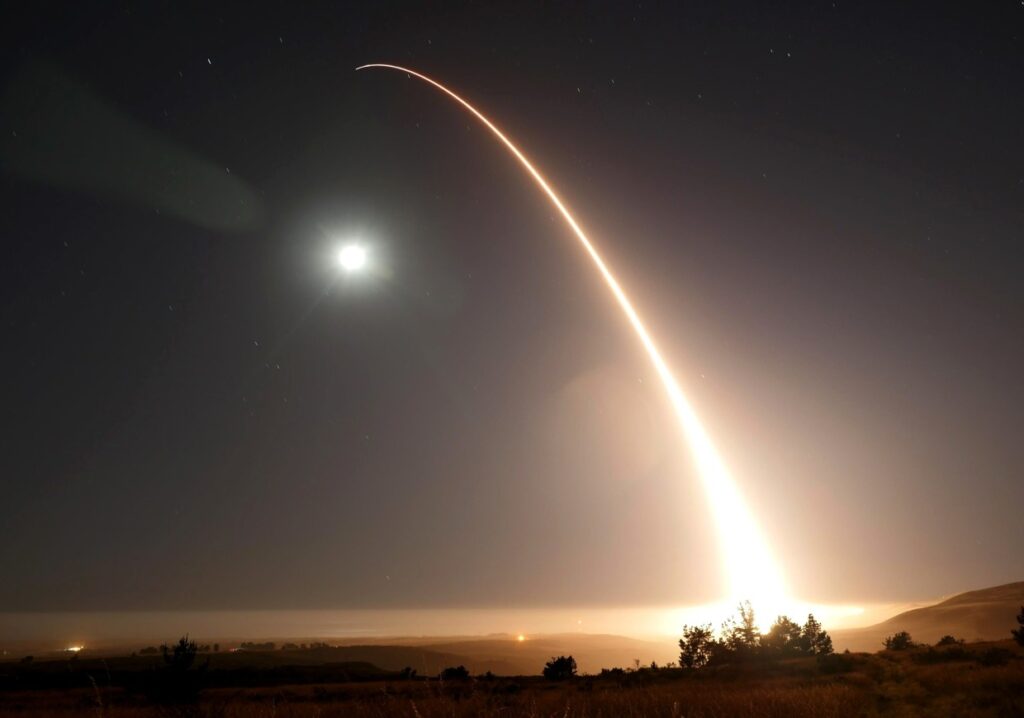
This is the concept of escape velocity. Escape velocity is the minimum speed an object needs to reach in order to escape the gravitational pull of a planet. Earth’s escape velocity is about 7.8 kilometers per second (4.8 miles per second). If a rocket can reach this speed, it will be able to escape Earth’s gravity and travel into space.

The amount of escape velocity needed to escape a planet’s gravity depends on the planet’s mass. For example, the Moon’s escape velocity is much smaller than Earth’s because the Moon is much less massive. This is why it is easier to travel to the Moon than it is to travel to other planets.

So, the next time you look up at the stars, remember that the objects you see in orbit are constantly falling towards the Earth. But they are also moving sideways so fast that they never actually hit the ground. This perpetual fall is what keeps them in orbit, and it is a testament to the incredible power of gravity.

Filed Under: Trends Worldwide Tagged With: fall, ground, never, orbiting:, perpetual, reaches, that, trends, worldwide

Reader Interactions

Leave a Reply Cancel reply

Your email address will not be published. Required fields are marked *

Primary Sidebar

More to See

Blind pit bull regain her eyesight and sees her beloved foster parents for the first time

By Hasan Jasim Editorial Team

The world’s 100 worst polluted cities are in Asia — and 83 of them are in just one country

By Hasan Jasim Editorial Team

Encounter with the Giant Pacific Octopus: Caught and Released by Fishers off the Coast of California

By Hasan Jasim Editorial Team

If You Remember This, Your Childhood Was Shaped by a Different World

By Hasan Jasim Editorial Team

Extinct toad from the ice age discovered at Los Angeles’ La Brea Tar Pits

By Hasan Jasim Editorial Team

Amazing Story About A Dog Who Walked 50 Miles In Almost 2 Months To Find His Owners

By Hasan Jasim Editorial Team

If You Mixed Everyone In The World Together, You’d Get a Meatball Big Enough To Fit In Central Park

By Hasan Jasim Editorial Team

Footer

ABOUT HASANJASIM.ONLINE

Hasanjasim.online is a digital platform dedicated to publishing well-researched articles about the animal kingdom, nature, and the environment. Our editorial team works to source stories from credible outlets, scientific research, and verified reports, aiming to inform as much as we entertain. From wildlife conservation and animal behavior to natural wonders and environmental science, we cover the topics that help readers better understand and appreciate the natural world. Whether you're a lifelong nature lover or simply curious about the planet we share, Hasanjasim.online aims to be a trustworthy destination for stories worth reading — and worth citing.

Recent

  • Florida Couple Buys 45-Acre Swamp in 2007 to Protect It from Development. 15 Years Later, It’s Home to Hundreds of Wood Storks
  • Your Mother’s Cells May Still Be Living in Your Body — Science Calls It Microchimerism
  • Disabled dog abandoned with a bag of diapers and a note
  • Cat dyed purple and used as a chew toy – but transformation 3 months later is wonderful
  • Woman who stabbed and killed her ‘stupid’ dog she adopted avoids jail by blaming PTSD
  • Tiny kitten survives 15-minute ride in car’s engine bay in Malta and finds a new home
  • Burnt Noah’s Ark remains found buried 30 feet underground

Search