
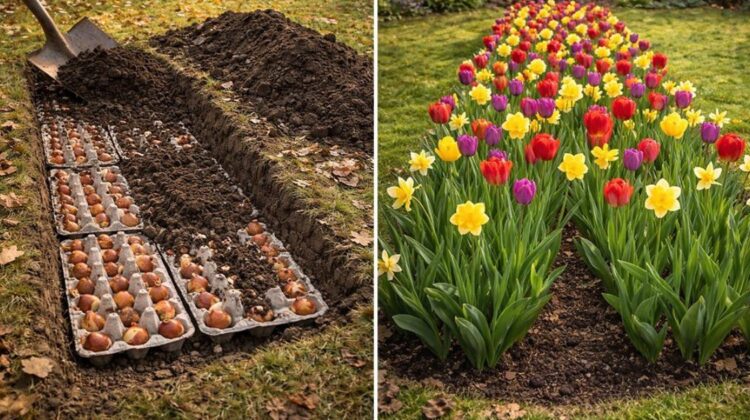
Planting flower bulbs in straight, evenly spaced rows sounds simple—until you try to do it at scale. Measuring distances, maintaining uniform depth, and keeping bulbs upright can quickly turn into a time-consuming task, especially when planting dozens or even hundreds at once. One surprisingly effective solution comes from the recycling bin: cardboard egg cartons.
Using egg cartons inside a shallow trench creates a low-cost, environmentally friendly planting system that delivers consistent spacing, uniform depth, and healthier root development. This method is especially popular among experienced gardeners who value efficiency, order, and long-term soil health.
How the Egg Carton Trench Method Works
This technique combines two essentials of successful bulb planting:
- A continuous trench that ensures consistent planting depth
- Cardboard egg cartons that act as natural spacing guides
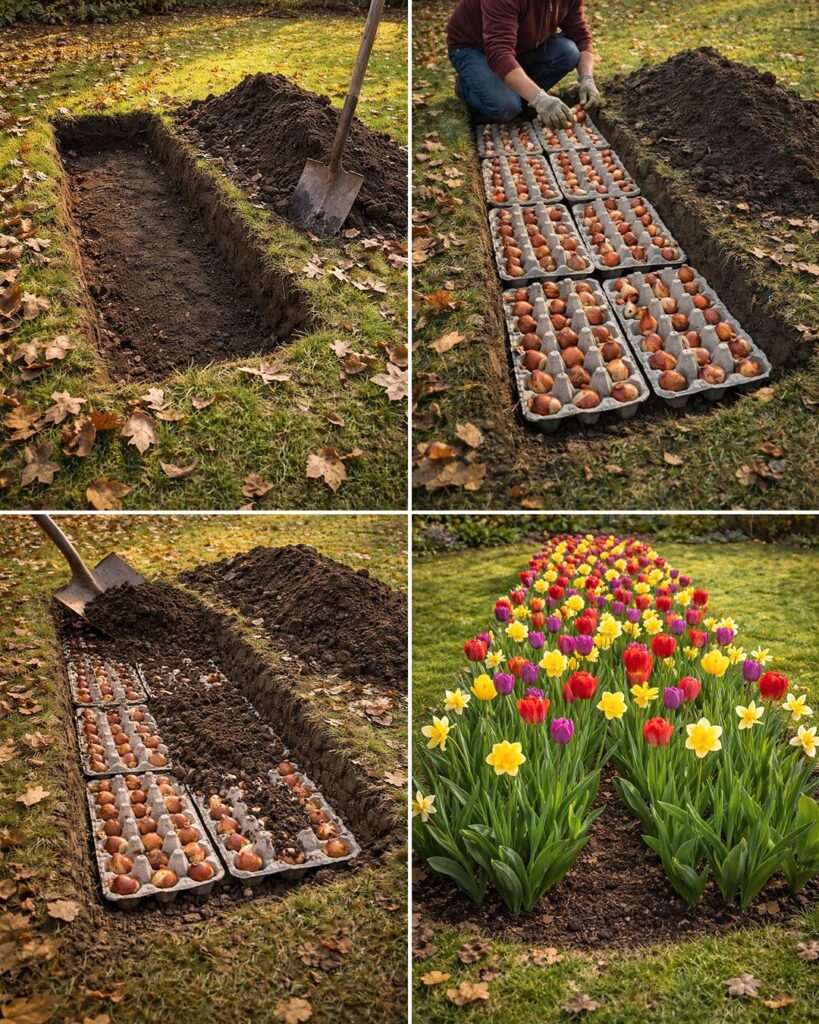
Placed directly into the soil, egg cartons function as biodegradable planting trays. Each cup holds a single bulb in position, preventing rolling or tipping. Over time, the cardboard softens and decomposes, adding a small amount of organic matter to the soil without interfering with root growth.
Step-by-Step Planting Process
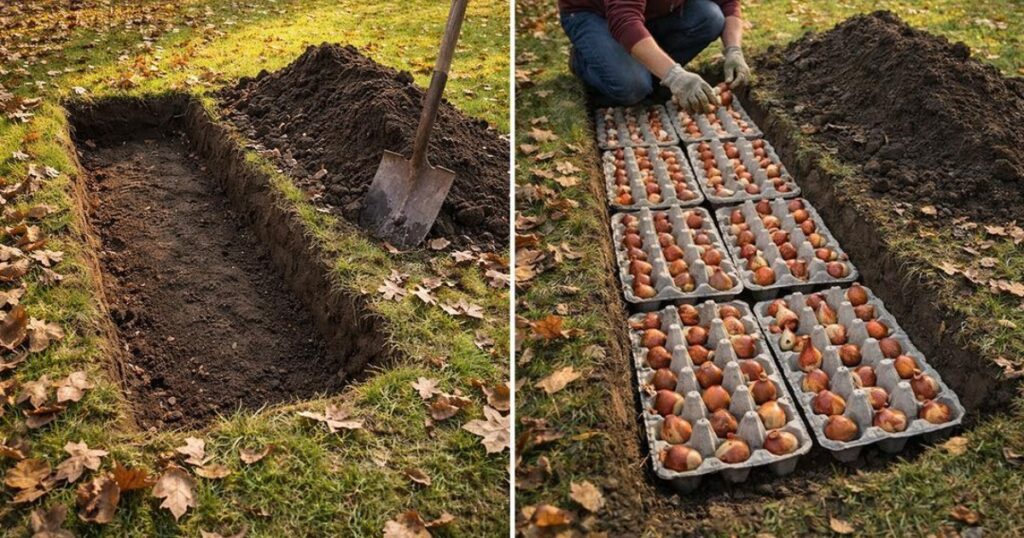
- Dig a straight trench to the appropriate depth for your bulbs
- Lay empty cardboard egg cartons along the bottom of the trench
- Place one bulb in each cup, pointed end facing upward
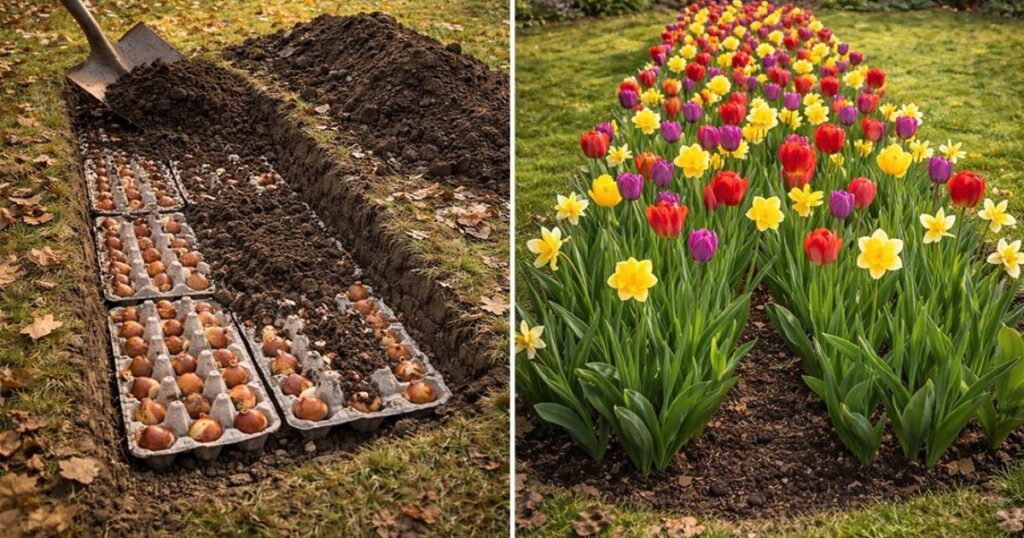
- Backfill the trench with soil
- Water thoroughly to settle the soil
The result is a clean, organized planting layout with evenly spaced bulbs that emerge at the same time, creating a balanced and professional-looking display.
Key Benefits of This Method
- Precise spacing without measuring
- Uniform planting depth for even emergence
- Faster planting over large areas
- Eco-friendly use of recycled materials
- Reduced bulb damage and shifting
- Visually organized garden beds
Bulbs Best Suited for Egg Carton Planting
This method works best for small to medium-sized bulbs that do not require excessive spacing.
Spring-Blooming Bulbs
- Tulips
- Daffodils (Narcissus)
- Crocus
- Hyacinths
- Grape hyacinths (Muscari)
- Snowdrops (Galanthus)
- Scilla (Siberian squill)
- Anemone blanda
- Iris reticulata
Summer-Blooming Bulbs
- Gladiolus
- Freesia
- Ranunculus
- Ixias
- Dwarf lilies
Very large bulbs, such as giant alliums or large ornamental lilies, require deeper planting and wider spacing and are better planted individually.
Choosing the Right Egg Cartons
Use only:
- Plain cardboard or recycled paper cartons
- Uncoated, non-plastic materials
Avoid:
- Styrofoam cartons
- Plastic containers
- Wax-coated cartons
Optional: poke small holes in the bottom of each cup to improve drainage, especially in heavier soils.
Ideal Planting Depth Guidelines
A reliable rule is to plant bulbs at a depth equal to two to three times their height.
Examples:
- Tulips and daffodils: 12–15 cm
- Hyacinths: 10–12 cm
- Crocus and muscari: 6–8 cm
Prepare the trench to the correct depth before placing the cartons.
Expert Tips for Strong, Healthy Growth
Use only high-quality bulbs
Choose bulbs that are firm, dry, and free from mold or damage. Weak bulbs produce weak blooms.
Plant at the correct season
- Spring-flowering bulbs: plant in autumn
- Summer-flowering bulbs: plant in spring after frost
Cold-season bulbs require winter chilling to bloom properly.
Improve soil structure
Incorporate compost, leaf mold, or well-rotted manure. Good drainage is essential, as bulbs are highly susceptible to rot in waterlogged soil.
Position bulbs correctly
Always place the pointed end upward. If unsure, planting sideways is acceptable—bulbs can orient themselves naturally.
Water wisely
Water deeply once after planting to eliminate air pockets and activate root growth. Avoid frequent winter watering unless the soil becomes extremely dry.
Mulch for protection
Apply a light mulch of straw, dry leaves, or wood chips to regulate soil temperature and reduce erosion.
Fertilize with restraint
Apply bulb fertilizer or compost lightly at planting or in early spring. Excess nitrogen promotes foliage growth at the expense of flowers.
Allow foliage to die back naturally
Never remove green leaves immediately after flowering. They store energy for next year’s blooms and should only be removed once yellow and dry.
Common Mistakes to Avoid
- Planting bulbs too shallow
- Using plastic or coated cartons
- Overwatering during winter
- Planting damaged or diseased bulbs
- Ignoring drainage in heavy clay soils
Final Perspective
The egg carton trench method is a rare example of simplicity delivering professional-grade results. It saves time, improves planting accuracy, and supports healthier root systems while reducing waste and effort. For gardeners focused on long-term performance, soil health, and visually striking flower beds, this technique offers a practical edge without specialized tools.
When paired with quality bulbs, proper depth, and well-prepared soil, this method can produce dense, vibrant blooms that return reliably year after year—proving that smart gardening often starts with the simplest ideas.
Leave a Reply