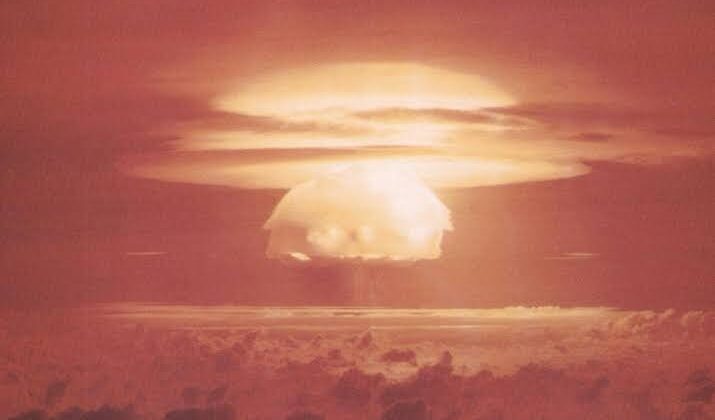
Thousands of satellites orbit just above the atmosphere, supporting communications, weather monitoring, navigation aids, Earth observation and military systems. A new simulation asks an unsettling question: what would happen to them if a nuclear weapon were detonated in low-Earth orbit? The answer, according to researchers, is that most of them would be disabled within days, and the debris could make the region hazardous for years. Here is what the study found, and what it doesn’t prove.
The Study
Researchers from Princeton University and the University of Wisconsin–Madison modeled the effects of a nuclear explosion in low-Earth orbit (LEO), the region below about 2,000 kilometers (1,242 miles) where most satellites operate. They estimate there are now more than 13,000 satellites in this region, with a growing number of military and commercial spacecraft being added.
The study was posted on the preprint server arXiv, which means it has not yet gone through formal peer review. It is a theoretical exercise, not a prediction.
The Scenario
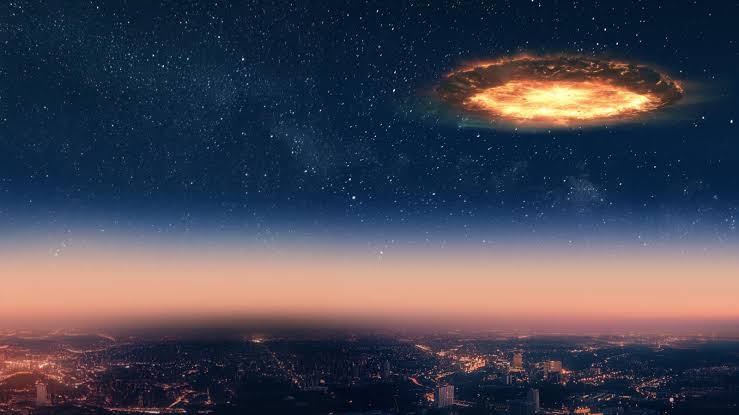
In their model, the team imagined a one-megaton nuclear weapon detonated 500 kilometers (311 miles) above the South Atlantic. They assumed that satellites disabled by radiation would remain in orbit but lose the ability to maneuver, and they followed how collisions and debris fragments would spread over time.
The Results
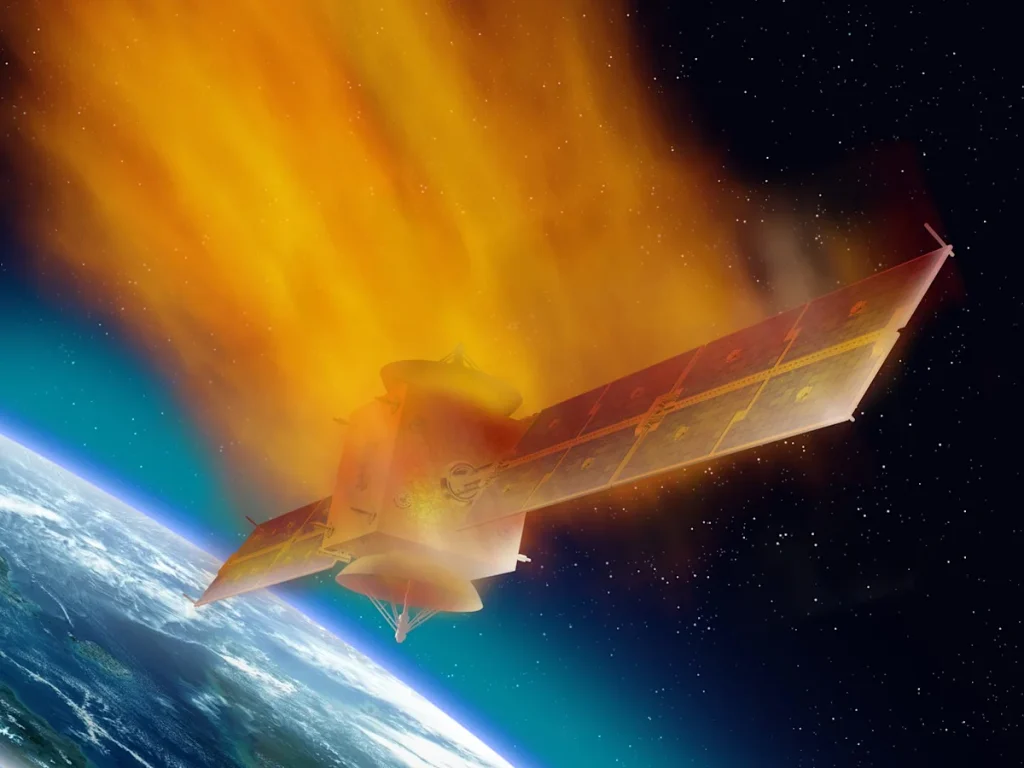
According to the simulation, radiation damage would be the biggest immediate problem:
- About 25% of satellites would be disabled in less than a day.
- About 78% after three days.
- About 98% after a week.
Disabled satellites that can’t maneuver would be at risk of colliding with each other and with space debris. The model found three collisions within 15 days, double that by 30 days and at least 19 collisions within a year. Each collision would create fragments that threaten other spacecraft. Atmospheric drag would gradually pull down objects in lower orbits, reducing the hazard there, but satellites at higher altitudes would face the highest risk for longer.
What History Shows
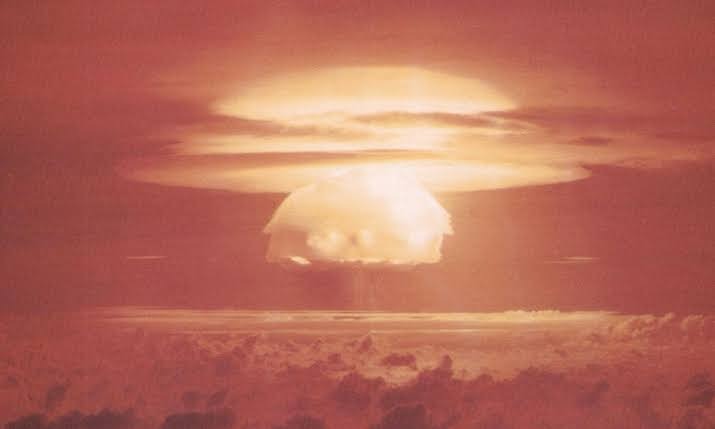
This isn’t purely hypothetical. Decades ago, a high-altitude test called Starfish Prime detonated a 1.4-megaton bomb about 400 kilometers above the Pacific, near Johnston Atoll. The blast created an artificial radiation belt that damaged satellites in orbit at the time, as well as some launched soon afterward. A treaty banning nuclear tests in the atmosphere, underwater and in space was signed a year later by the United States and the Soviet Union. A later treaty on outer space also bans placing nuclear weapons in orbit.
The number of satellites has multiplied enormously since those days, which is why researchers are revisiting the question.
A Debris Problem
One of the most worrying outcomes of the model is the spread of debris. Scientists have long warned of a runaway chain reaction of collisions, often called Kessler syndrome, in which crashes create fragments that cause more crashes. In this scenario, the debris would add to the risk for satellites that survived the radiation. Restoring services, the authors say, would require more than replacing the lost spacecraft, because new satellites would have to endure the remaining radiation and debris too.
What the Study Doesn’t Show
It’s important to keep the findings in perspective:
- It is a simulation based on one scenario, with assumptions about the weapon’s size, location and how radiation would affect satellites.
- It hasn’t been peer-reviewed, and real-world results could be different.
- It focuses on low-Earth orbit. Other services, such as navigation satellites, operate at higher altitudes, and the study doesn’t claim to describe them.
- It is not a forecast of any event. The authors’ point is that preventing nuclear weapons in space is the best way to avoid such a scenario.
- How long radiation would remain dangerous above the atmosphere is still uncertain.
Why It Matters
Satellites support daily life in ways that many people don’t notice, from weather forecasts to communications and banking systems that depend on precise timing. A severe loss of satellite infrastructure would disrupt many of these services, and replacing them could take years. For that reason, the authors argue that preventing the deployment and use of nuclear weapons in space is essential.
Exploring Space From Earth
Readers fascinated by orbit and the night sky often buy a telescope or binoculars for stargazing, use satellite tracking and astronomy apps to spot the International Space Station and satellites overhead, browse astronomy books and space documentaries and visit exhibits with science museum tickets, while aspiring astrophotographers compare astrophotography cameras and tripods.
Frequently Asked Questions
What did the simulation show? That a one-megaton nuclear explosion in low-Earth orbit could disable most satellites in that region within a week, with debris posing a long-term hazard.
Has anything like this happened before? A high-altitude nuclear test decades ago created a radiation belt that damaged satellites, which led to a treaty banning tests in space.
Is the study peer-reviewed? Not yet. It was posted as a preprint.
Does this mean it will happen? No. It is a theoretical analysis, and the authors stress the need to prevent nuclear weapons in space.
Sources: arXiv, Popular Mechanics