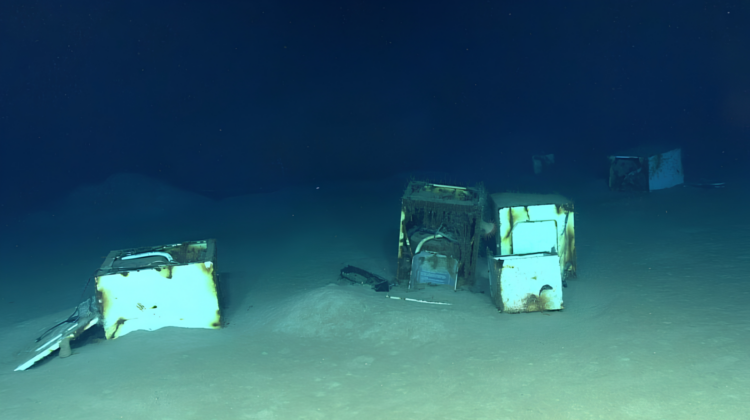
More than 5,000 feet beneath the surface of the Gulf of Mexico, a team of scientists came face to face with a landscape so eerie that many viewers have compared it to the internet’s “backrooms”. The discovery happened in 2017, when researchers from the US National Oceanic and Atmospheric Administration (NOAA) set out to investigate what they believed was a shipwreck, possibly carrying a lost archaeological treasure.
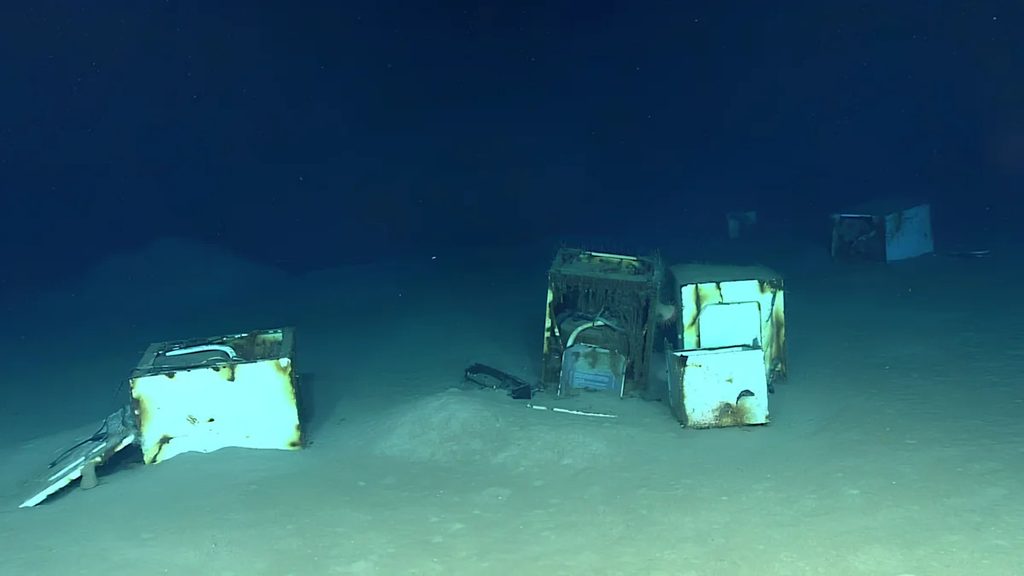
The remotely operated dive was part of an expedition aboard the Okeanos Explorer to map and survey the Gulf, led by marine biologist Diva Amon and echinodermologist Charles Messing. Sonar had detected a structure about 1.5 kilometers (0.9 miles) down, and it had all the signs of a sunken ship: one large object surrounded by smaller, scattered ones. As the team steered their remotely operated vehicle (ROV) toward the target, one crew member described it as a true day of exploration at an unknown sonar contact.
An Alien Landscape Made of White Cubes
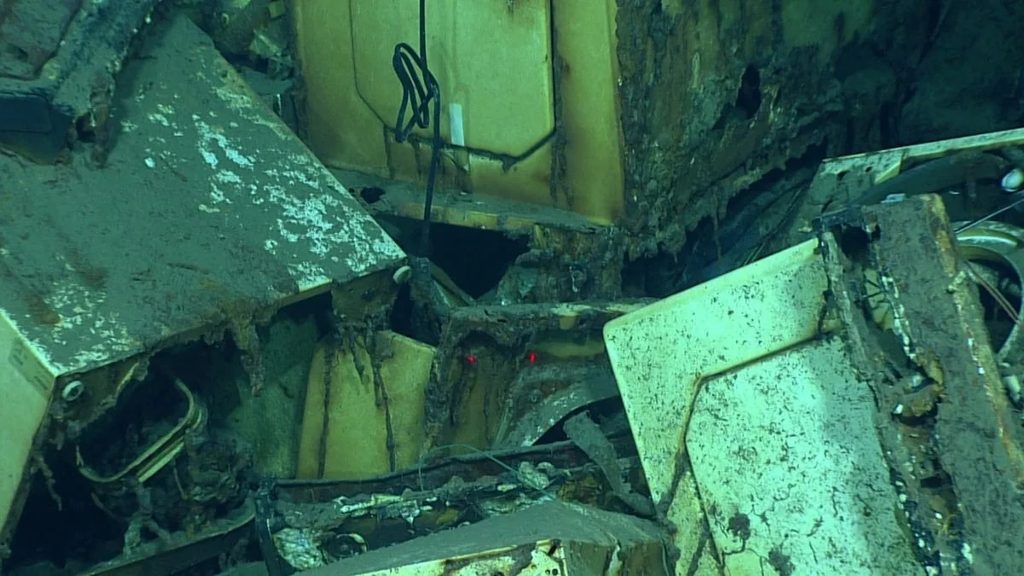
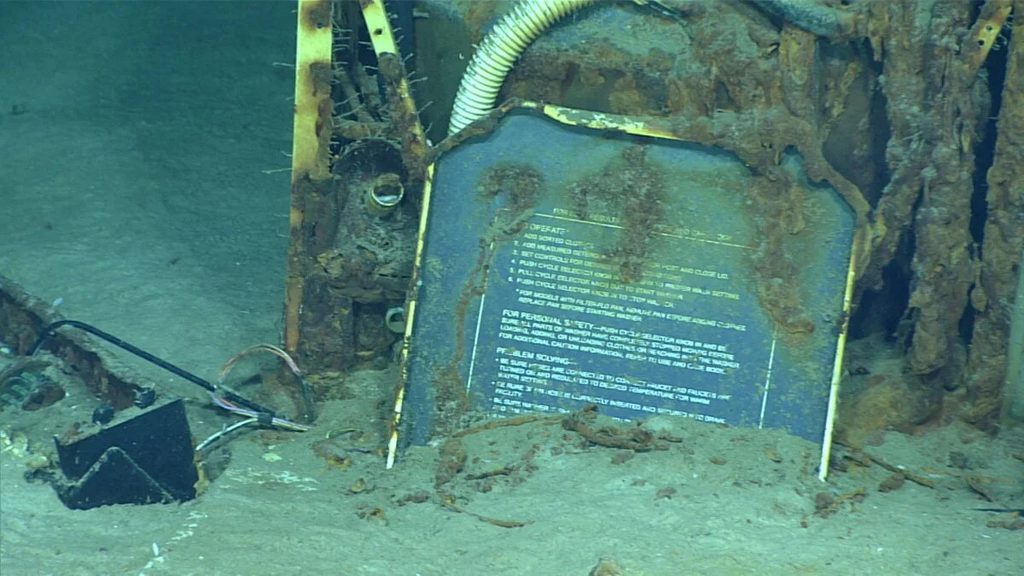
Out of the darkness came a barren, sandy plain littered with rusted white cubes. Some had burst open on impact, exposing plastic innards and copper wiring. As the cameras zoomed in, the crew spotted a metal plate covered in sand and oxidized metal sediment, carrying printed text. Only fragments could be read, including the headings “To Operate”, “For Personal Safety” and “Problem Solving”, while the bullet points beneath them were almost entirely unreadable.
Then the biggest object of all appeared: a crumpled red shipping container with more white cubes spilling out of its torn side. A sticker on one of the appliances suggested it came from General Electric’s Appliance Park in Louisville, Kentucky. According to the official dive notes, other appliances lay nearby and farther away, forming what the team first took to be a debris field. The container’s ID number was ITLU733016, and the cargo included several brands, such as RCA and GE. Because the goods had no packaging, the team suggested they were being shipped for recycling. The container never reached its destination.
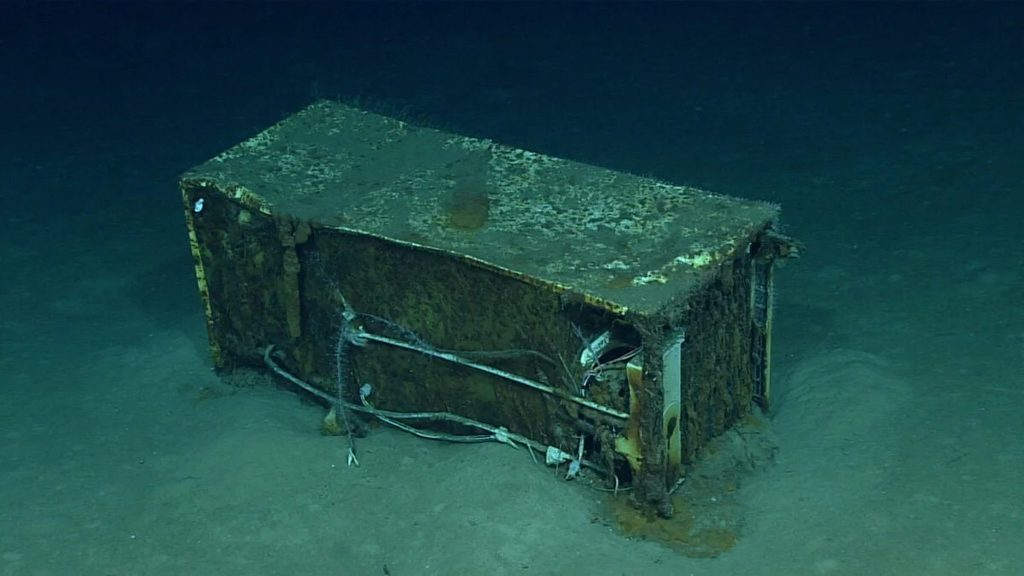
One crew member called the scene “a bit surreal”, noting that the team was 1.5 kilometers down in the deep sea, moving through a field of freezers, fridges and washing machines. The deep sea is often imagined as an untouched place, they said, but the sight was a reminder that human activity still reaches this alien ecosystem.
How Many Shipping Containers Are Lost at Sea?
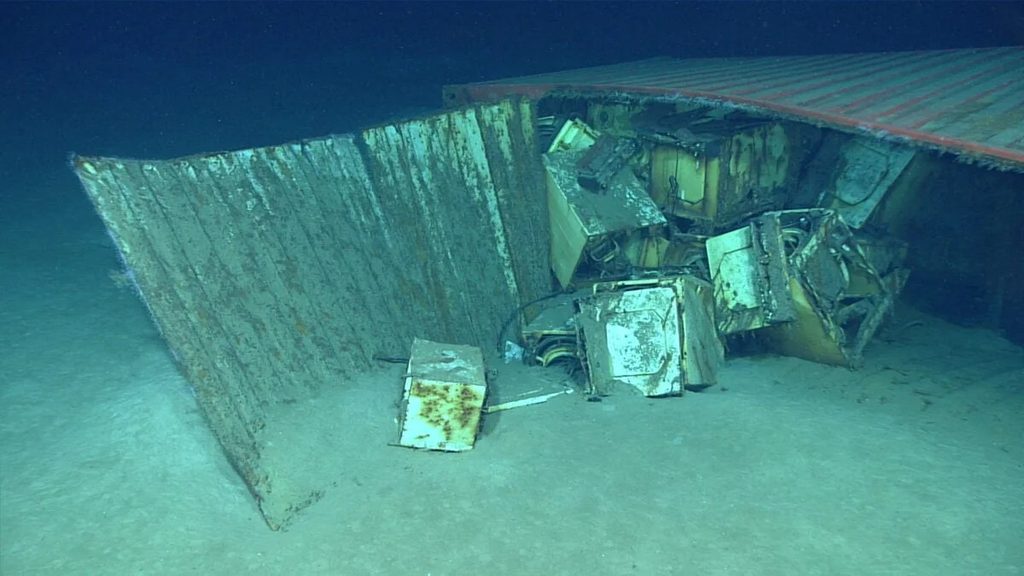
The NOAA team speculated that the container fell from a ship during stormy weather. According to World Shipping Council data, a few hundred to more than 1,000 containers are lost at sea every year, out of roughly 280 million shipped. In its recent report on the 2025 figures, the council notes that severe weather makes it more likely that cargo ships will lose containers in rough seas. Even without storms, warmer-than-usual ocean temperatures can raise wave energy.
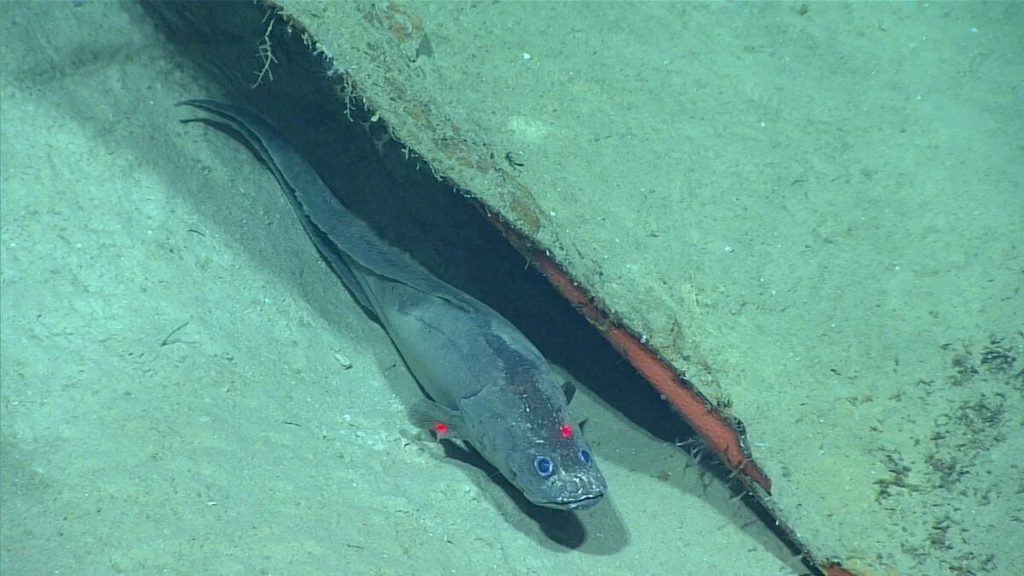
A NOAA crew member said most people probably don’t realize how much ends up in the ocean, and another added that research suggests lost containers could take hundreds of years, or even longer, to fully break down in the deep ocean. In the meantime, marine life has moved in. Corals and hydroids cling to the metal, their soft bodies swaying as the ROV passes, and a large fish was seen sheltering in the container’s shadow. The crew nicknamed the site “Deep Clean”.
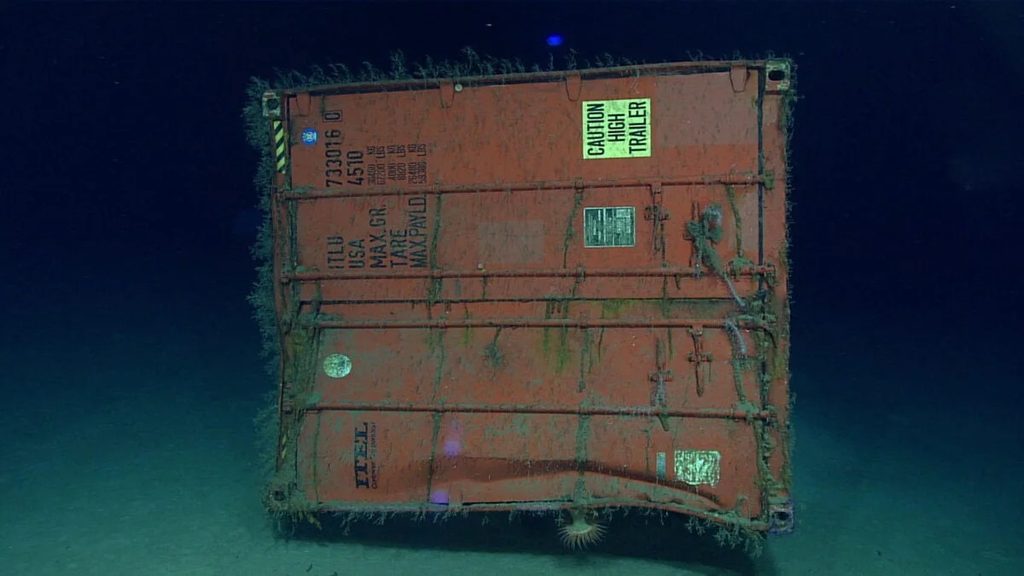
The dive is one example of NOAA’s ongoing work to explore the deep ocean. ROV missions are run by a crew of scientists and technicians aboard a ship, who guide a submersible robot to the seafloor. The ROV is connected to the ship by a long cable that carries commands down and sends data, including the live video feed, back up. That is why the scientists’ reactions can be heard in real time, since their voices are recorded alongside the footage, and it lets them make audio notes about what they see. The clip that circulated online was compiled from the raw live footage after the expedition ended. Live feeds like this also give the public a rare window into the crew’s reactions to the strange and wonderful things they find in uncharted waters.
Frequently Asked Questions
What did NOAA scientists find on the Gulf of Mexico seafloor? While investigating a suspected shipwreck in 2017, they found a field of rusted household appliances, including freezers, fridges and washing machines, spilling from a crumpled red shipping container about 1.5 kilometers (0.9 miles) down.
How did the container end up there? The NOAA team speculated it fell from a ship during stormy weather. World Shipping Council data shows a few hundred to more than 1,000 containers are lost at sea each year, out of roughly 280 million shipped.
Is there life on the wreck? Yes. Corals and hydroids have attached to the metal, and a large fish was seen sheltering in the container’s shadow. The crew nicknamed the site “Deep Clean”.