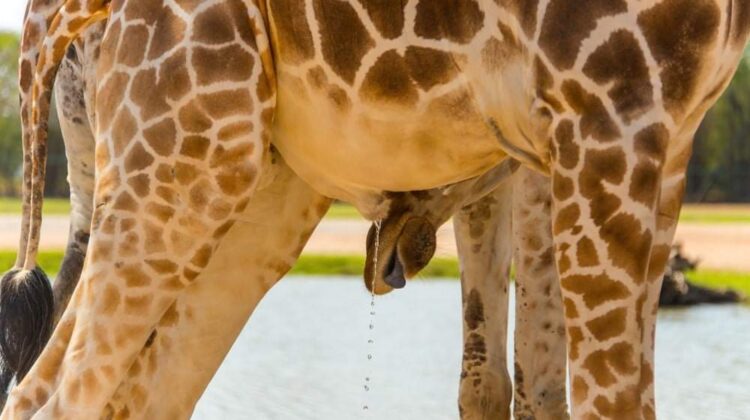
Giraffes don’t have a breeding season, don’t go into visible heat the way cats or dogs do, and don’t rely on mating calls or obvious visual cues to signal readiness. That leaves male giraffes with a genuine problem: how do you know if a female is actually interested?
Their answer, it turns out, involves her urine — and a 2023 study finally explained exactly why.
The Behavior Itself
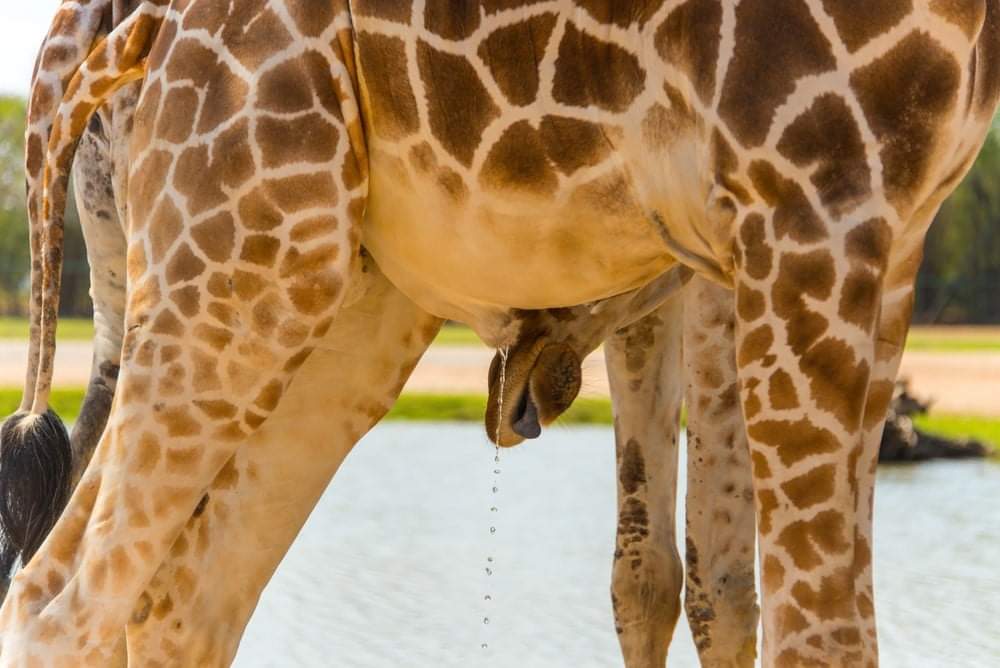
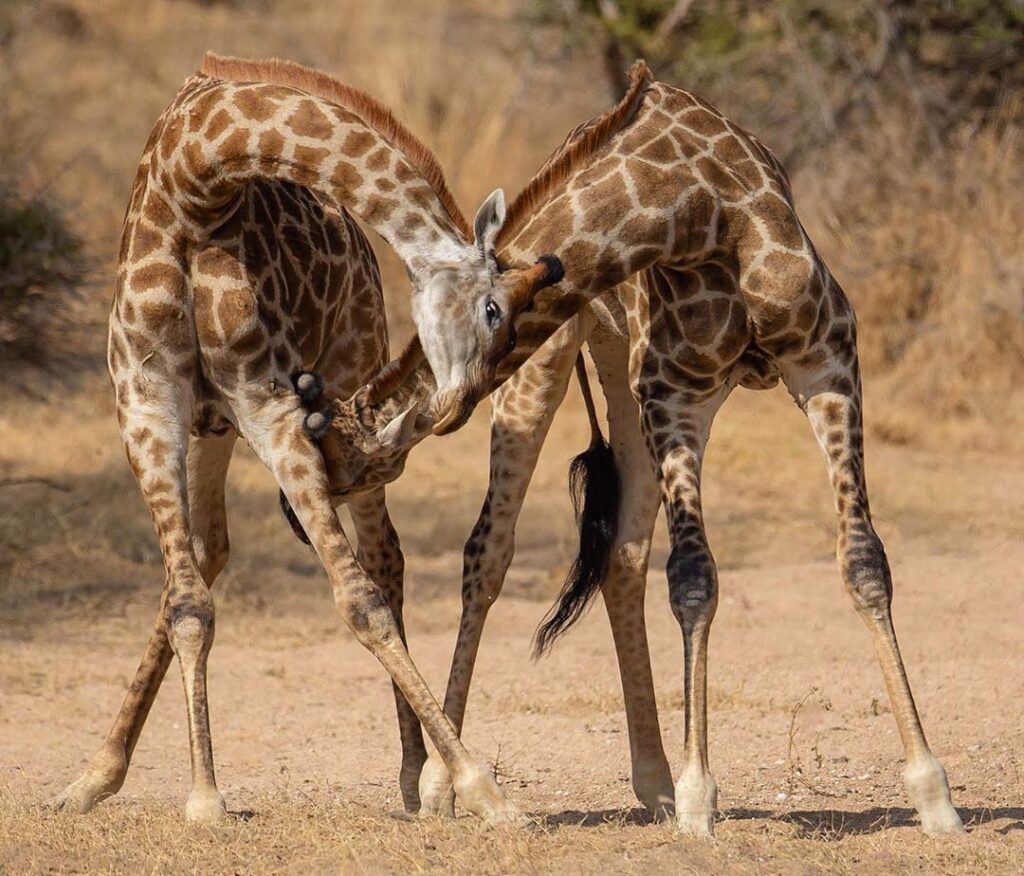
When a male giraffe wants to test a female’s receptivity, he’ll nudge or nuzzle her, essentially prompting her to urinate, according to UC Davis. If she’s willing, she widens her stance and urinates for about five seconds while the male catches some of the stream in his mouth.
He then performs what’s called a flehmen response: curling back his upper lip, baring his teeth, and inhaling with his mouth open for several seconds. The behavior carries the female’s scent, including pheromones, from his mouth to his vomeronasal organ (VNO) — a specialized organ many mammals use to detect chemical signals tied to reproduction and social behavior.
If the chemical signal doesn’t indicate the female is near estrus, the male simply moves on and tries his luck elsewhere.
Why Giraffes Do This Differently Than Other Animals
Flehmen itself isn’t unique to giraffes — horses, cats, and goats all do some version of it. What’s unusual is how giraffes collect the sample in the first place. Most animals that use flehmen wait until urine has hit the ground before investigating it.
Giraffes can’t really do that. “They don’t risk going all the way to the ground because of the extreme development of their head and neck,” said Lynette Hart, a professor of population health and reproduction at UC Davis and the study’s lead author, per Earth.com. Bending that far down puts a giraffe in an unstable, vulnerable position, so instead, the male intercepts the stream directly from the source.
What The Research Actually Found
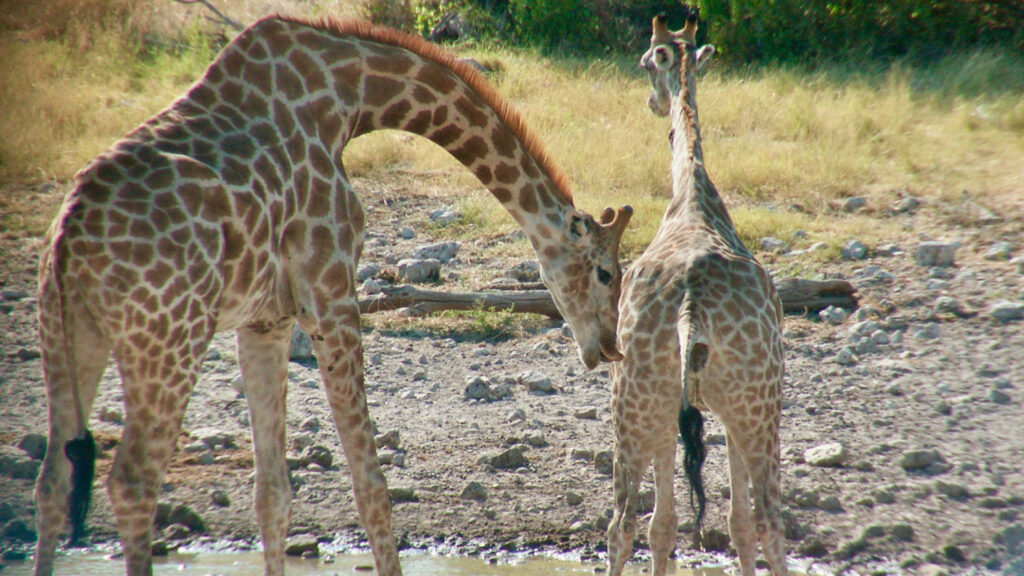
The study, published in the journal Animals in February 2023 and led by Lynette Hart alongside her husband and co-author Benjamin Hart, a professor emeritus at UC Davis’s School of Veterinary Medicine, drew on years of direct observation of giraffes (Giraffa giraffa angolensis) at Etosha National Park in Namibia, along with examination of preserved specimens.
That anatomical work confirmed something distinctive about giraffes: their vomeronasal organ connects more strongly to the mouth, via a duct in the hard palate, than to the nose. In most mammals that rely on flehmen, the nasal connection to the VNO matters more. Researchers believe giraffes may rely less on that nasal pathway in part because they’re able to mate year-round, without the seasonal pressure that shapes reproductive signaling in many other species.
Benjamin Hart, who had previously studied flehmen anatomy in other animals including goats, said the behavior in giraffes serves the same core purpose. “This is part of their reproductive behavior,” he said.

Other Surprising Behaviors The Study Documented
The Harts’ fieldwork turned up more than just the urine-testing ritual. Their observations in Etosha also documented giraffes chewing on bones (a behavior known as osteophagia) and what may be a form of mourning: after a giraffe was killed by two lions, the researchers observed a steady procession of other giraffes arriving over several days to investigate the body, Futurity reported.
Frequently Asked Questions
Why do male giraffes taste female giraffes’ urine? It’s how they test whether a female is close to estrus and likely to be receptive to mating. Chemical cues in the urine are detected by the male’s vomeronasal organ after he performs a flehmen response.
What is a flehmen response? It’s a behavior, seen in many mammals including horses, cats, and goats, where an animal curls its upper lip and inhales with its mouth open to draw scent particles toward the vomeronasal organ, which detects pheromones.
Why don’t giraffes just smell urine on the ground like other animals? Their long necks and heavy heads make bending all the way to the ground to investigate ground-level urine unstable and impractical, so males intercept the urine stream directly instead.
Who conducted this research? Lynette and Benjamin Hart of UC Davis’s School of Veterinary Medicine, based on years of field observation at Etosha National Park in Namibia and examination of preserved giraffe specimens.
Did the study find anything else notable about giraffe behavior? Yes — the researchers also documented giraffes chewing bones and what appeared to be a form of mourning behavior, with giraffes repeatedly visiting the body of a giraffe killed by lions.
Where was the research published? In the journal Animals, in February 2023.
Sources: UC Davis (“Heavy Necking: New Insights Into the Sex Life of Giraffes”), Earth.com, Futurity, Live Science, and Popular Science coverage of the Hart et al. study published in Animals.
Leave a Reply