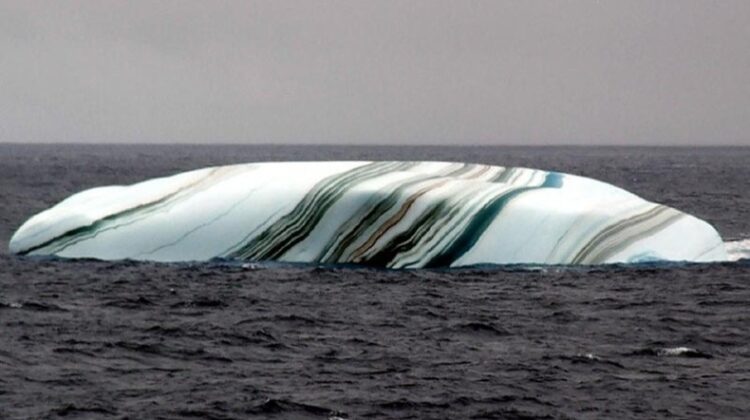
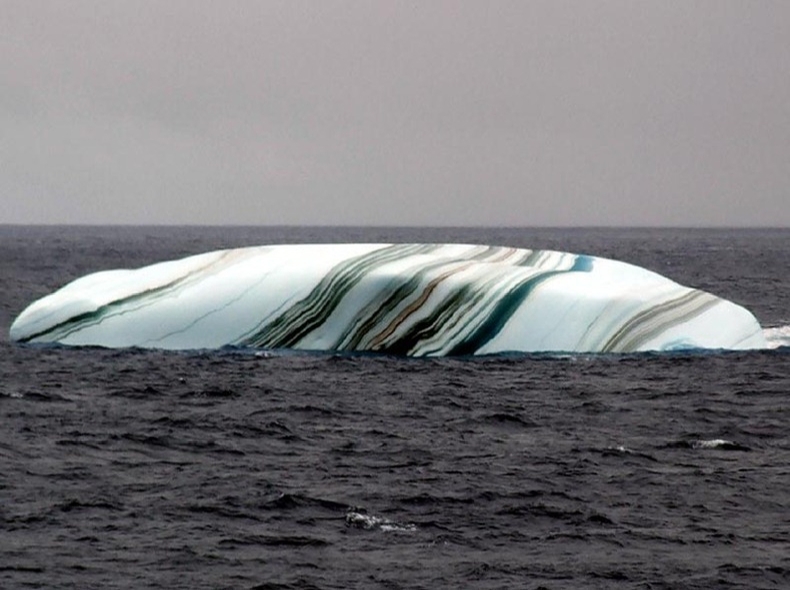
Icebergs are supposed to be white. So when Norwegian sailor Oyvind Tangen photographed a cluster of them banded in blue, black, brown and gold from a research ship roughly 660 miles north of Antarctica in 2008, the pictures looked almost too vivid to be real — striped like hard candy, floating in open water.
Why Icebergs Are Usually White, Not Blue
Ice itself isn’t white. Glacial ice — the compacted, ancient snow that makes up most icebergs — is riddled with tiny trapped air bubbles that scatter light in every direction, which is what makes it look white rather than clear or blue. An iceberg forms when a chunk of that ice calves off a glacier or ice shelf and drifts into open ocean.
Three Different Ways a Stripe Can Form

According to explanations from the British Antarctic Survey and glaciologists who study iceberg coloring, each stripe color has a distinct cause:
Blue stripes, the most common, form when a crack or crevice in the ice fills with seawater or meltwater and freezes so quickly that no air bubbles have time to form. Without bubbles to scatter light, that ice looks a clear, deep blue instead of white — the same physics that makes the sky look blue.
Green stripes show up when seawater rich in algae seeps into the base of an ice shelf and freezes there. The organic matter in that layer tints the ice green rather than blue.
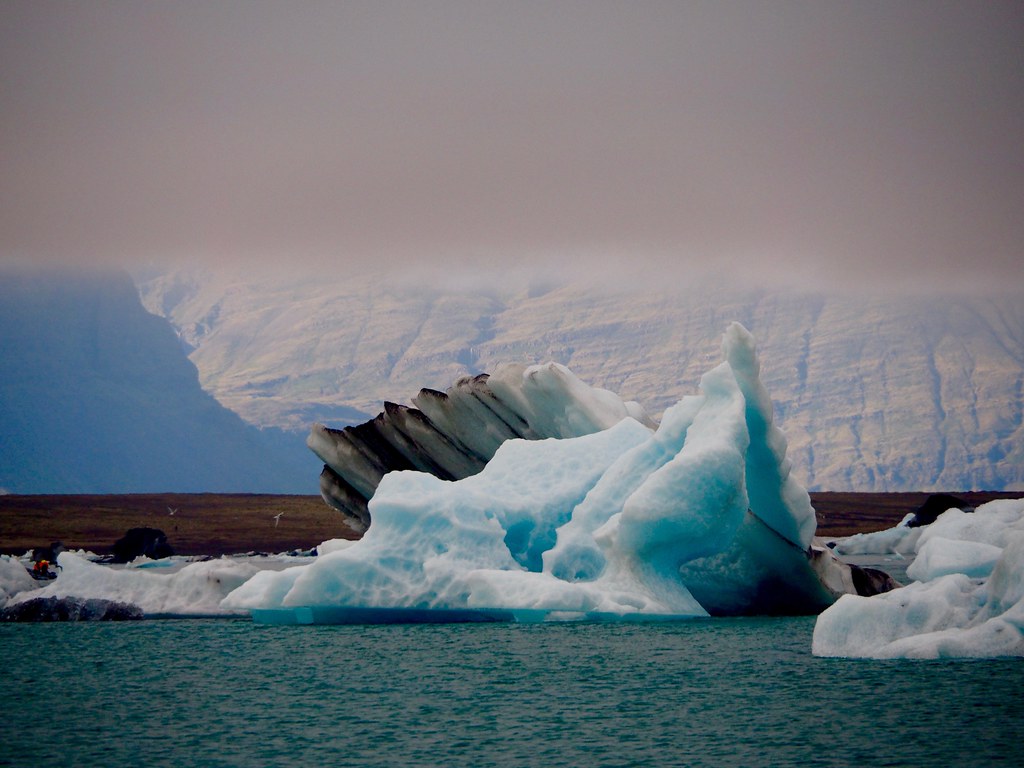
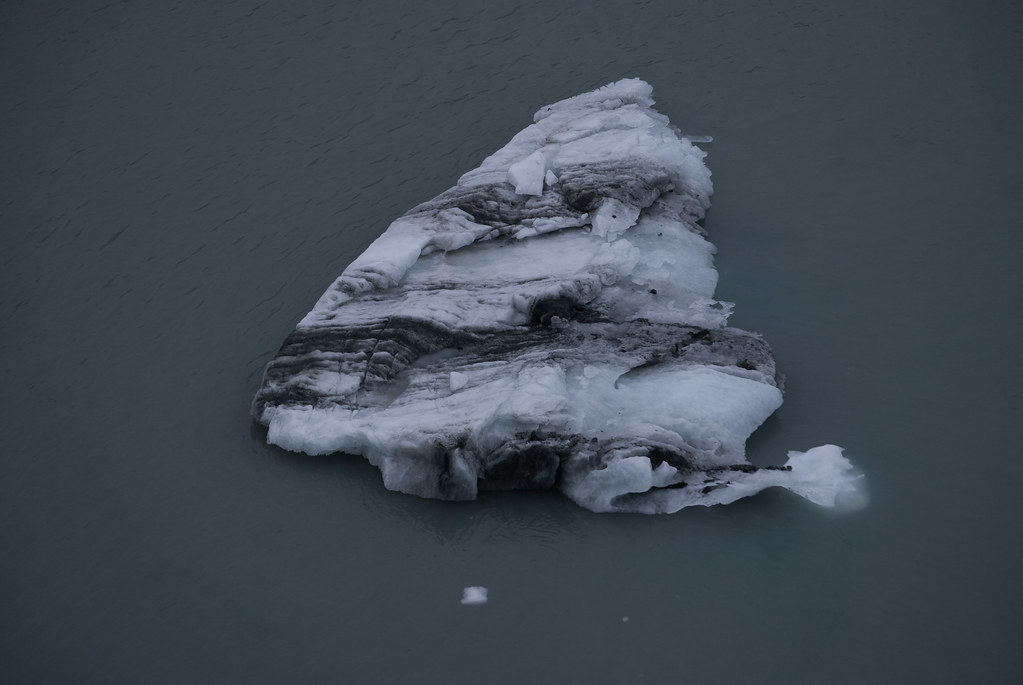
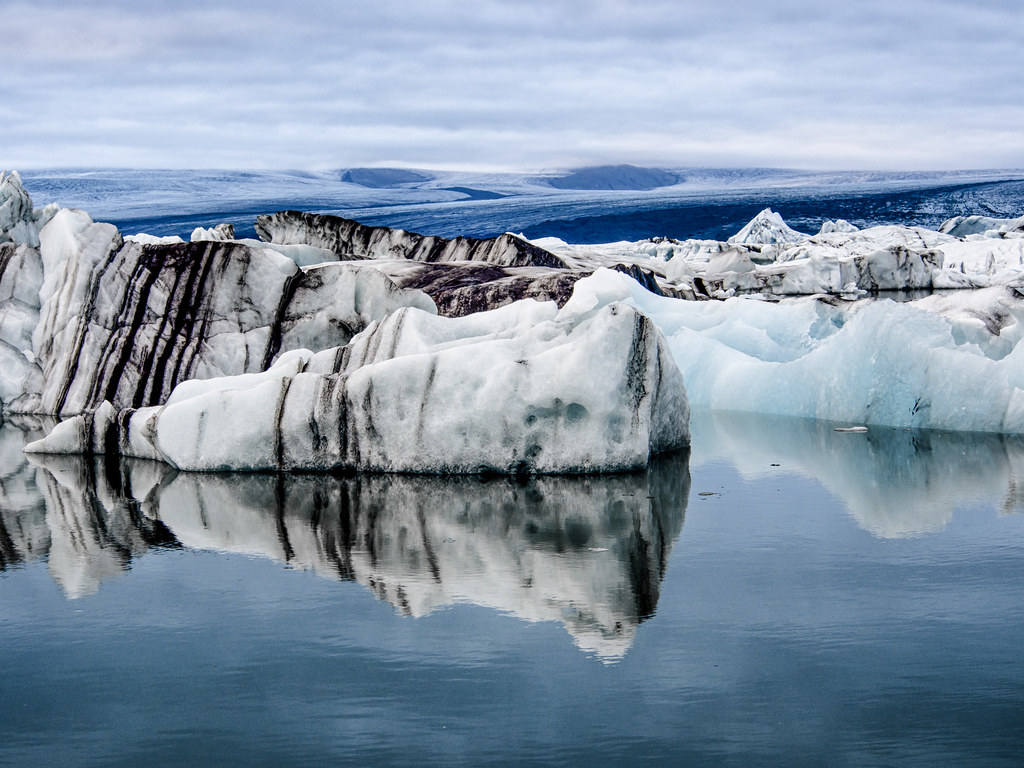
Brown, black, and yellow stripes come from sediment, not seawater chemistry. As glacial ice grinds slowly across the Antarctic continent toward the sea, it picks up rock dust and dirt from the land beneath it. That sediment gets trapped in the ice and shows up as dark or yellowish bands once the iceberg calves and breaks apart.
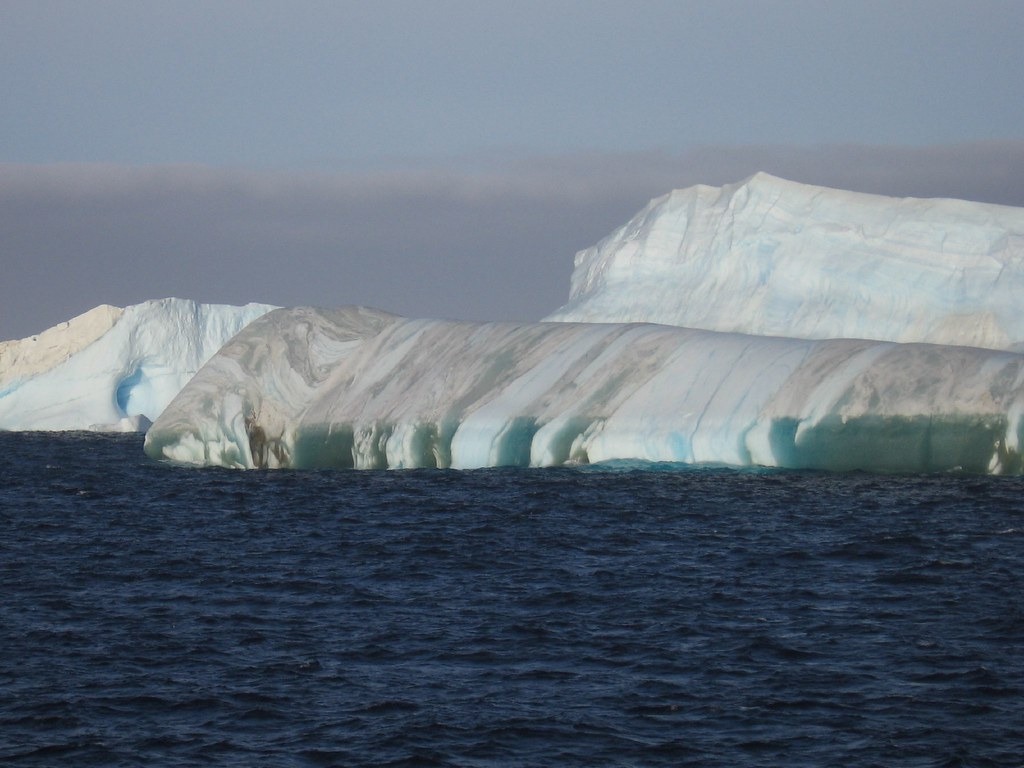

Whether a berg ends up with one solid-colored stripe or a rainbow of them comes down to timing: if several cracks fill and freeze around the same time, you get uniform bands of a single color. If cracks open and refreeze at different points over years, you get the more elaborate, multicolored striping.
Why You Only See This in Antarctica
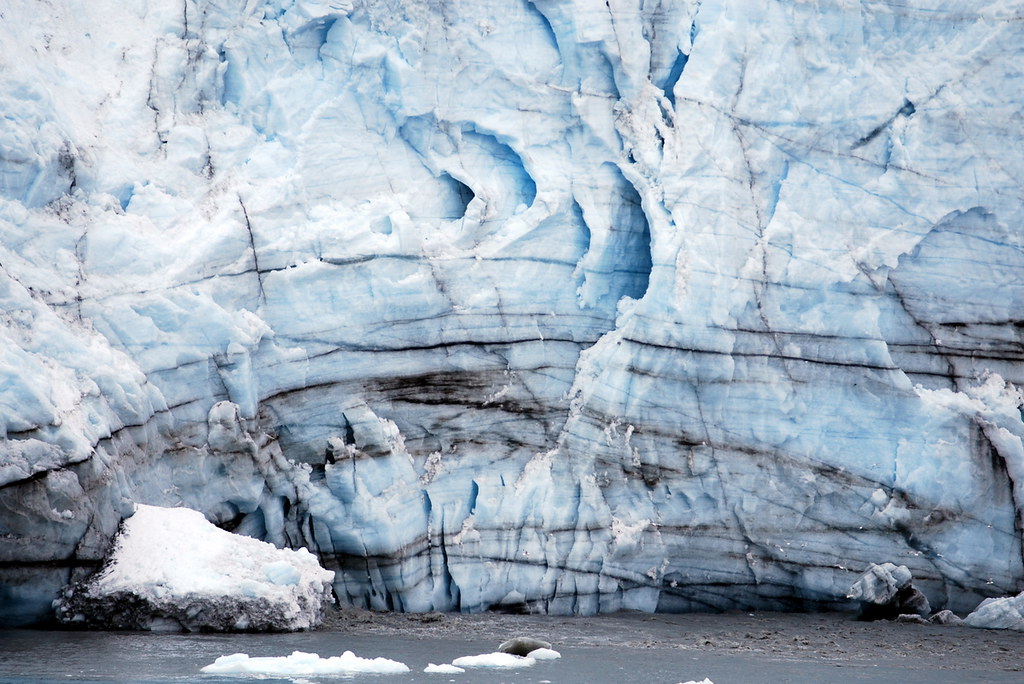

Striped icebergs are considered essentially unique to Antarctica. The scale of the ice shelves there, combined with how the ice sheet moves and cracks over long timeframes, creates the right conditions for seawater and sediment to work their way into the ice repeatedly before it ever breaks free. It’s uncommon enough that researchers who study the region, including scientists with the British Antarctic Survey, have said they still encounter stripe patterns and colors they haven’t documented before.
Frequently Asked Questions
Are these photos real, or edited? Real. Fact-checkers, including Snopes, have confirmed striped icebergs are a genuine natural phenomenon, not the product of image editing.
What causes the different colors? Blue comes from rapidly refrozen, bubble-free water; green comes from algae-rich seawater; brown, black, and yellow come from sediment picked up as the ice sheet moves toward the coast.
Where was this particular set of icebergs seen? Roughly 660 miles north of Antarctica, photographed by Norwegian sailor Oyvind Tangen aboard a research vessel in 2008.
Sources: Scientific American; ABC News (Australia); IFLScience; Snow Addiction; ZME Science; iceberg.co.nz.
What an amazing thank you for the SHARE
Looks like Candy Cane 👍👍👍👍
I didn’t know that salt water could find a path through ice. I’ve experienced saltwater moving through land though!