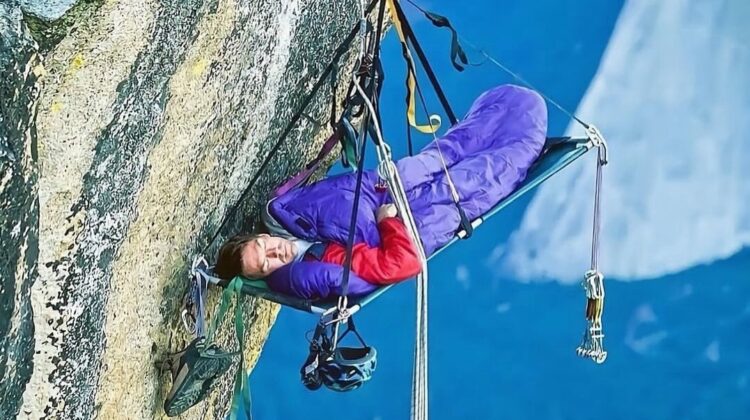
The terrifying-looking hanging platforms often seen dangling from sheer cliffs are known as portaledges — specialized suspended shelters designed for climbers tackling some of the world’s most dangerous rock faces.
Used during multi-day climbing expeditions, portaledges function as collapsible hanging tents that allow climbers to eat, sleep and survive while suspended high above the ground.
The systems are most famously associated with massive vertical walls such as El Capitan, where climbers can spend days or even weeks ascending nearly impossible rock formations.
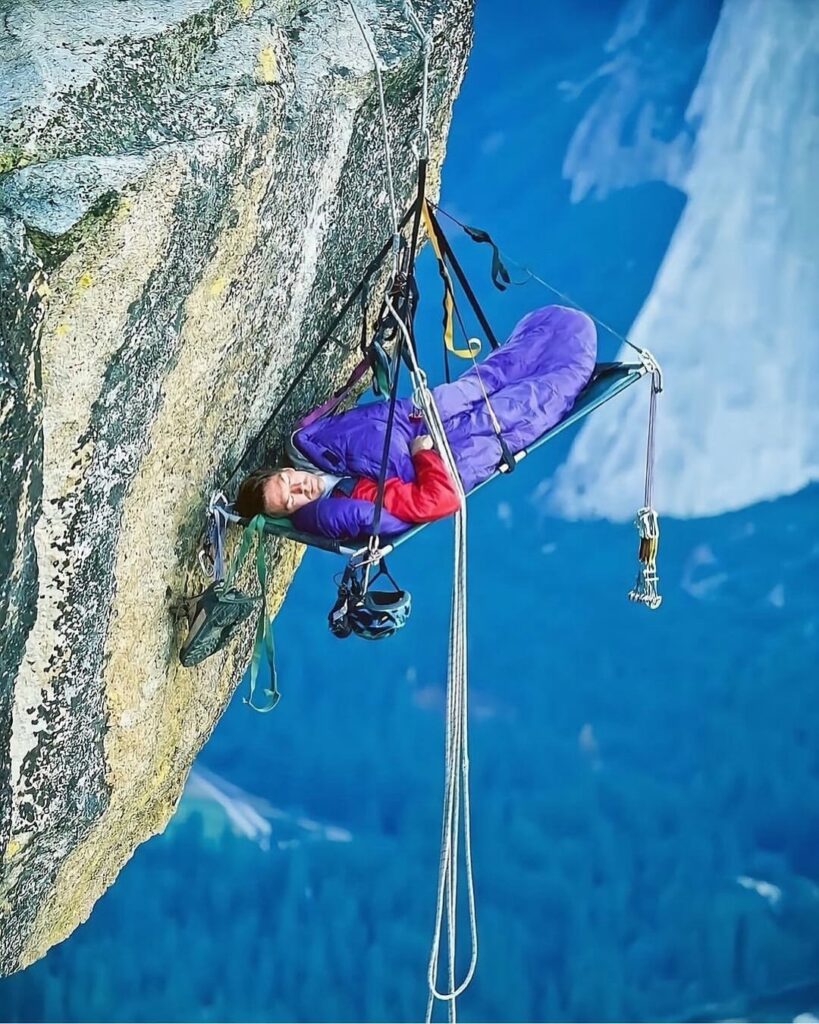
At first glance, the setup appears almost unreal: a small fabric platform hanging from a cliff thousands of feet in the air.
But behind the extreme visuals is highly engineered mountaineering equipment designed for survival in harsh vertical environments.
Modern portaledges typically use lightweight aluminum frames combined with extremely durable ballistic nylon stretched tightly across the platform.
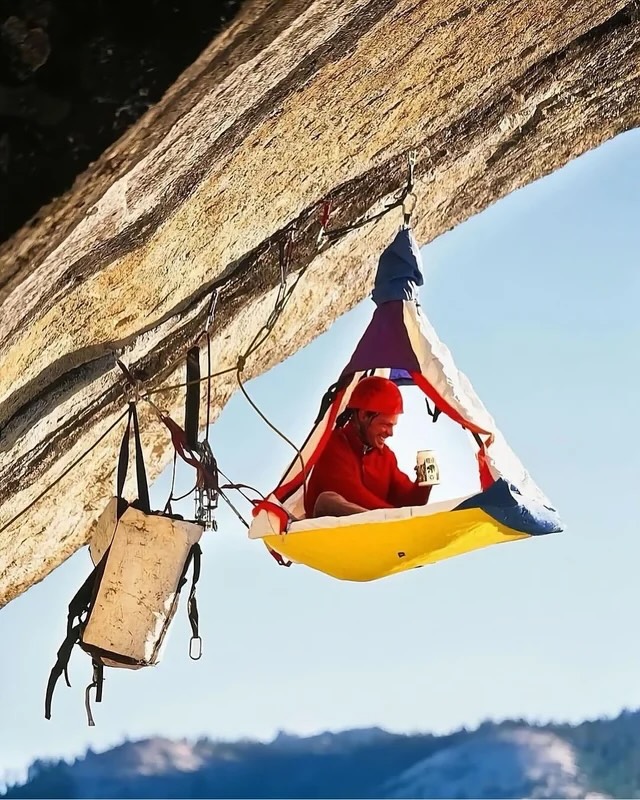
The entire structure hangs from secure anchor systems drilled or attached into the rock face.
For protection against storms, climbers attach waterproof outer covers that transform the exposed platform into a suspended tent capable of withstanding rain, snow and powerful winds.
Safety is treated with absolute seriousness.
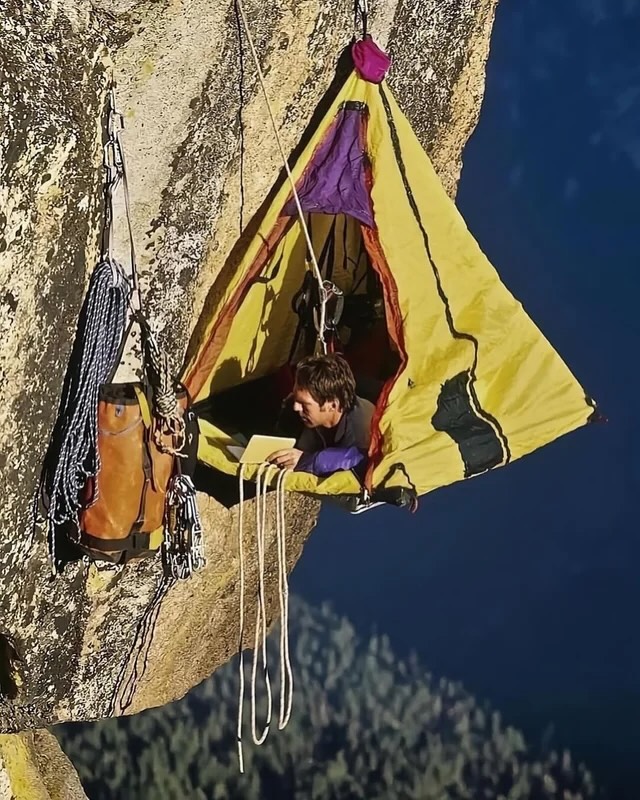
Climbers remain attached to independent safety ropes and harness systems at all times — including while sleeping.
Even simple tasks such as cooking or organizing gear become highly technical operations when performed hundreds or thousands of feet above the ground.
Waste management is also strictly controlled, with climbers carrying sealed waste containers back down the mountain to minimize environmental impact.
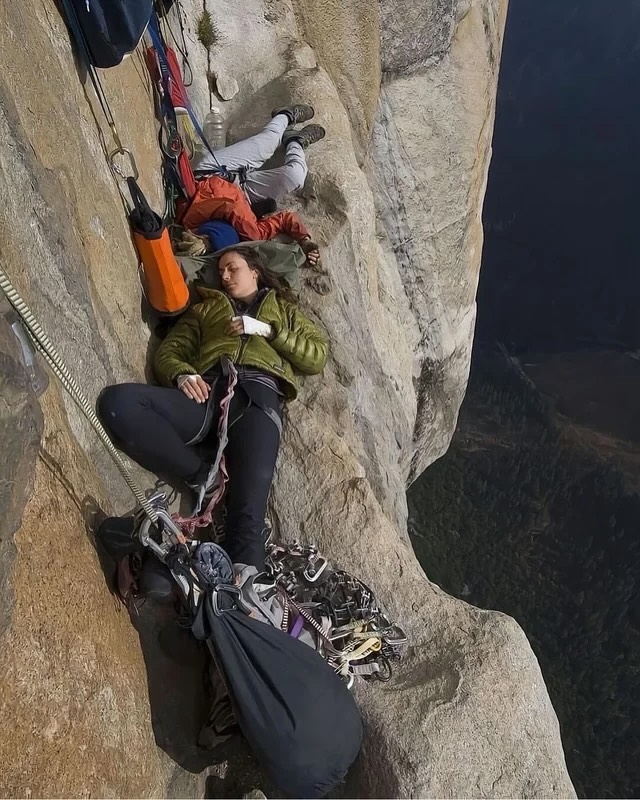
Portaledges revolutionized big-wall climbing by making previously impossible routes achievable.
Before their invention, climbers attempting giant vertical ascents often had no practical way to rest during extended expeditions.
Today, the equipment has become an iconic symbol of extreme mountaineering and adventure photography.
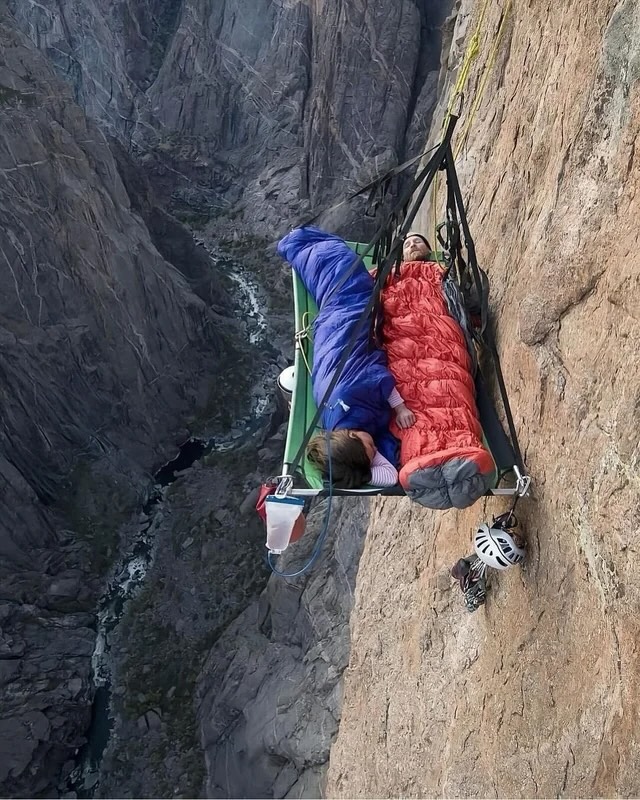
Images of climbers sleeping on vertical cliffs continue fascinating millions online because they combine breathtaking scenery with the very real danger of life suspended in midair.
Why extreme climbing content attracts huge audiences online
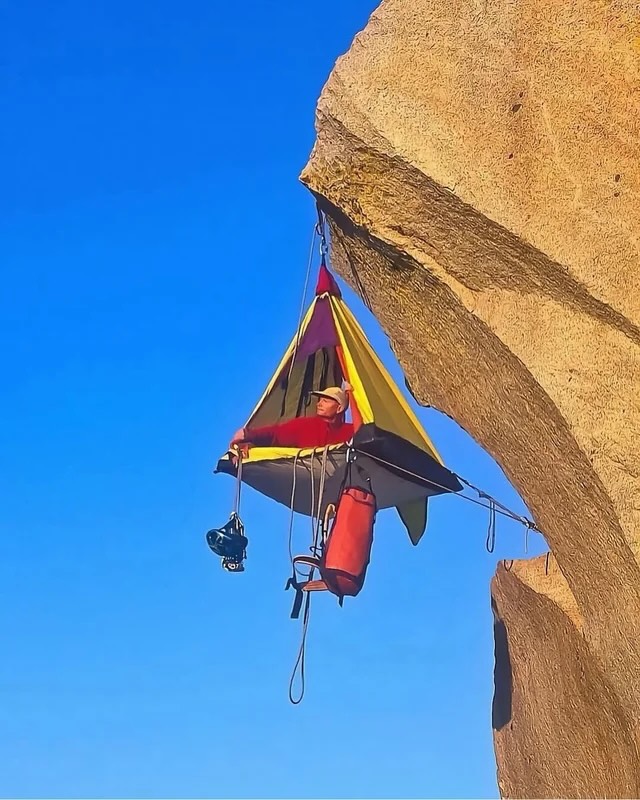
Big-wall climbing videos and photographs consistently go viral because they trigger both fear and fascination. Viewers are often captivated by the combination of human endurance, engineering, survival skills and exposure to extreme heights in some of the planet’s most dangerous landscapes.
Leave a Reply