
American and Canadian chefs are just learning what Mexicans have long known: a bluish fungus that infects corn and has been considered a scourge by most U.S. farmers is actually delicious. So much so that scientists are now trying to figure out how to purposefully grow it.
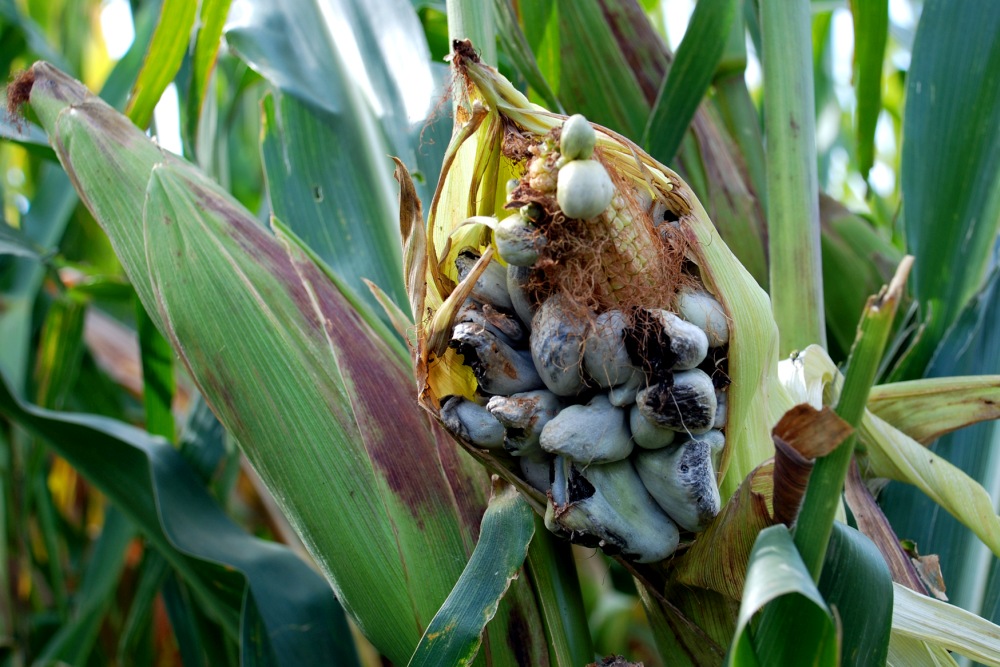
One evening last July, Sean Brock, an executive chef and restaurant owner based in Charleston, learned from a local farmer that the special Mexican variety of White Bolita corn he had commissioned him to grow had been infested with corn smut, a plant disease caused by the pathogenic fungus Ustilago maydis. The farmer was devastated, but to his surprise, Brock wasn’t. On the contrary:
“I love when nature throws you a curveball, and it tastes like this,” he told NPR. “It’s insanely delicious and luxurious, like black truffles.”
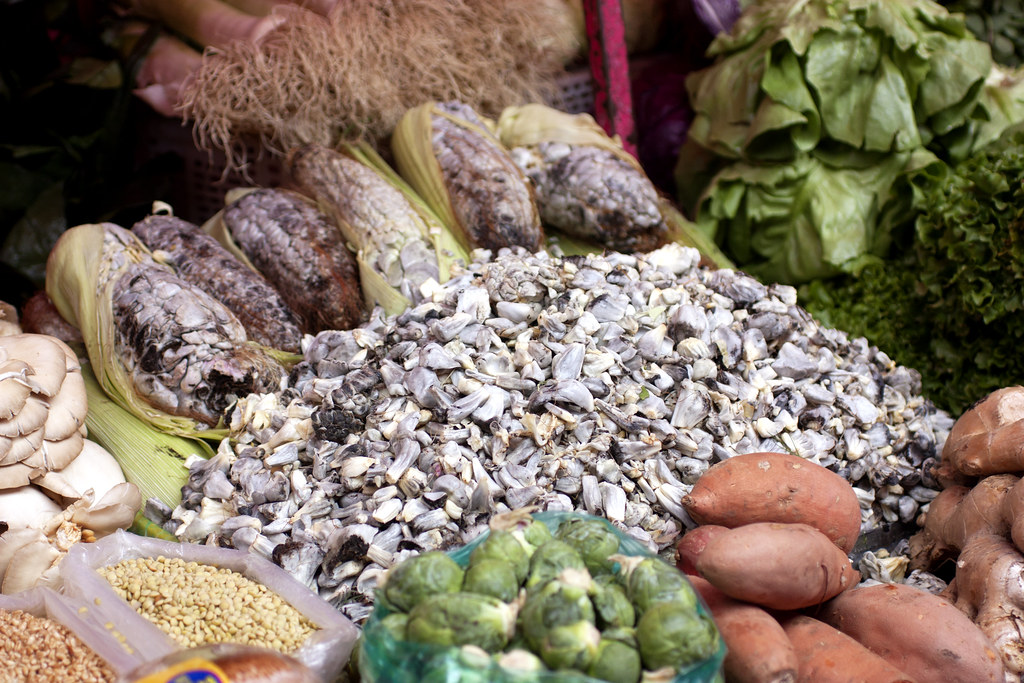
Brock knew what he was talking about. In Mexico, the corn kernels turned by the infection into swollen up, tumor-like galls are known as “huitlacoche” and have long been considered a delicacy. There, they are usually eaten as a filling, in quesadillas and other tortilla-based foods, and also in soups. And they are even sold fresh at markets.
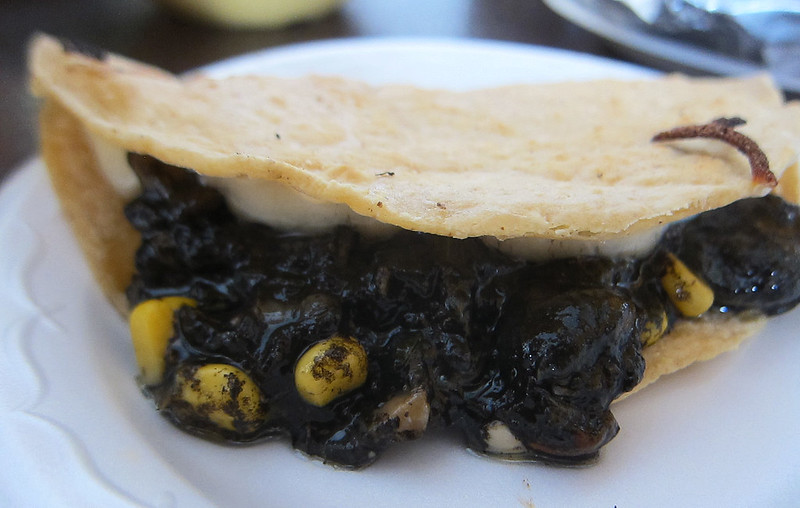
Hence Brock’s delight upon hearing the bad (good) news. Traditionally, families in Mexico would walk miles and miles through cornstalks just to gather a basket of ears infected with this distant relative of mushrooms. And now, he had a whole field’s worth fall into his lap. So, he asked the farmer to harvest the corn smut by hand and bring it to Charleston, where he had tacos prepared with it.
In Mexico’s corn-reliant culture, huitlacoche is held in high esteem nut just for its taste, but also for the extra nutrition it provides. It has, besides lots of fiber and protein, high amounts of the essential amino acid lysine that’s absent in corn. Together, corn and smut make a complete protein meal – and they grow at the same place.
In the US, however, only a dedicated huitlacoche underground have valued the peculiar-looking crop, while corn producers and the government have spent millions trying to eradicate it, banning imports and breeding resistant strains.

And although in the past decades the delicious fungal crop has gained some ground north of Mexico, too, anybody who wants to grow it on purpose has a big problem to face. Huitlacoche is difficult to source fresh, as the fungal infection entirely depends on nature’s whims.
But help is on the way. At Mushroom Mountain farm in Easley, S.C., mycologist Tradd Cotter has a 42,000-square-foot mushroom production facility where he plans to produce a pure liquid inoculum that farmers can buy – just like beer brewers buy yeast. A similar project is underway at Trent University in Peterborough, Canada, where scientist Barry Saville is also working with a liquid inoculum, infecting local varieties of sweet corn. So, a solution for mass production could be available soon.

Nat Bradford, the farmer commissioned by Chef Brock hopes that huitlacoche’s moment has arrived in the US too. “Next year I’m going to make sure Chef Sean Brock has all he wants,” he told NPR. Bradford has some big plans, actually. He wants to import other Mexican corn strains along with White Bolita and, with Tradd Cotter’s help, infect his entire crop next year.
As the old Russian proverb goes, “a lucky man can stumble upon a treasure while an unlucky one can’t even find a mushroom.”
Leave a Reply