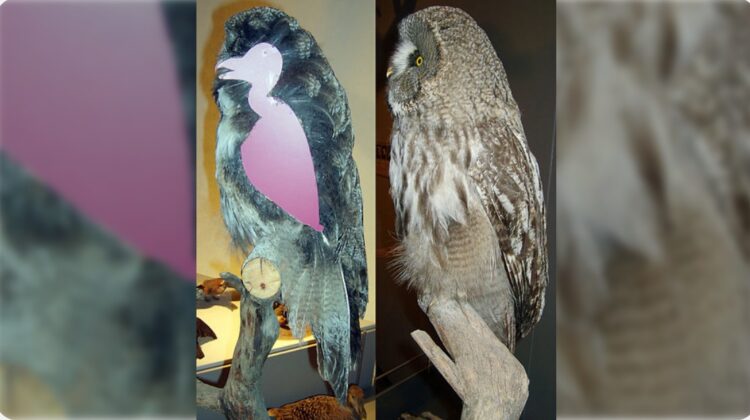
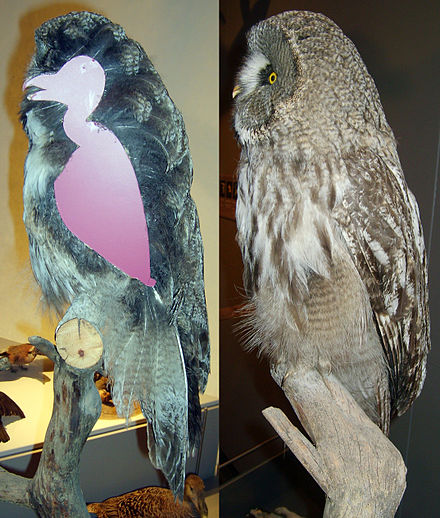
The Great Grey Owl, a majestic raptor shrouded in mystery and allure, is often admired for its impressive size and haunting gaze. However, a fascinating aspect of its biology is often overlooked: its plumage. Recent studies reveal that these birds are composed of approximately 70% feathers by volume, a feature that significantly influences their survival and adaptation in the wild. This article delves into the structural and functional marvels of the Great Grey Owl’s plumage, providing insights that bird enthusiasts and ornithologists alike will find enlightening.
The Structural Marvel of Great Grey Owl Feathers:
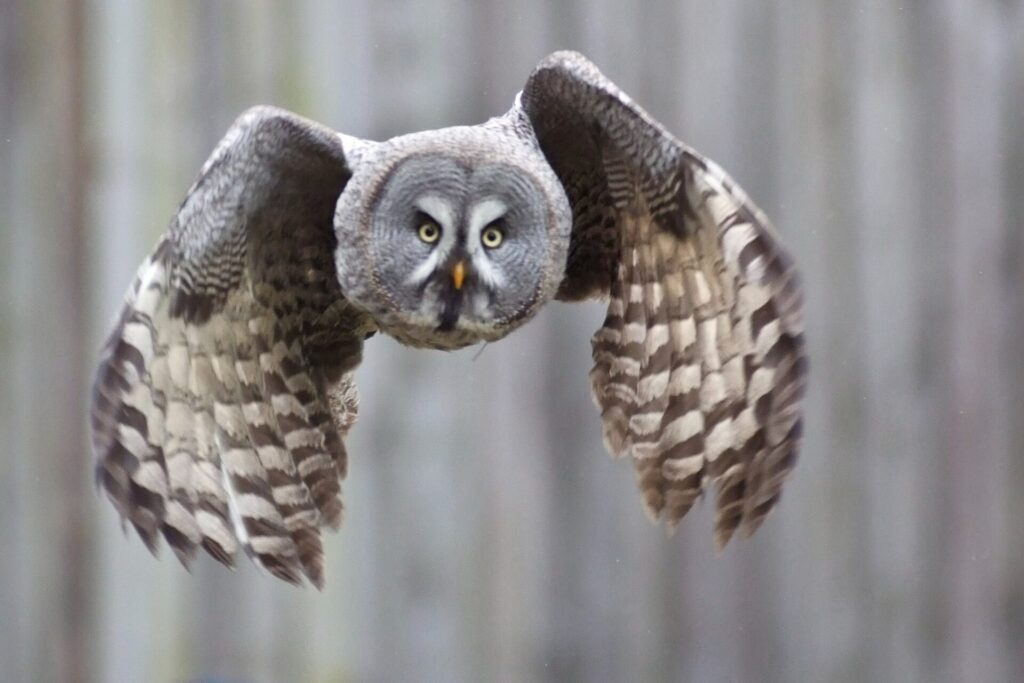
Feathers play a pivotal role in the life of a Great Grey Owl, serving multiple purposes from insulation to camouflage. The dense, fluffy plumage that makes up the majority of the owl’s body volume is not just for show; it’s a critical adaptation for survival. The intricate feather structure allows these owls to thrive in their native habitats, providing excellent insulation against the harsh cold of their boreal forest homes. Additionally, the softness of the feathers aids in silent flight, an essential attribute for a nocturnal predator.
Adaptations for Silent Hunting:
One of the most remarkable features of the Great Grey Owl’s feathers is their contribution to the bird’s stealth hunting capabilities. The feather’s leading edges are serrated, a unique adaptation that reduces noise generated during flight. This silent flight enables the owl to swoop down on prey without a sound, catching unsuspecting rodents and small mammals off-guard. Understanding the biomechanics of this feature offers exciting possibilities for biomimicry in technology, particularly in noise reduction technologies.
Camouflage and Survival:
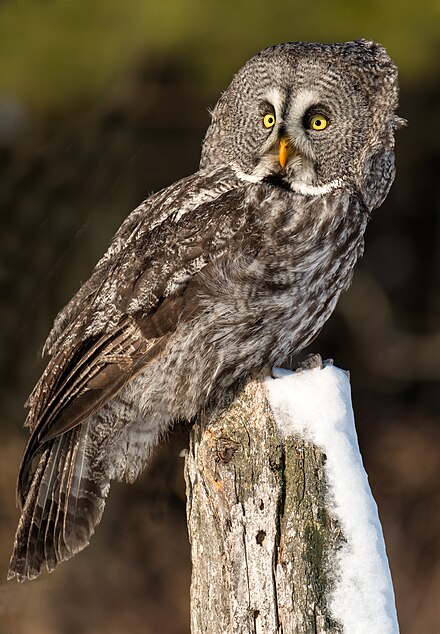
Beyond silence, the Great Grey Owl’s plumage offers perfect camouflage against the wooded landscapes of its environment. The intricate patterns and coloration of the feathers blend seamlessly with the bark and leaves of the forest, providing concealment from both prey and potential predators. This natural disguise plays a crucial role in the owl’s hunting and breeding success, illustrating the intricate link between biology and ecology.
Conservation Implications:
Studying the Great Grey Owl’s plumage also has significant conservation implications. As climate change and habitat destruction pose increasing threats to wildlife, understanding the specific needs and adaptations of key species like the Great Grey Owl is vital for developing effective conservation strategies. Preserving their natural habitats and ensuring a stable climate are essential to maintaining the delicate balance that allows these owls to flourish.
The Great Grey Owl’s plumage is a testament to the complexity and elegance of nature’s designs. By studying these magnificent birds, we gain not only insights into their lives but also broader lessons on the importance of adaptation and conservation. Whether you’re a bird lover, a conservationist, or simply a curious reader, the story of the Great Grey Owl’s feathers is a fascinating chapter in the book of natural wonders.
Leave a Reply