
Few moments in pet ownership are harder than the last one. A conversation at a veterinary clinic, shared online in 2018, has since reached millions of people and changed how many of them think about saying goodbye.
A Question That Went Viral
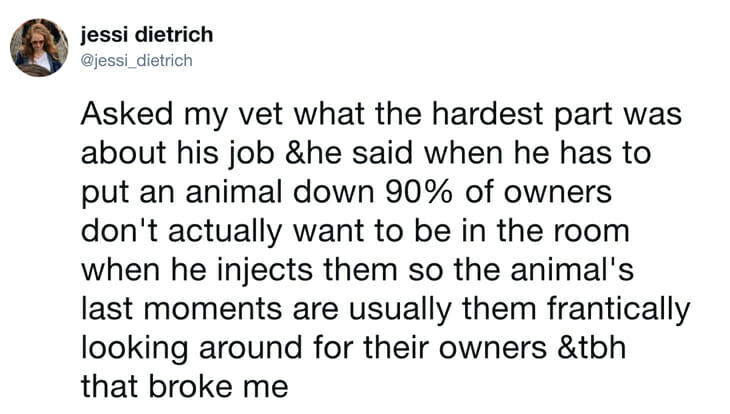
On July 27, 2018, Tennessee Twitter user Jessi Dietrich shared what her vet had told her when she asked about the hardest part of his job. According to her, he said that when he has to euthanize an animal, most owners prefer not to be in the room, and so the animal’s final moments are often spent looking around for them.
She said it broke her heart, and that she planned to be holding her own dog, Rick, when his time came. The tweet drew more than 40,000 retweets and spread well beyond her followers.
A South African Clinic Joined In

The conversation grew when Hillcrest Veterinary Hospital in South Africa shared a message on Facebook written by one of its veterinary team. The message asked owners not to leave their pets alone in a room of strangers at the end. It reminded readers that the owner is the center of a pet’s world, and that pets look for the people they trust when those people leave. It was widely reshared and picked up by news outlets around the world.
Do Most Owners Really Leave?
The “90 percent” figure comes from a single vet’s experience, and other professionals describe a different picture. One vet tech who replied to the original tweet estimated that about 80 percent of owners in her clinic want to be present. Australian vet Dr. Robert Zammit told reporters that in his experience most owners want to stay with their pet. He said some admit they would rather not be there but refuse to walk out, and he doesn’t pressure anyone either way.
What most vets seem to agree on is that being there matters to the animal, even if only for part of the process.
Why Sedation Matters
Vets note that many clinics sedate a pet before the final injection. Dr. Zammit has described sedation as essential to a peaceful passing. He says owners who feel they cannot stay for the end can at least remain with their pet while it is sedated, so the animal is calm and comforted by a familiar voice and touch as it drifts off.
Veterinary teams also say that when an owner is too overcome to stay, staff will comfort the animal in their place.
Planning Ahead: Costs and Options Worth Knowing
Many owners are caught off guard by the practical side of end-of-life care. A little preparation makes a hard day easier:
- Ask about euthanasia costs in advance. Fees vary by clinic, pet size and the services included, so it helps to know before an emergency.
- Consider in-home pet euthanasia. Many areas have mobile vets and in-home euthanasia services, which let a pet pass in a familiar place with the family beside them.
- Compare aftercare and cremation options. Individual cremation, communal cremation and burial all have different pet cremation costs. Ask what each package includes.
- Review your pet insurance. Some pet insurance plans and pet wellness plans include end-of-life benefits or optional add-ons. Check the terms before you need them.
- Think about keepsakes. Paw print kits, memorial urns and pet memorial jewelry are popular ways to remember a companion.
- Line up support for yourself. Pet loss support groups and grief counseling can help families cope with the loss.

The Bottom Line
No one can say for certain what a pet understands at the very end. But many veterinarians believe a familiar face and a gentle voice bring comfort. Whether you stay for the whole procedure or only until your pet is asleep, being there is a final act of love that many owners say they never regret.
Frequently Asked Questions
Do pets really look for their owners at the end?
Several veterinarians say they see animals searching the room for their owners. That is an observation from professionals rather than a scientific measurement, but it has convinced many vets to encourage owners to stay.
Is it wrong to leave the room during euthanasia?
No. Some owners find it too painful, and vets generally don’t pressure them. Many suggest staying at least through the sedation stage if possible.
What is sedation before euthanasia?
It is a medication given beforehand to relax the pet and ease anxiety, so the final injection happens when the animal is calm. Ask your vet whether it will be used.
Can euthanasia be done at home?
In many areas, yes. Mobile and in-home euthanasia services let pets pass in familiar surroundings. Availability and pricing vary by location.
Does pet insurance cover euthanasia or cremation?
It depends on the provider and the plan. Some include or offer end-of-life coverage, so read the policy terms and exclusions.
How can I cope after losing a pet?
Pet loss support groups, grief counselors and memorial keepsakes help many people. Talking with friends or family who understand can help as well.
Sources: Shared.com, Yahoo News Australia, BioBioChile, and Northern Public Radio, all covering Jessi Dietrich’s 2018 viral tweet and the Hillcrest Veterinary Hospital Facebook post about pets’ final moments.
Leave a Reply