• Skip to main content
  • Skip to primary sidebar
  • Skip to footer
  • Home
  • About Us
  • Copyright Report
  • Submit Content
  • Terms
  • Privacy Policy
  • Legal Disclaimer

Hasan Jasim

Hasan Jasim is a place where you may get entertainment, viral videos, trending material, and breaking news. For a social generation, we are the largest community on the planet.

Scientists Revive 32,000-Year-Old Plant Right Out of the Pleistocene

by Hasan Jasim Editorial Team 2 Comments

ShareTweet

In a remarkable feat of scientific ingenuity, researchers have brought back to life a plant that has been frozen in time for over 32,000 years. This astonishing achievement, which surpasses previous records, has opened new doors for understanding the resilience of life and the potential for preserving biodiversity.

The Discovery
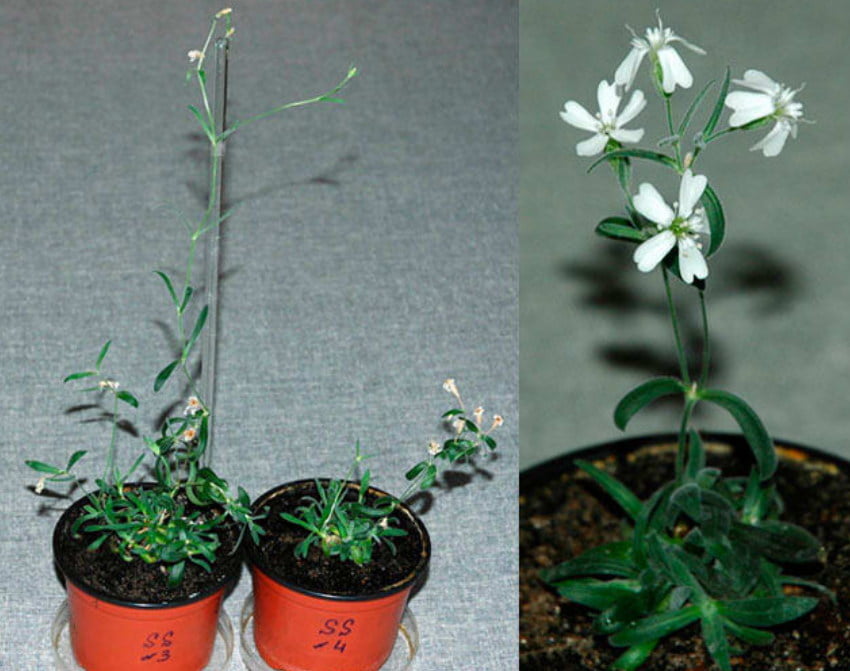
Fruiting (at left) and flowering plants of Silene stenophylla regenerated from tissue of fossil fruits (S. Yashina et al)

The plant in question, Silene stenophylla, was discovered in the permafrost of Siberia. Its seeds, dating back to the Pleistocene epoch, were found preserved within the frozen ground. This remarkable preservation was likely due to the extreme cold of the permafrost, which effectively halted biological processes.

The Resurrection

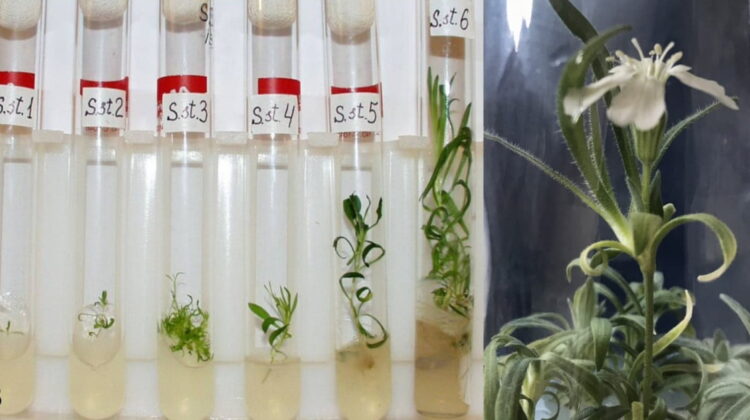
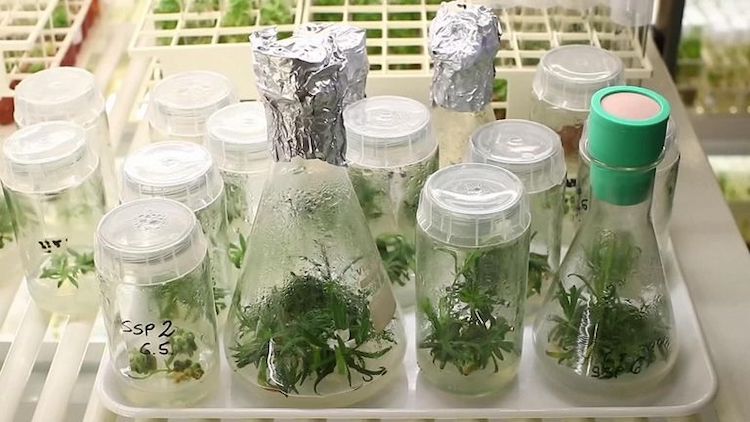
Clonal micropropagation of Silene stenophylla regenerated from placenta tissue of immature 30,000-y-old fruits buried in permafrost deposits. (А) Initial shoot initiated from placental tissue in vitro. (В) Stages of clonal micropropagation from primary shoots to rooted plants. (Scale bars, 20 mm.) (S. Yashina et al)

Scientists carefully extracted the ancient seeds and cultivated them in a controlled laboratory environment. Despite their incredible age, the seeds demonstrated remarkable viability. After several years of nurturing, the plants successfully germinated and grew to maturity.
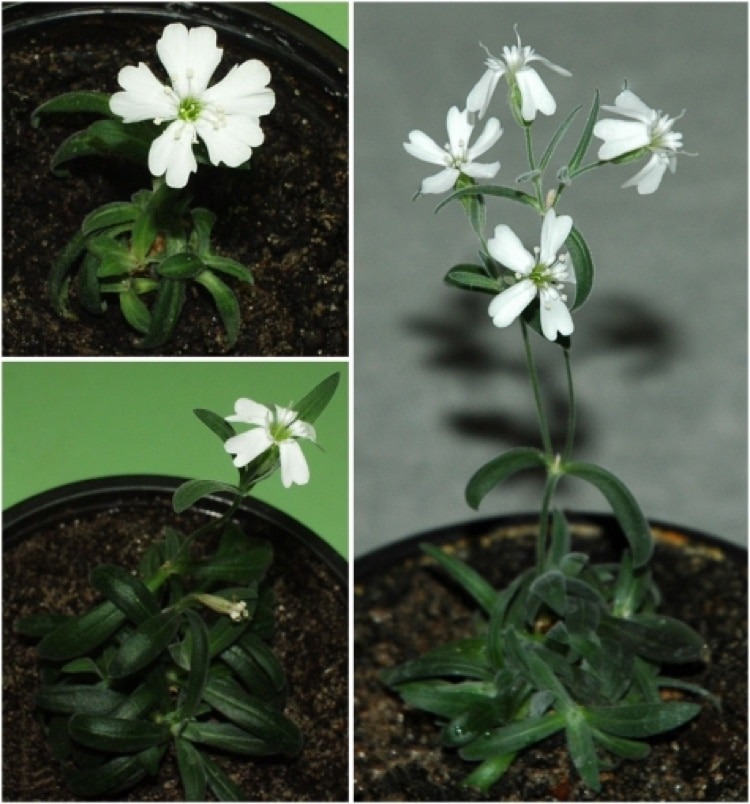
Photo: Yashina, Gubin, et al

Implications and Future Research

This groundbreaking discovery has profound implications for our understanding of plant biology and the potential for preserving ancient genetic material. It raises the tantalizing possibility of resurrecting other extinct species and offers insights into the long-term viability of life on Earth.
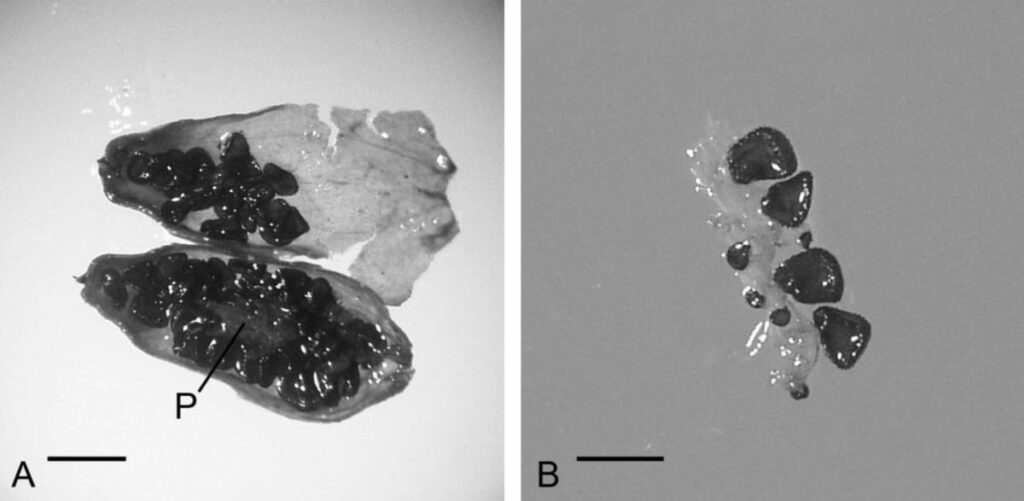
Immature fruit of Silene stenophylla buried in permafrost more than 30,000 years ago (S. Yashina et al)

Future research may focus on exploring the genetic mechanisms that allowed the plant to survive for such an extended period. Additionally, scientists may investigate whether similar techniques can be applied to other ancient organisms, such as bacteria or viruses.

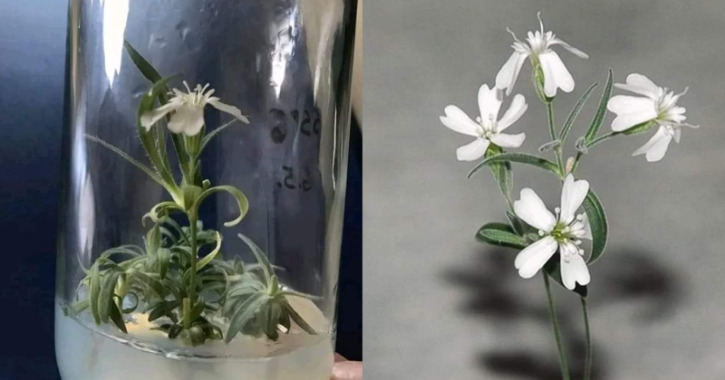
The revived plant at full blossom stage. (S. Yashina et al)

The resurrection of the 32,000-year-old plant is a testament to the resilience of life and the power of scientific discovery. This extraordinary achievement not only expands our knowledge of the natural world but also offers hope for the preservation of biodiversity in the face of climate change and other environmental challenges.

Filed Under: Trends Worldwide Tagged With: ancient plant, CLIMATE CHANGE, genetic preservation, permafrost, plant resurrection, Pleistocene epoch, scientific breakthrough, Silene stenophylla

Reader Interactions

Comments

  1. lucienne desgroseillers says

    February 23, 2023 at 6:58 pm

    love it.. its wonderful to find treasures buried in perma,,

    Reply
  2. hazel Wilkinson says

    February 25, 2023 at 3:52 am

    Wow

    Reply

Leave a Reply Cancel reply

Your email address will not be published. Required fields are marked *

Primary Sidebar

More to See

The Spectral Outpourings of a Beluga Whale: Noc’s Attempt to Bridge the Linguistic Divide Between Animals and Humans

By Hasan Jasim Editorial Team

There’s An Island Completely Untouched By Modern Society Where Tribe Will Kill Anyone Who Comes Near

By Hasan Jasim Editorial Team

Japan To Start Hunting Fin Whales, The Second-Largest Animal On Earth

By Hasan Jasim Editorial Team

The Carnian Pluvial Event: When It Rained For 2 Million Years On Earth

By Hasan Jasim Editorial Team

Compassionate Breakthrough: Trailblazers in Hungary Use Drones to Save Animals at Risk During Harvest

By Hasan Jasim Editorial Team

Man Plants a Tree on Barren Island Every Day for 40 Years; Now It’s a Giant Forest

By Hasan Jasim Editorial Team

Inky’s Impossible Escape from a New Zealand Aquarium by Octopus Houdini

By Hasan Jasim Editorial Team

Footer

ABOUT HASANJASIM.ONLINE

Hasanjasim.online is a digital platform dedicated to publishing well-researched articles about the animal kingdom, nature, and the environment. Our editorial team works to source stories from credible outlets, scientific research, and verified reports, aiming to inform as much as we entertain. From wildlife conservation and animal behavior to natural wonders and environmental science, we cover the topics that help readers better understand and appreciate the natural world. Whether you're a lifelong nature lover or simply curious about the planet we share, Hasanjasim.online aims to be a trustworthy destination for stories worth reading — and worth citing.

Recent

  • The Viral Trend of Dogs Getting Their Own Maternity Photoshoots
  • The Seahorse Photo That Captured a Silent Farewell — And Won Photography’s Top Ocean Prize
  • Blood-Soaked California Poachers Arrested After Cops Make Horrifying Discovery
  • The Moment an Emu Wrestled a Man to the Ground — Then Turned the Tables
  • Why didn’t anyone tell me there’s an animal that smells exactly like hot, buttered popcorn?
  • I Never Liked the Caribbean—But This Island With Waterfalls, Hot Springs, and Rainforests Won Me Over
  • He Was a Magnificent 17-Point Buck — Now His Life Is Over

Search