• Skip to main content
  • Skip to primary sidebar
  • Skip to footer
  • Home
  • About Us
  • Copyright Report
  • Submit Content
  • Terms
  • Privacy Policy
  • Legal Disclaimer

Hasan Jasim

Hasan Jasim is a place where you may get entertainment, viral videos, trending material, and breaking news. For a social generation, we are the largest community on the planet.

Ivory Poaching in Mozambique Has Caused Female Elephants To Rapidly Evolve Into Tuskless Creatures

by Hasan Jasim Editorial Team Leave a Comment

ShareTweet

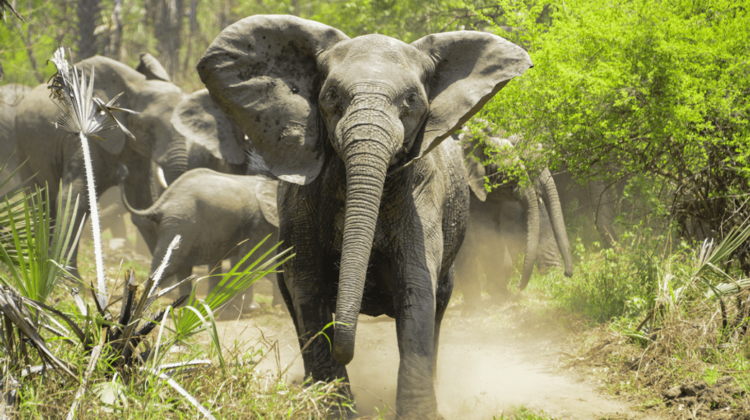
It’s no secret that human activity has a significant impact on the ecosystem, but the manner in which humans influence the evolution of creatures in our immediate vicinity can be more subtle. Poaching proved to be a significant enough evolutionary pressure for a population of African elephants (both species are now listed as endangered) in Mozambique, according to new research, causing natural selection to favor tusklessness over animals with the adapted teeth that are so highly sought after in the illegal wildlife trade.

The study, which was published in the journal Science, focused on the impact of ivory poaching on a group of African savanna elephants (Loxodonta africana) in Mozambique’s Gorongosa National Park during the Mozambican Civil War, which lasted 15 years from 1977 to 1992. Because warfare has traditionally been linked to an increase in poaching in countries across Africa, it was thought to be a period of particular relevance in examining the potential impacts of wildlife exploitation on evolution.

To examine how the war impacted the park’s elephant population, the researchers used field and survey data, as well as archival film footage and current sighting data. The struggle took a huge toll on the Gorongosa National Park’s large herbivores in general, with populations dropping by 90% during the 15-year conflict. The number of African elephants began to rapidly decline as soldiers on both sides used the chance to hunt for ivory, and researchers noticed a threefold increase in tuskless female elephants, from 18.5 percent to 50.9 percent.

The researchers dug deeper to figure out why this would be, and discovered survey data indicating that a specific gene plays a key role in tusk inheritance patterns. AMELX and MEP1a, both of which play a role in mammalian tooth formation, were two possible suspects.

For two reasons, AMELX is a very intriguing candidate. To begin with, it’s an X-dominant, male-lethal characteristic, which indicates that male embryos are unlikely to survive pregnancy since they lack a second X chromosome to oppose the AMELX loci, unlike females. Second, it’s known to slow the growth of maxillary incisors (the tooth that most closely resembles elephant tusks) in humans, possibly offering a mechanism by which genetic alterations in the population resulted in an increase in tuskless females.

The authors of the study wrote, “Understanding the evolutionary ramifications of wildlife exploitation is becoming increasingly crucial as harvesting grows more effective.” “This study provides evidence for quick, poaching-mediated selection in a keystone species for the loss of a notable morphological characteristic.”

Filed Under: Trends Worldwide Tagged With: caused, creatures, Elephants, evolve, female?, into, ivory, mozambique, poaching, rapidly, trends, tuskless, worldwide

Reader Interactions

Leave a Reply Cancel reply

Your email address will not be published. Required fields are marked *

Primary Sidebar

More to See

Secrets of the Sea: The Greater Argonaut and Its Ingenious Shell

By Hasan Jasim Editorial Team

Partially blind, emaciated dog found abandoned for the second time — soon gets a happy ending

By Hasan Jasim Editorial Team

Man Builds Underground Survival Bunker That Can Withstand The End Of The World

By Hasan Jasim Editorial Team

Woman Makes A Tiny Cheeseboard For The Mouse That Kept Raiding Her Kitchen

By Hasan Jasim Editorial Team

Adorable Photos of Tiny Harvest Mice Joyfully Playing in Nature

By Hasan Jasim Editorial Team

Atacama: The Blooming Desert’s Unbelievable Transformation

By Hasan Jasim Editorial Team

The Strange Foam-Like Structure on Your Fence: A Hidden Nursery of Nature’s Silent Hunter

By Hasan Jasim Editorial Team

Footer

ABOUT HASANJASIM.ONLINE

Hasanjasim.online is a digital platform dedicated to publishing well-researched articles about the animal kingdom, nature, and the environment. Our editorial team works to source stories from credible outlets, scientific research, and verified reports, aiming to inform as much as we entertain. From wildlife conservation and animal behavior to natural wonders and environmental science, we cover the topics that help readers better understand and appreciate the natural world. Whether you're a lifelong nature lover or simply curious about the planet we share, Hasanjasim.online aims to be a trustworthy destination for stories worth reading — and worth citing.

Recent

  • Euphorbia Hirta (“Asthma-Plant”): What Traditional Use and Real Research Actually Show
  • A Mystery Animal Has Been Randomly Attacking People in New Hampshire — Here’s What We Know
  • A Woman Was Filmed Sharing Her Ice Cream With Her Dog — Here’s What Vets Actually Say About It
  • Dolphin Calf Incident in Ceuta Sparks Outrage After Disturbing Beach Footage Emerges
  • Lactuca Serriola Root: Traditional Uses of Prickly Lettuce (Wild Lettuce) Root
  • The Puppy a Firefighter Couldn’t Leave Behind — and the Story Didn’t End There
  • A Mother Dog Dove Into Floodwater Again and Again — Until All 7 of Her Puppies Were Safe

Search