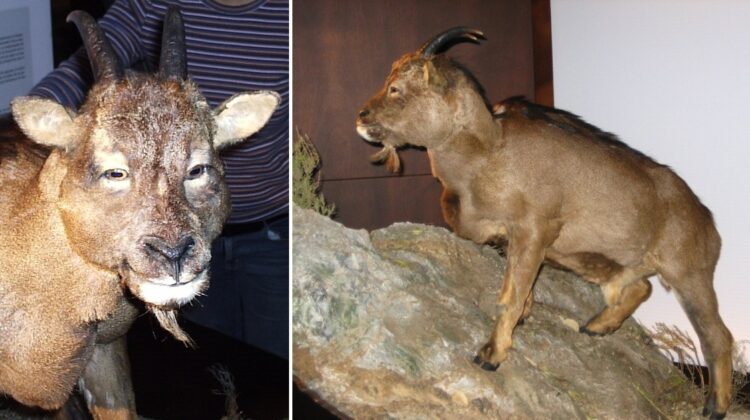
The Balearic cave goat, scientifically known as Myotragus balearicus, was one of the strangest mammals ever to exist. This remarkable species lived on the Balearic Islands and vanished around 4,000 BCE, leaving behind fossil evidence that continues to astonish scientists. What sets this animal apart is that it combined traits never before seen together in a mammal.
A Goat With Predator-Like Vision
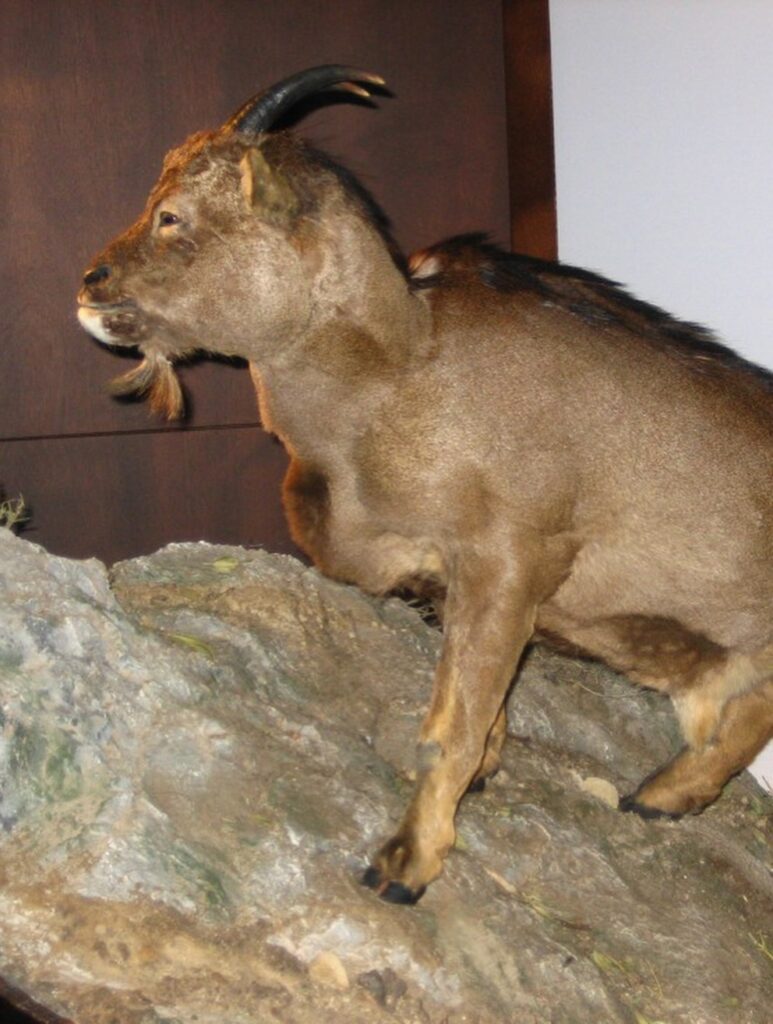
Unlike modern goats, which have side-facing eyes that allow wide peripheral vision to detect predators, Myotragus balearicus had forward-facing eyes. This gave it depth perception similar to that of predators. To this day, it remains the only known goat species ever discovered with this eye placement, making it a unique anomaly among hoofed animals.
Scientists believe this unusual trait developed because the goat lived in long-term isolation. For thousands of years, the Balearic Islands had no natural predators, removing the evolutionary pressure to maintain wide-angle vision. Over generations, the goat’s anatomy gradually shifted, allowing its eyes to move forward without compromising survival.
The Only Known Cold-Blooded Mammal
Even more astonishing, Myotragus balearicus is considered the only known cold-blooded mammal ever discovered. While it nursed its young like other mammals, evidence suggests it regulated its body temperature using external heat sources—much like reptiles such as crocodiles or lizards.
Fossilized bones revealed growth patterns similar to those found in cold-blooded animals. These structures indicate that the goat could slow down or even pause its growth depending on environmental conditions. While modern goats reach maturity in under a year, Myotragus took an incredible 12 years to fully mature, pointing to an extremely slow, reptile-like metabolism.
Life on an Isolated Island
Living on the Balearic Islands for more than 5 million years, Myotragus balearicus adapted to an environment with no predators but limited food resources. Over time, it evolved into a smaller animal—about the size of a large dog—weighing roughly 50 pounds (23 kg).
To conserve energy, it developed:
- A small brain and reduced eye size
- Extremely slow movement
- Sun-basking behavior to regulate body temperature

These adaptations allowed it to survive on minimal energy, a strategy unheard of in mammals.
Diet and Survival Strategy
As the only major herbivore on the islands, Myotragus balearicus fed on grasses, shrubs, and tree vegetation. Its teeth were specialized for grinding tough plant material and grew continuously throughout its life. A complex digestive system enabled it to extract nutrients from low-quality food sources, further supporting survival in a resource-poor environment.
Extinction After Human Arrival
Despite surviving for millions of years, Myotragus balearicus could not withstand the arrival of humans around 3,000 BC. Humans hunted the animal for food, clothing, and tools, and introduced new species such as dogs, pigs, and sheep, which competed for food and habitat.
Within just a few centuries, the Balearic cave goat became extinct.
A Powerful Evolutionary Lesson

Myotragus balearicus stands as one of the most extraordinary examples of mammalian evolution and adaptation ever recorded. It shows how isolation can drive nature to develop solutions that seem impossible—and how fragile those solutions become when disrupted by human interference.
This extinct goat is also a sobering reminder of the vast biodiversity that once existed on Earth and the responsibility humans carry to protect what remains.
Rare evolutionary cases like Myotragus balearicus play a crucial role in modern research on climate adaptation, metabolism, and biodiversity loss. Studies of extinct species inform conservation strategies, genetic research, and environmental policy, helping scientists predict how animals respond to isolation and ecological change. As global interest grows in evolutionary biology and climate resilience, such discoveries continue to influence education, research funding, and wildlife preservation efforts.
Leave a Reply