• Skip to main content
  • Skip to primary sidebar
  • Skip to footer
  • Home
  • About Us
  • Copyright Report
  • Submit Content
  • Terms
  • Privacy Policy
  • Legal Disclaimer

Hasan Jasim

Hasan Jasim is a place where you may get entertainment, viral videos, trending material, and breaking news. For a social generation, we are the largest community on the planet.

The ‘High-Heeled’ Dinosaur: New Research Sheds Light on How Rhoetosaurus Brownei Supported Its Weight

by Stephen King Leave a Comment

ShareTweet

A new study conducted by researchers at the University of Queensland has revealed that the Rhoetosaurus brownei, a 24-tonne dinosaur, may have walked on its tiptoes, similar to how humans wear high heels. The research, which analyzed fossils of Australia’s only named Jurassic sauropod, aimed to better understand how such an enormous creature could support its own body weight.

Andréas Jannel, a Ph.D. candidate at the University of Queensland and part of the research team, explained that by looking at the bones of the foot, it was clear that the Rhoetosaurus walked with an elevated heel, which raised the question of how its foot was able to support its immense mass, which could reach up to 40 tonnes.
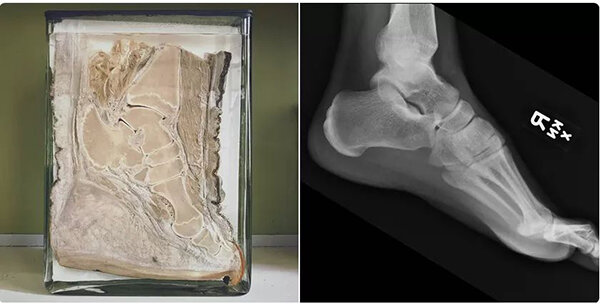
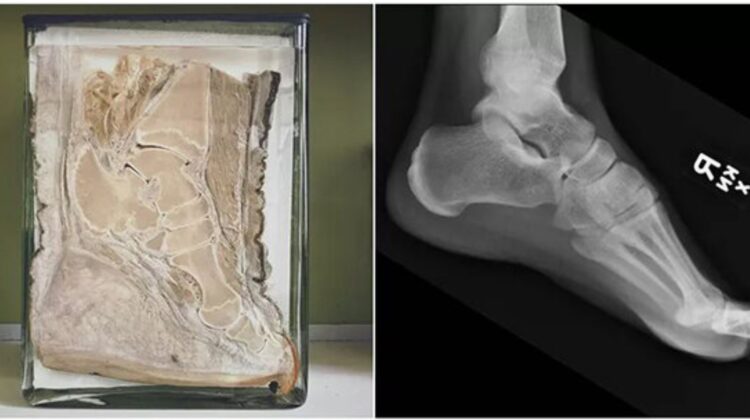
A cross-section of an elephant’s foot alongside a human foot x-ray, revealing a striking skeletal likeness. Credit: University of Queensland

The research revealed that the dinosaur’s heel was cushioned by a fleshy pad, which is similar to what is found in an elephant’s foot. However, the Rhoetosaurus was at least five times heavier than an elephant, so the forces involved were much greater. The presence of the cushioning pad that supports the raised heel appears to be a key innovation during the evolution of sauropods, and probably appeared in early members of the group some time during the Early to Middle Jurassic Periods.
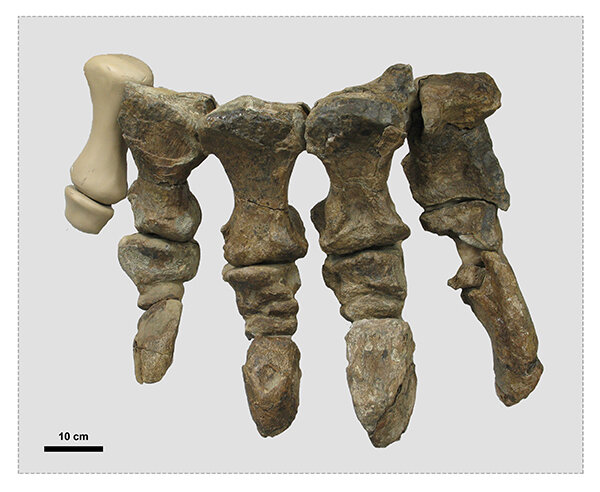
Right hind foot of the fossil specimen of Rhoetosaurus brownei (QM F1659), in dorsal view. The hind foot preserves the first four digits in completion, but is missing the fifth one. Credit: Jay P. Nair & Andréas Jannel.

The team arrived at this conclusion by creating a replica of the fossil and then physically manipulating it in an attempt to understand the movement between bones. They also used 3-D modeling techniques to assess the different foot postures that would have allowed the Rhoetosaurus to support its weight. Additionally, they looked at a range of sauropod footprints from around the world, many of which indicated the presence of a fleshy heel pad behind the toes, supporting what the bones were telling them.

The fossils of the R. brownei specimen were found near Roma in southwest Queensland and are dated to 160-170 million years ago when Australia was part of the supercontinent of Gondwana. Jannel is now using computer techniques to simulate how different foot postures and the presence of a soft tissue pad affect stress distributions within the bones.
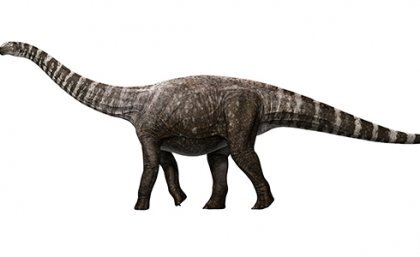
An artist’s impression of Rhoetosaurus brownei, (c) Queensland Museum 2014. Credit: Konstantinov, Atuchin & Hocknull. Credit: University of Queensland

Overall, this study provides new insights into the evolution of sauropod dinosaurs and how their feet were able to support their enormous body sizes. As Jannel noted, there’s much more to know, but this research shows that becoming ‘high-heeled’ may have been an important step in the evolution of these giant creatures.

Filed Under: Trends Worldwide Tagged With: ‘high-heeled’, brownei, dinosaur, light, research, rhoetosaurus, sheds, supported, trends, weight, worldwide

Reader Interactions

Leave a Reply Cancel reply

Your email address will not be published. Required fields are marked *

Primary Sidebar

More to See

The Story Behind an Incredible Shot of an Owl in Flight

By Stephen King

11 Signs Your Cat May Be Nearing the End of Its Life

By Stephen King

Alaska bear cub and wolf pup forget they’re rivals, and turn a standoff into play

By Stephen King

An Incredible Before and After Excavation of an Ancient Greek Stadium

By Stephen King

Real Seashells Are Transformed Into Trinket Dishes That Look Like Sunken Treasure

By Stephen King

With a new prosthetic beak, a parrot with a damaged beak gets a second chance at life

By Stephen King

Mama Stray Dog Living in a Roadside Ditch With Her Only Baby Never Expected What Came Next

By Stephen King

Footer

About hasanjasim.online

Hasanjasim.online is a digital platform dedicated to publishing diverse articles and content, with a strong focus on topics related to the animal kingdom, nature, and the environment. The website offers engaging stories and visual content aimed at raising awareness about animal welfare and showcasing the wonders of the natural world, making it a great destination for nature lovers and curious readers alike.

Recent

  • Former Police Officer Accused of Poisoning Ex-Girlfriend’s Dog Faces Animal Cruelty Charge
  • Shameless Squirrel Keeps Making Himself At Home On Man’s Windowsill
  • Move over Jimothy: Dog with same short spine syndrome as raccoon melts hearts on internet
  • Homeless Dog Owner Sleeps Outside Veterinary Clinic to Save His Injured Companion
  • Six Beluga Whales Relocated From Closed Canadian Marine Park as International Rescue Effort Begins
  • The largest great white shark ever recorded in the Atlantic has resurfaced and experts think he’s heading for popular beach destination
  • Evil cat killer, 25, who microwaved kittens for fun is now living in stunning $1m mansion after being freed just one day into four year jail sentence

Search