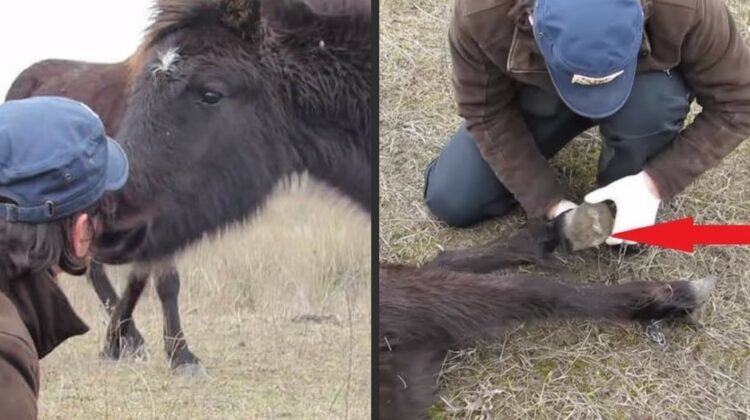
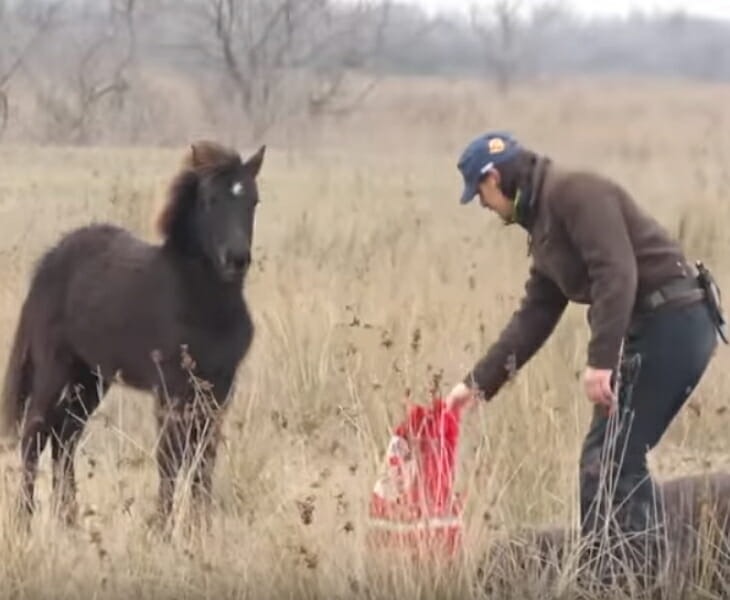
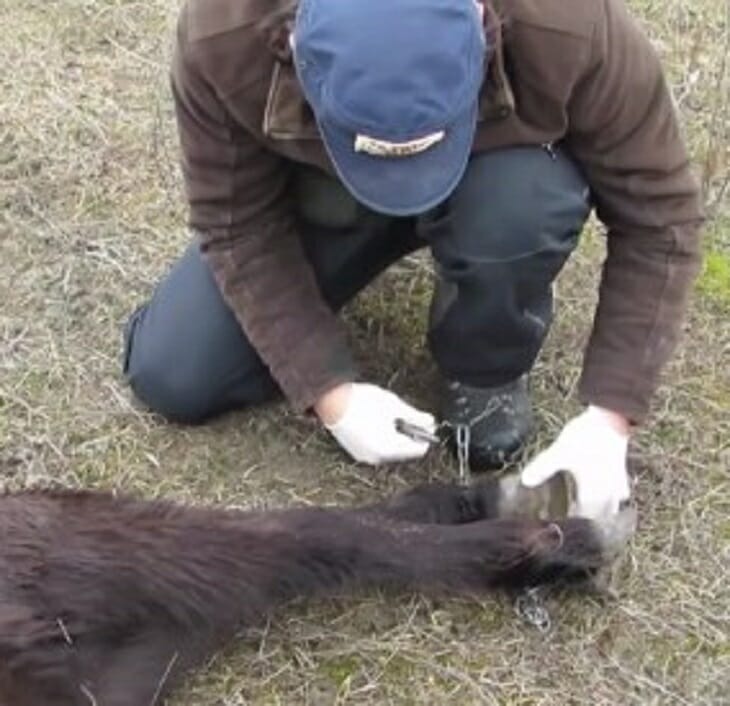
In parts of Romania’s Danube Delta, wild horses are sometimes found with their front or hind legs bound in chains — a rough, informal method some locals use to stop them from wandering too far. When a veterinarian freed one from her chains, the horse’s response, captured on video, went viral for reasons that had nothing to do with the injury itself.
The Moment That Went Viral
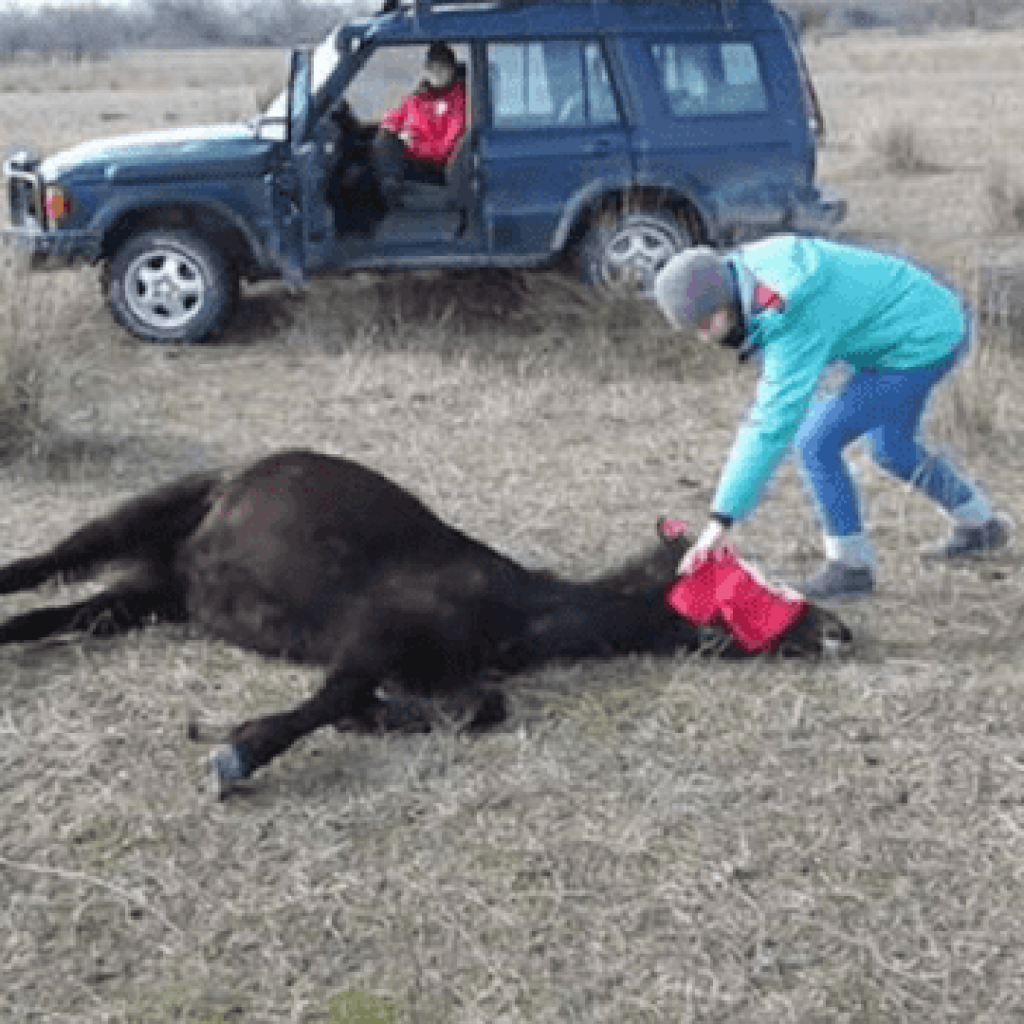
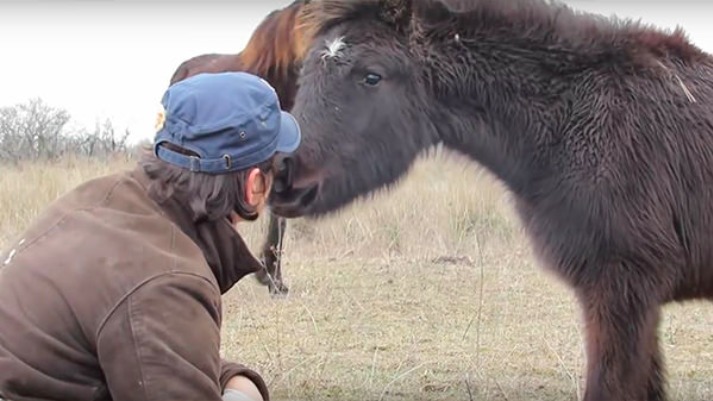
Footage released by Four Paws International shows veterinarian Dr. Ovidiu Rosu working to calm a nervous mare while carefully removing chains that had left visible marks on her legs. As he worked, another horse from the herd stepped forward and gently touched its nose to him — a gesture widely read online as a kind of thank-you, though what’s certain is that it was a striking, calm moment between a wild animal and the person helping it.
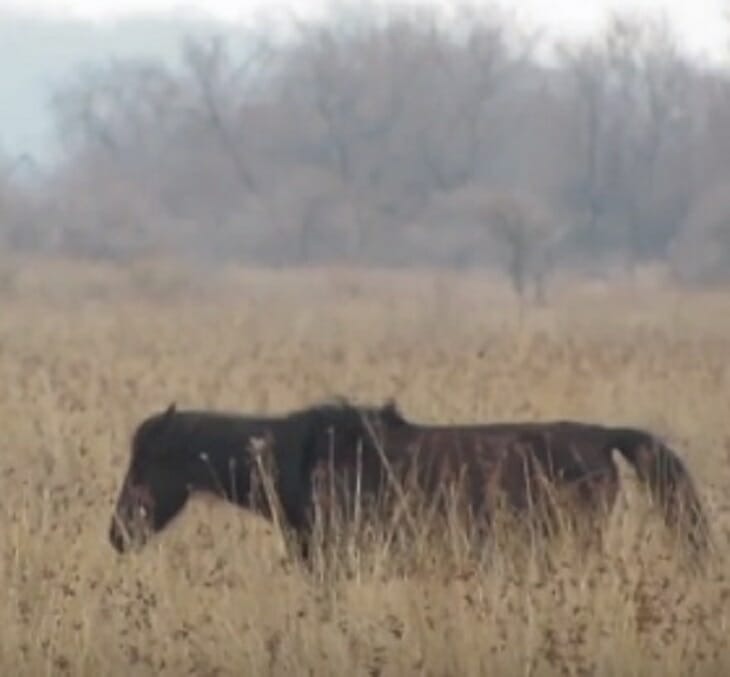
Why These Horses Exist in the First Place
The horses of the Danube Delta trace back roughly 300 years, according to Four Paws’ own historical account, when Tatar cavalry passed through the region and left horses behind after their campaigns. Centuries later, after Romania’s agricultural collectives collapsed following the fall of communism in 1989, many former working horses were released and left to fend for themselves in the delta. Their population grew rapidly through the 1990s and 2000s, eventually reaching an estimated 1,000 to 4,000 horses depending on the count and year.
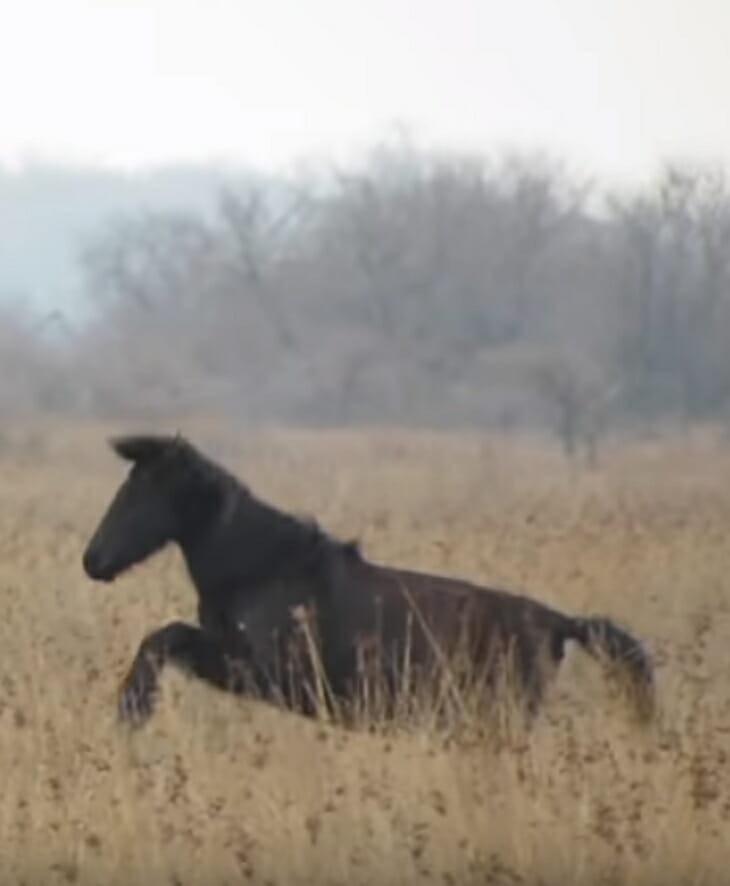
A Population That Outgrew Its Space
That growth created a real ecological problem. Many horses moved into the strictly protected Letea Forest — a roughly 2,800-hectare UNESCO Biosphere Reserve and Romania’s oldest nature reserve — where their grazing began damaging young tree growth and disrupting the forest’s regeneration. By 2011, Romanian authorities were seriously considering culling the population to protect the reserve.
How Four Paws Changed the Outcome
Rather than allowing a cull, Four Paws International proposed an alternative: a long-term immuno-contraception program using a vaccine to gradually reduce births rather than killing horses outright. Veterinarian Dr. Ovidiu Rosu — the same vet seen freeing the mare from her chains — wrote his doctoral thesis on the vaccine’s effectiveness and helped lead the program from its early stages in 2012.
The process involves tranquilizing mares, giving them a full veterinary check (including blood samples and a dental exam to estimate age), tagging them for future identification, and administering the contraceptive vaccine. The program, run in partnership with Bucharest’s Faculty of Veterinary Medicine and Romanian veterinary authorities, was reported to have delivered over 100 vaccinations and dozens of booster shots within its early seasons alone — and, according to a 2017 aerial census, helped bring the Letea Forest population down to fewer than 500 horses, a level considered more sustainable for the reserve.
What’s Happening Now
As of 2025, Four Paws has formally handed its equine welfare programs in Romania — including the Danube Delta horse project — over to local Romanian authorities, following more than a decade of running the initiative directly. It’s a notable milestone: a conservation program designed, from the outset, to eventually become locally sustained rather than permanently dependent on an international NGO.
Frequently Asked Questions
Why do some Danube Delta horses end up in chains? It’s an informal, unofficial practice used by some in the area to restrict a horse’s movement rather than an authorized management method — Four Paws’ veterinary teams routinely encounter and remove these chains during their fieldwork.
Is population control still necessary for these horses today? The long-running contraception program significantly reduced population growth in the protected Letea Forest area, and management responsibility has now shifted to Romanian authorities as of 2025 to continue the work locally.
How can people support wild horse welfare efforts like this one? Four Paws International and similar animal welfare organizations rely on donations, veterinary partnerships, and public awareness to fund field programs like vaccination campaigns, medical care, and habitat monitoring.
Sources: Four Paws International, American Wild Horse Conservation, and Romania Insider, cited above.
Cheap, barbaric practice!! Put up a fence if you don’t want them to roam!!