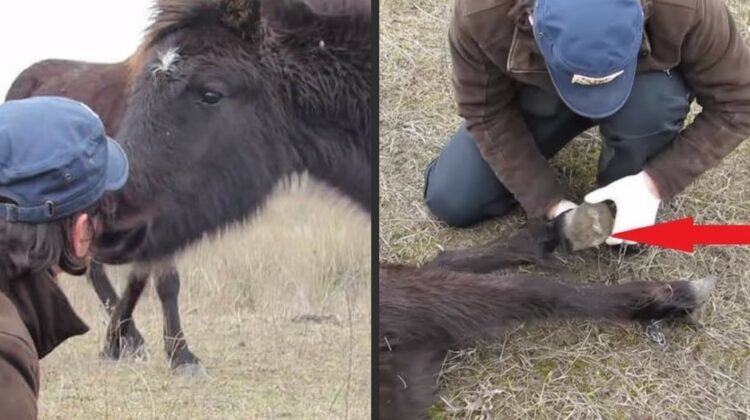
Being unable to move freely is difficult for any animal, but for a wild horse, it can be life-threatening. One veterinarian in Romania’s Danube Delta came across exactly that situation — and what happened after he stepped in to help quickly went viral.
A Common, Painful Practice
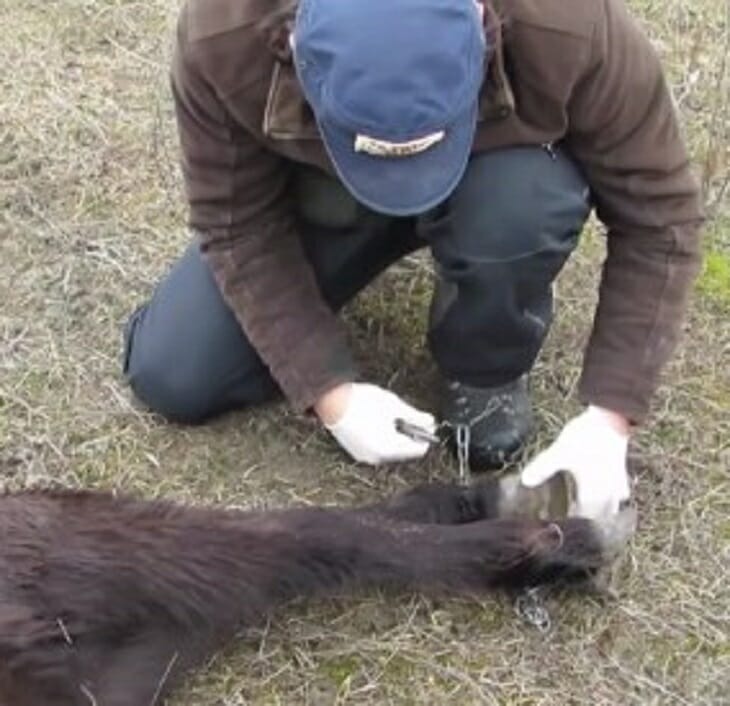
In parts of Romania, owners of semi-feral and working horses sometimes use makeshift hobbles made of unpadded chains around a horse’s front or hind legs to keep the animal from wandering off. Unlike padded hobbles used elsewhere, these metal chains can dig directly into a horse’s skin, especially if fastened too tightly, causing painful wounds and severely limiting the animal’s ability to move.
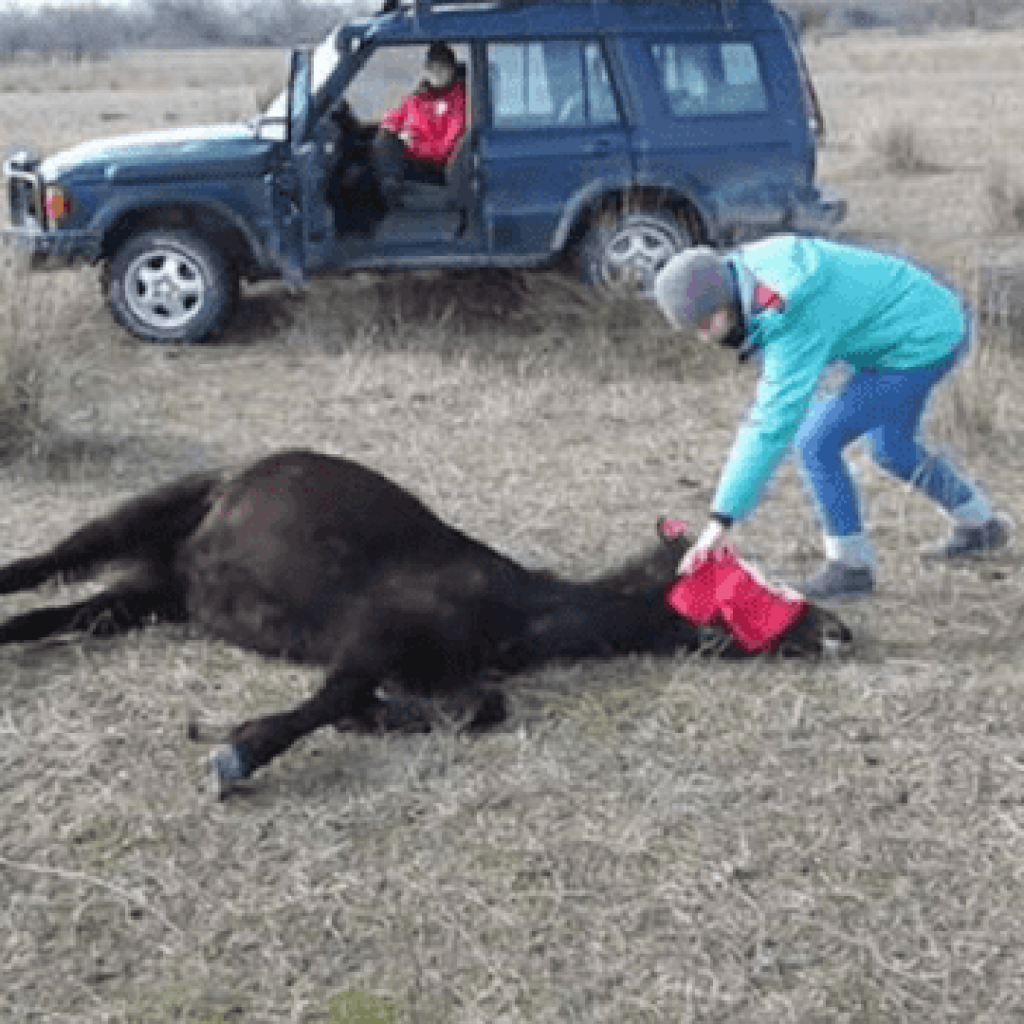
Veterinarian Ovidiu Rosu, who works with the international animal welfare organization FOUR PAWS on its wild horse program in the Danube Delta, came across one such horse — its legs bound so tightly that it could barely move at all, with the chains already cutting into its skin.
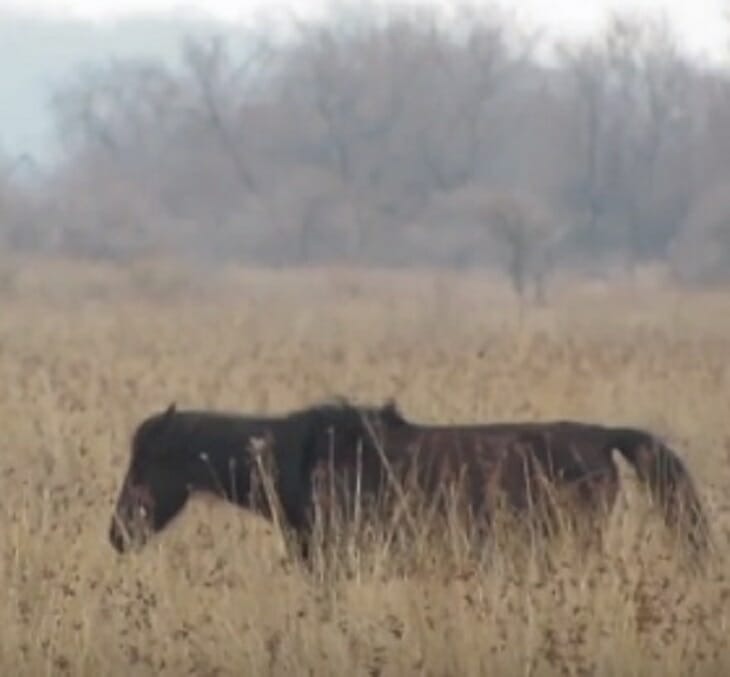
Freeing The Horse
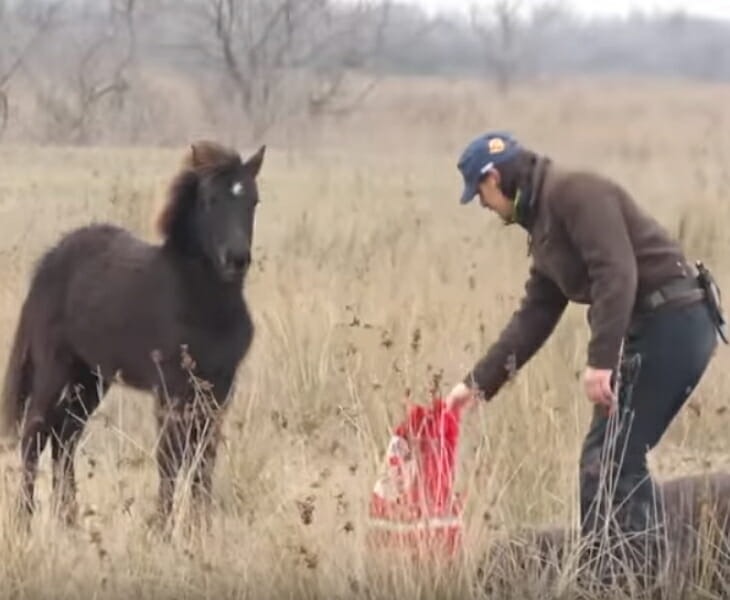
Rosu approached carefully, working to calm the animal before placing a cloth gently over its eyes to help keep it still. He then used pliers to begin cutting through the chains, working patiently as the frightened, injured horse remained on the ground beside him.
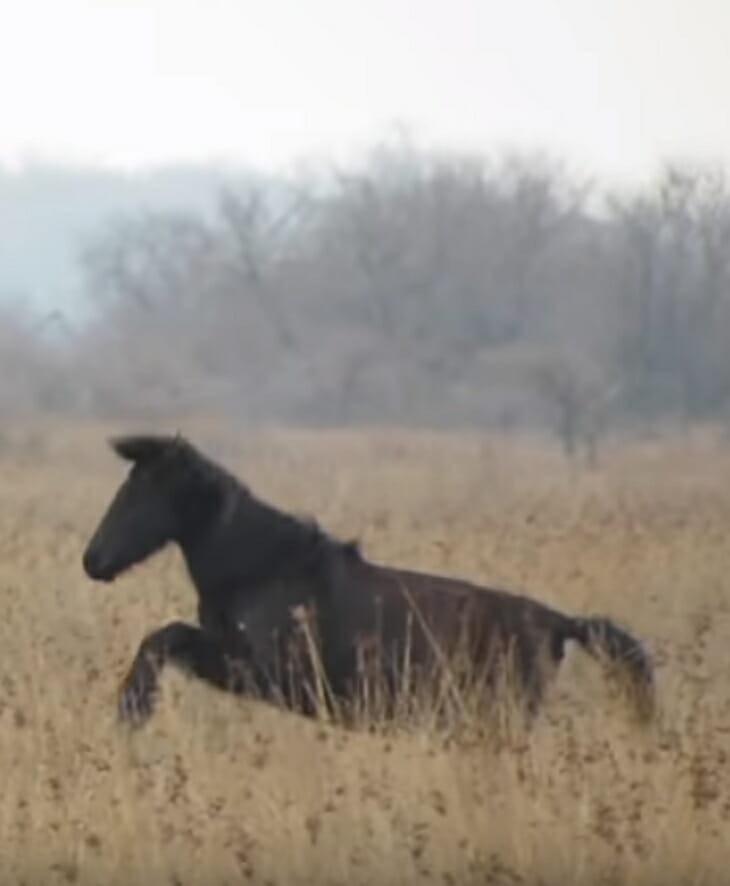
After the chains were removed, Rosu helped the horse back onto its feet. It took a moment for the animal to process what had just happened, seemingly unsure at first that it was actually free to move again after being immobilized for so long.
A Moment Of Apparent Gratitude
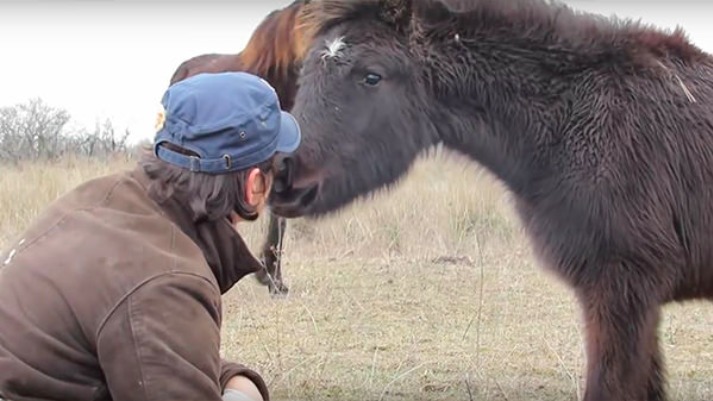
What happened next is what turned the footage into a viral moment. Rather than immediately bolting off, the horse leaned in toward Rosu, gently touching its nose to his in a gesture many viewers interpreted as a clear sign of gratitude — a striking moment between a wild animal and the person who had just freed it from real pain.
Part Of A Larger Effort
Rosu’s rescue is one example of the broader work FOUR PAWS International has carried out in Romania’s Danube Delta, home to one of Europe’s last populations of free-roaming wild horses. The organization has worked in the region for over a decade, running welfare and population-management programs for the delta’s semi-feral horses alongside broader efforts to improve conditions for Romania’s working horses, many of which face inadequate veterinary care and difficult living and working conditions.
Frequently Asked Questions
Why do some horse owners in Romania use chains instead of standard hobbles? Unpadded chain hobbles are a low-cost, traditional method used in parts of Romania to prevent horses, including semi-feral animals, from wandering away. Unlike padded restraints, they carry a much higher risk of injuring the horse’s skin and limiting its mobility to a dangerous degree.
Was the horse seriously injured by the chains? According to the footage, the horse’s legs showed clear signs of the chains cutting into its skin and it could barely move, though the veterinarian was able to free and stabilize the animal without further harm.
What organization was involved in the rescue? FOUR PAWS International, an animal welfare organization that has run wild horse and working horse welfare programs in Romania’s Danube Delta and elsewhere in the country for more than a decade.
Was the horse’s reaction really a sign of gratitude? While animal behavior can’t be definitively interpreted as human-like gratitude, the horse’s gentle nose-to-nose contact with its rescuer after being freed was widely seen by viewers as an unusually tender and deliberate gesture toward the person who had just helped it.
Are wild horses in the Danube Delta still at risk today? The Danube Delta’s semi-feral horse population has faced various pressures over the years, including habitat concerns within the protected biosphere reserve, which is part of why organizations like FOUR PAWS have run long-term welfare and population-management programs in the area.
Sources: Horse Illustrated and FOUR PAWS International, cited above.
Cheap, barbaric practice!! Put up a fence if you don’t want them to roam!!