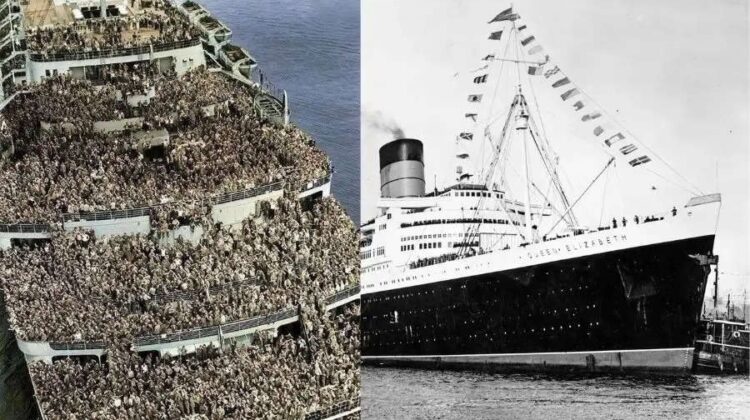
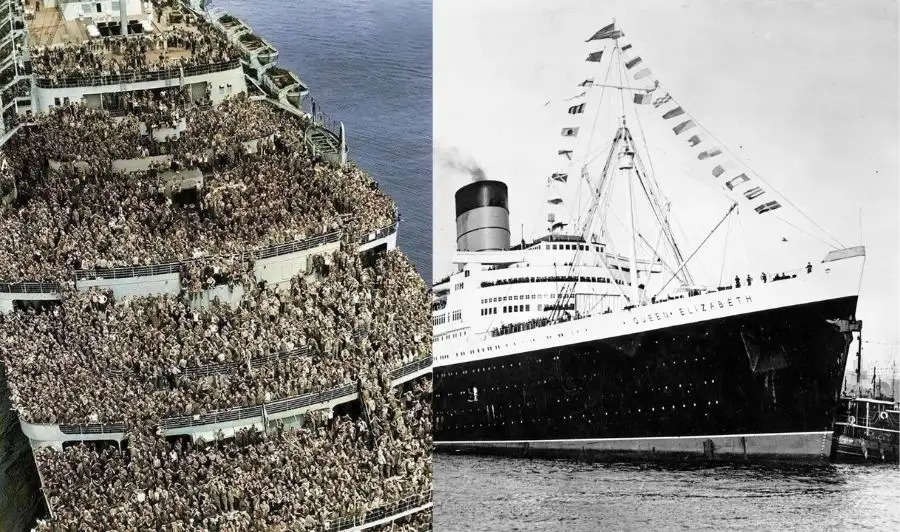
On June 29, 1945, the largest passenger liner ever built steamed into New York Bay with her decks packed with returning American servicemen. The RMS Queen Elizabeth, built for luxury travel, had spent the war as one of the Allies’ most important troopships.
A Luxury Liner Called to War
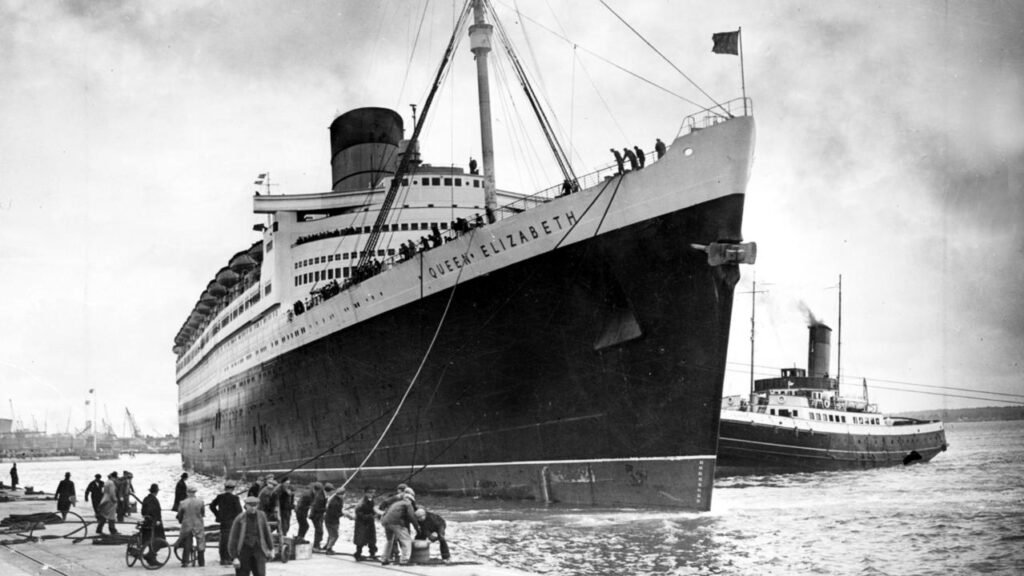
Cunard launched the Queen Elizabeth on September 27, 1938. She was meant to carry paying passengers on weekly transatlantic crossings, but war interrupted her maiden voyage before she could be completed.
To keep her safe from German bombers, Britain sent the unfinished liner across the Atlantic to New York, where she arrived in March 1940. By November she was on her way to Singapore to be fitted out as a troop ship and painted wartime gray.
Carrying an Army Across the Oceans
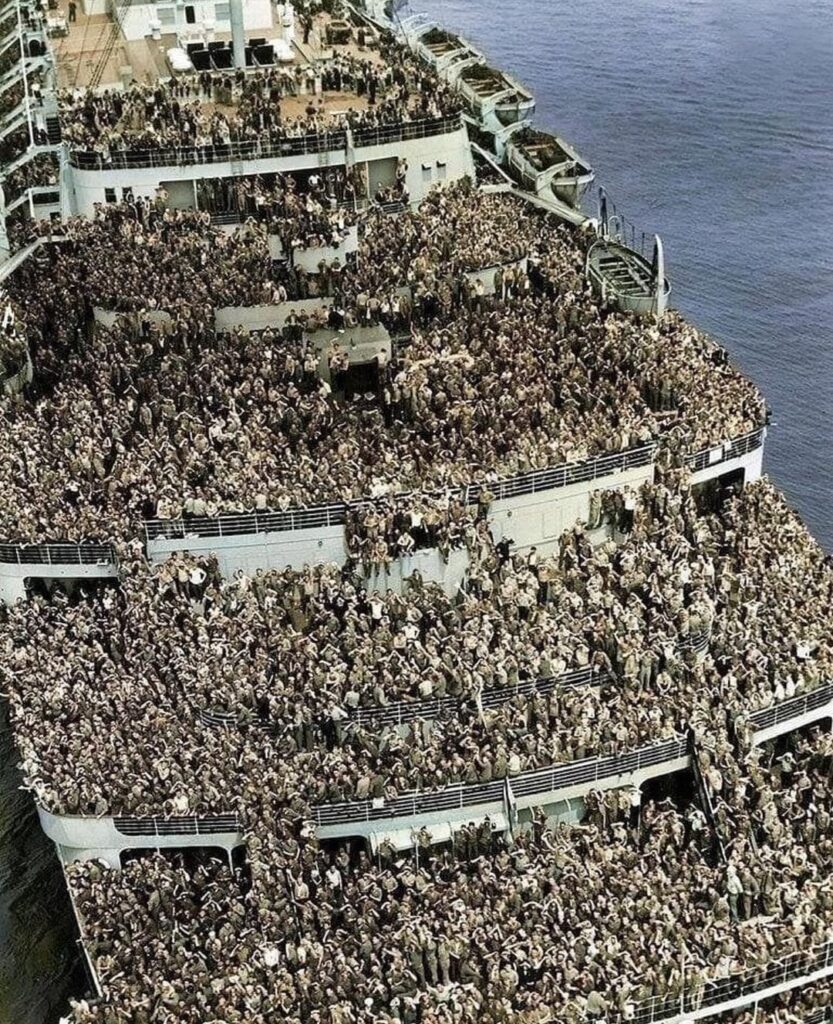
Her size and speed made her ideal for the job. The ship was designed for about 2,283 passengers and more than 1,000 crew, but as a troopship she could carry more than 15,000 people at a time. She was fast enough to outrun German U-boats and usually sailed alone, without escorts.
By the war’s end, the Queen Elizabeth had transported more than 750,000 troops and sailed some 500,000 miles. She brought the first contingent of American troops to Britain, and in 1942 carried about 8,000 U.S. soldiers on a long voyage from San Francisco to Sydney, Australia.
The Return to New York
After victory in Europe, the Queen Elizabeth and her sister ship, Queen Mary, shifted from carrying men to the front to carrying them home. A famous photograph from June 29, 1945, shows the ship entering New York Bay with about 14,000 returning servicemen crowding every deck.
According to Dwight Eisenhower’s memoir, men had complained to the press that they weren’t returning fast enough, so he asked a crowd of troops whether they’d rather ride in normal comfort or be packed in to get home sooner. They overwhelmingly chose the second option.
A Date Worth Correcting
The ship’s 1946 arrival in New York is often described as a troop homecoming, but that isn’t quite right. The Queen Elizabeth left Southampton on October 16, 1946, on her first commercial passenger voyage, her first crossing as a civilian liner. She went on to provide weekly service with Cunard for years, and made her final crossing to New York in 1968.
Relive the Era of Ocean Liners
If the story of the Queens has you dreaming of the sea, there are plenty of ways to explore it:
- Book a transatlantic crossing. Compare Cunard cruise deals and transatlantic cruise packages between New York and Southampton.
- Protect your trip. Cruise travel insurance covers cancellations and medical care at sea.
- Trace your family’s war story. Genealogy services can help you search WWII service records.
- Support those who served. A donation to a veterans’ charity helps today’s service members and their families.
Frequently Asked Questions
How many troops did the Queen Elizabeth carry in WWII? She carried more than 750,000 troops and sailed about 500,000 miles during the war.
Could she really carry 15,000 people? Yes, but only as a troopship. As a luxury liner, she was built for about 2,283 passengers.
When did the Queen Elizabeth arrive in New York with returning servicemen? A well-known photo shows her arriving on June 29, 1945, with about 14,000 American servicemen on board.
When did she start civilian service? Her first commercial voyage began on October 16, 1946, from Southampton to New York.
Sources: Soundings, The World War II Multimedia Database, Maritime Quest, and Rare Historical Photos, all covering the RMS Queen Elizabeth’s wartime troopship service, her June 1945 arrival in New York with returning servicemen, and her 1946 return to civilian service.
Leave a Reply