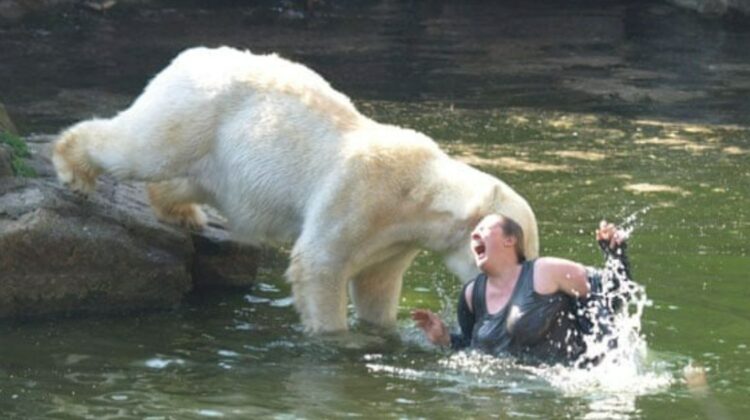
Going to the zoo is supposed to be a joyful experience. But one spring day in 2009, Berlin Zoo became the scene of a life-and-death drama after a visitor entered the polar bear enclosure during a public feeding.
What Happened
It began during the zoo’s daily polar bear feeding, a popular moment for visitors who gather to watch the animals eat. Given the bears’ size and strength, even zookeepers typically keep a safe distance during feedings, tossing food into the enclosure from behind an outer wall.
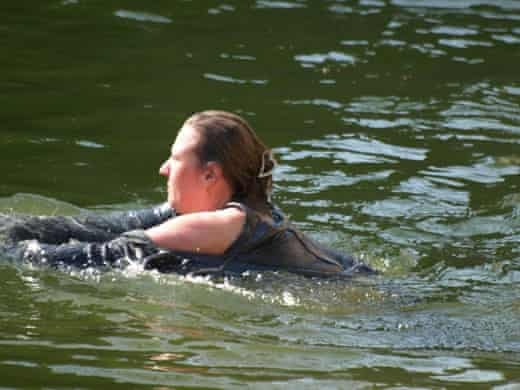
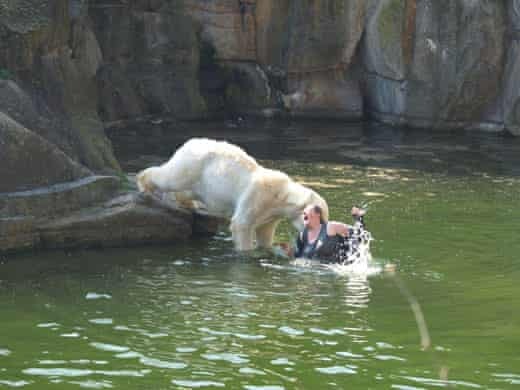
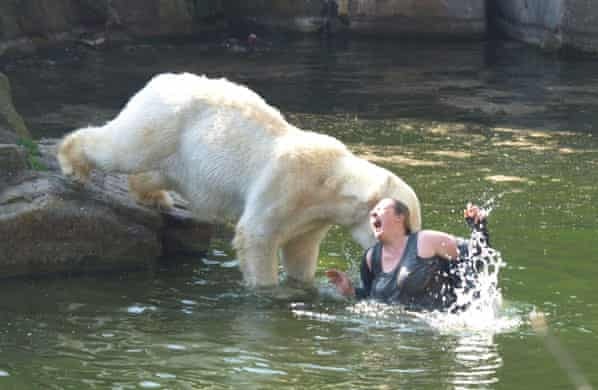
A 32-year-old woman climbed the three-foot wall surrounding the enclosure and entered the water, swimming toward the bears on a nearby rocky ledge. Most of the animals remained focused on the food being thrown by keepers — except for one, which noticed her and moved to attack.
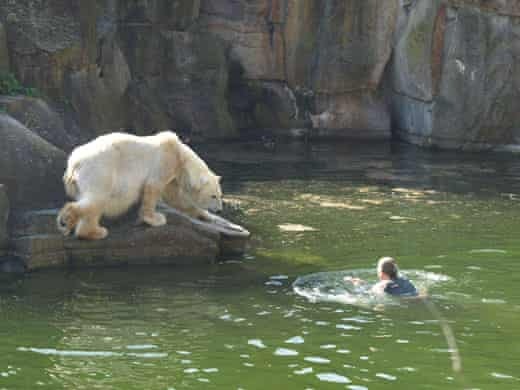
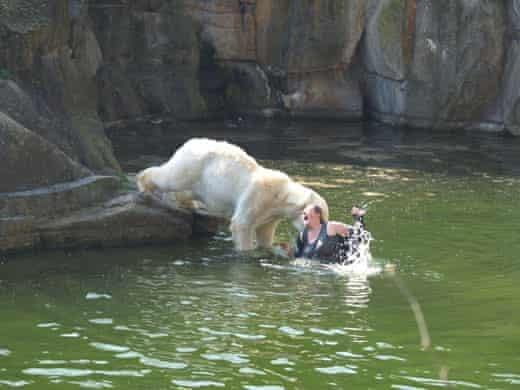
She attempted to swim back toward the wall but was unable to climb out on her own. Zoo staff responded immediately, throwing life rings into the water and tossing meat to try to distract the bears. As more bears became aware of her in the water, the situation grew more dangerous, with one bear repeatedly pulling her under as she tried to grab a life ring.
Staff eventually pulled her to safety. She was taken to the hospital with deep wounds to her arms, hips, back, and legs, and survived the attack.
The Zoo’s Response
Zoo biologist Heiner Klos told German press afterward that the zoo’s emergency alarm system worked as intended, adding that a slower response could have ended very differently — both for the woman and for the bear that would likely have faced consequences.
A police spokesperson told Der Spiegel at the time that the woman had entered the enclosure on her own and had to be aware of the risk involved. The zoo confirmed afterward that it would not be reinforcing the enclosure barrier, reasoning that a three-foot wall is meant to deter casual missteps, not stop someone determined to climb over.
Not an Isolated Incident
This wasn’t the first time someone had entered a bear enclosure at the zoo. In 2008, a 37-year-old man climbed into the enclosure housing Knut, a polar bear cub who had become a global sensation as the first cub in over 30 years to survive infancy at the zoo. Knut himself later became one of the most documented polar bears in modern zoo history before his death in 2011.
Incidents like these are part of a broader pattern seen at zoos worldwide, where enclosure barriers are generally designed around expected visitor behavior rather than to stop a person actively trying to get past them.
How Zoos Try to Prevent Enclosure Breaches
Modern zoo enclosure design typically layers several types of barriers rather than relying on a single wall or fence:
- Physical barriers sized to the animal’s reach and jumping ability, not just its size
- Psychological barriers — moats, drops, or open sightlines that discourage a visitor from feeling they could safely cross
- Monitoring systems — cameras and, in more modern enclosures, motion sensors that alert staff quickly if someone crosses a boundary
- Staff positioning during high-risk moments like feedings, when animals are most active and visitor attention is highest
Zoo safety experts generally note that no barrier system fully eliminates risk if a visitor is determined to bypass it — which is why rapid staff response, as seen in this case, matters as much as the barrier itself.
Frequently Asked Questions
Why weren’t the polar bears punished or removed after the attack? Zoo officials and authorities were clear that the bears were acting on natural instinct in response to a person entering their enclosure and the water — the responsibility was placed on the decision to enter, not on the animals.
How common are zoo enclosure breaches? They’re rare relative to total zoo visits, but they do recur periodically at zoos worldwide, which is why most zoos continually reassess barrier design after any incident, even ones that don’t result in injury.
Are three-foot walls really enough to keep visitors safely away from dangerous animals? Barrier height is only one part of enclosure design — moats, distance, and sightlines are usually engineered together, and zoos generally acknowledge that any barrier can be crossed by someone determined to do so, which is why staff monitoring during peak-risk times like feedings is treated as an equally important safeguard.
Leave a Reply