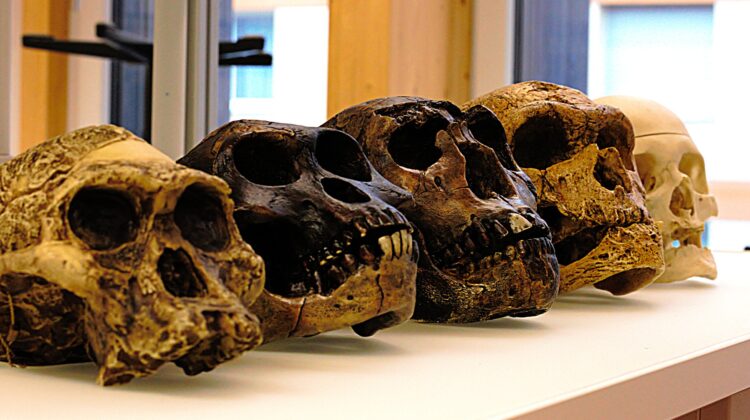
A groundbreaking genetic study suggests that human ancestors came dangerously close to extinction nearly 800,000 years ago—reduced to a shockingly small population that may have reshaped the course of human evolution.
Published in the journal Science, the research indicates that as few as 1,280 breeding individuals may have survived during a prolonged population collapse known as an ancestral bottleneck.
A collapse hidden in deep time
The study points to a dramatic decline between 800,000 and 900,000 years ago, during the Pleistocene.
During this period, scientists estimate that nearly 99 percent of the ancestral human population disappeared, leaving a small, fragile group struggling to survive for roughly 117,000 years.
This event may also explain long-standing gaps in fossil records across Africa and Eurasia—periods where evidence of human ancestors suddenly becomes scarce.
How scientists uncovered the mystery
To reconstruct this ancient collapse, researchers used a new genetic modeling method called FitCoal (fast infinitesimal time coalescent process).
By analyzing the genomes of more than 3,000 modern individuals from diverse populations, the team was able to trace patterns of genetic variation back through time.
Yun-Xin Fu of the University of Texas Health Science Center at Houston described the method as a breakthrough, capable of detecting ancient population changes even with limited data.
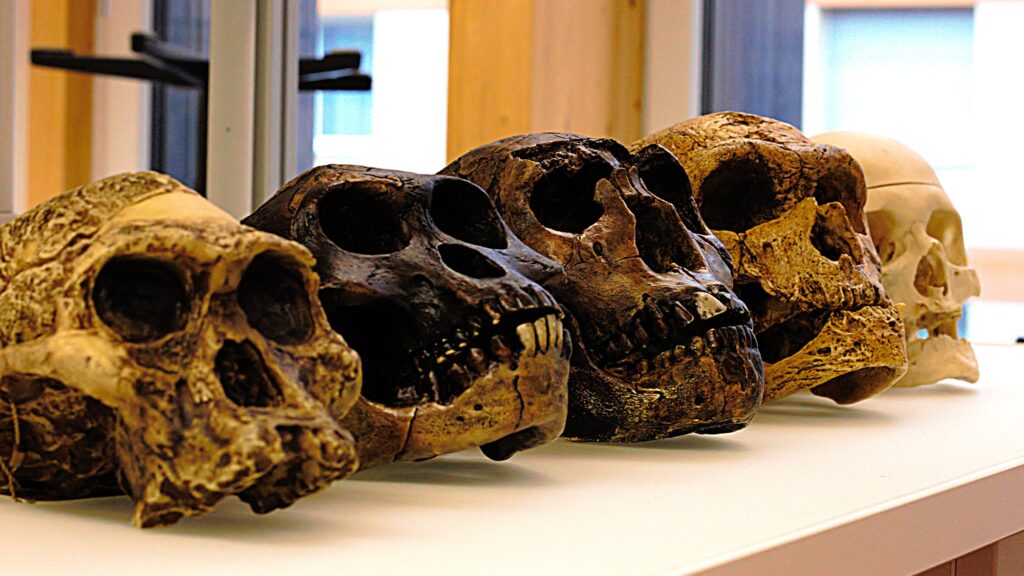
The findings suggest that this bottleneck caused a massive loss of genetic diversity—an estimated 65 percent of variation that would otherwise exist today.
What caused the near-extinction?
While the exact cause remains uncertain, scientists point to extreme environmental changes.
Severe climate fluctuations, prolonged droughts, and declining food sources likely played a major role. Many large animals—key parts of the ecosystem—were also disappearing, further destabilizing survival conditions.
Giorgio Manzi of Sapienza University of Rome noted that the timing aligns closely with a known gap in the fossil record, reinforcing the idea of a widespread demographic collapse.
A turning point in human evolution
Paradoxically, this catastrophic bottleneck may have helped shape modern humans.
Researchers suggest that during this period, critical evolutionary changes occurred—including the formation of human chromosome 2, a defining genetic feature that distinguishes humans from other primates.
This phase may also mark a key point in the divergence of early human relatives, including Neanderthals and Denisovans.
Yi-Hsuan Pan from East China Normal University emphasized that the findings open new questions about how such a small population managed to survive—and adapt.
Survival against the odds
Despite the extreme conditions, this small group endured. Scientists believe factors such as early control of fire, behavioral adaptation, and gradual climate improvement may have helped stabilize the population.
Over time, human numbers began to recover—eventually leading to the global spread of our species.
This discovery reshapes one of the most fundamental narratives of human history: survival was never guaranteed. The fact that all of humanity may descend from a group smaller than a modern town is both humbling and profound. It reveals that our existence today is the result of a fragile, improbable chain of survival—one that endured against overwhelming odds and ultimately gave rise to the complex, resilient species we are now.
Leave a Reply