The idea that alien civilisations may one day visit Earth has long captured the public imagination. However, some physicists argue that the laws of the universe make such encounters extremely unlikely.
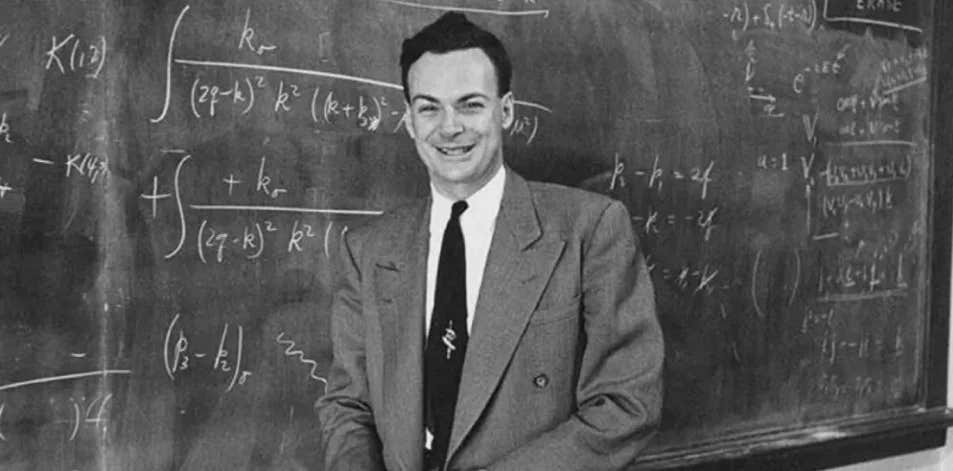
The argument centres on a simple observation often associated with Richard Feynman—that despite the vast number of stars in the night sky, there is no clear evidence of contact with extraterrestrial life.
A universe beyond human intuition
Scientists say one of the main challenges lies in scale. As astronomer Carl Sagan noted, the size and age of the universe are far beyond everyday human understanding.
Even the nearest star system, Proxima Centauri, is more than four light years away. At the speeds currently achievable by human-made spacecraft, a journey there would take thousands of years.
Across the Milky Way, which spans around 100,000 light years, such distances become even more difficult to comprehend.
The speed limit of the universe
A central barrier is the speed of light, widely regarded as a fundamental limit of nature. Physicist Kip Thorne has described it as a built-in constraint of space and time itself.
According to current physics, accelerating any object with mass to the speed of light would require an infinite amount of energy. This makes faster-than-light travel—often depicted in science fiction—impractical under known laws.
The challenge of interstellar travel
Even travelling at a fraction of light speed presents major difficulties. The “rocket equation,” developed by Konstantin Tsiolkovsky, shows that fuel requirements increase exponentially with speed.
More advanced concepts, such as fusion or antimatter propulsion, could reduce the burden but not eliminate it. Physicist Freeman Dyson once described chemical fuels as inadequate for interstellar missions.
The limits of theory
Alternative ideas, including warp drives and wormholes, have been explored in theoretical physics. The Alcubierre drive, proposed in 1994, suggests that space itself could be distorted to allow faster travel.
However, such models require forms of energy or matter that have not been observed in practical quantities. As a result, they remain speculative.
Biological and technological constraints
Human biology presents another obstacle. Long-duration space travel would expose travellers to high levels of radiation and prolonged weightlessness, both of which can have serious health effects.
Even robotic missions face limitations, as electronics degrade over time and are vulnerable to environmental hazards in deep space.
The problem of timing
Some scientists argue that even if intelligent life is widespread, different civilisations may simply never overlap in time.
Human technology capable of sending signals into space has existed for only about a century—a brief period compared to the universe’s 13.8-billion-year history.
Researchers such as Jill Tarter have suggested that the absence of contact does not necessarily mean that extraterrestrial life does not exist, but rather that opportunities for interaction may be extremely rare.
Taken together, these constraints—distance, physics, biology, and time—suggest that the silence of the universe may not be a mystery to solve, but a consequence of how reality itself is structured. While the possibility of life beyond Earth remains open, current scientific understanding indicates that direct contact between distant civilisations may be far less likely than once imagined.
Leave a Reply