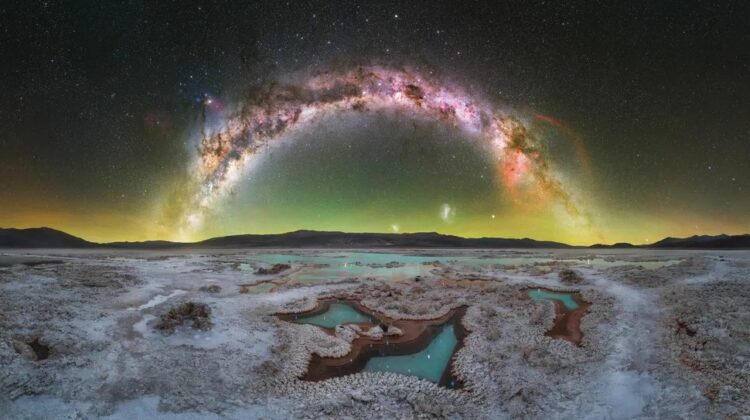
A breathtaking photograph captured beneath the skies of remote Argentina has been recognized in the 2026 Milky Way Photographer of the Year collection released by Capture the Atlas, showcasing some of the world’s most remarkable astrophotography images.
One of the standout entries, titled My Perfect Night, was created by astrophotographer Daniel Viñé Garcia in the isolated Argentine Puna region, an elevated plateau known for its extreme altitude, vast salt flats and exceptionally dark skies.
The image reveals a sweeping arch of the Milky Way stretching over reflective turquoise waters and untouched desert terrain, producing a scene many viewers described as almost surreal.
According to Garcia, the photograph was taken in one of the most remote areas he has ever visited, requiring travel across rough dirt roads far from major settlements and artificial light pollution.
Astrophotographers often seek out high-altitude locations because thinner air and minimal light interference create ideal conditions for photographing stars, nebulae and galactic structures invisible from most urban environments.
Garcia explained that the location’s untouched appearance and lack of previous widely known imagery made the experience especially meaningful.
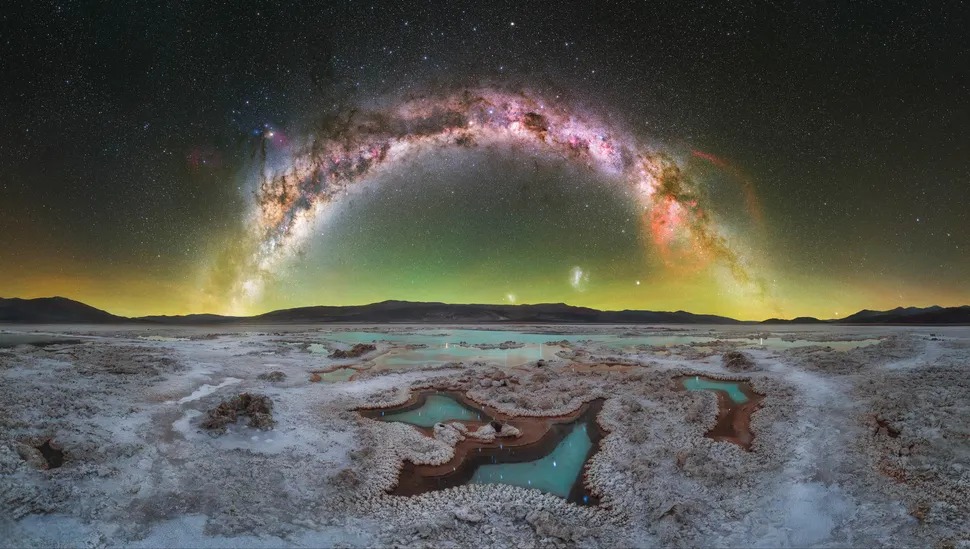
The composition reportedly captures both the galactic center and the Gum Nebula, balancing major celestial features across the night sky.
To create the image, Garcia used an astro-modified Sony A7 III camera paired with specialized lenses and a star-tracking system designed for long-exposure astrophotography.
Astrophotography has grown rapidly in popularity in recent years as camera technology, editing software and social media platforms have made night-sky photography more accessible to enthusiasts around the world.
Collections such as the Milky Way Photographer of the Year increasingly attract global audiences fascinated by deep-space imagery and remote natural landscapes.
For many viewers, images like My Perfect Night offer a rare reminder of how extraordinary the night sky can appear far away from modern cities and light pollution.
Scientists and environmental advocates have also used astrophotography to raise awareness about the growing impact of artificial lighting on ecosystems, astronomy and human connection to the natural night environment.
Why dark-sky tourism and astrophotography are booming worldwide
Astrophotography and dark-sky tourism have become major global travel trends as people seek remote destinations with minimal light pollution. National parks, desert plateaus and protected dark-sky reserves are increasingly attracting photographers, scientists and travelers interested in astronomy, nature and nighttime landscapes.
Leave a Reply