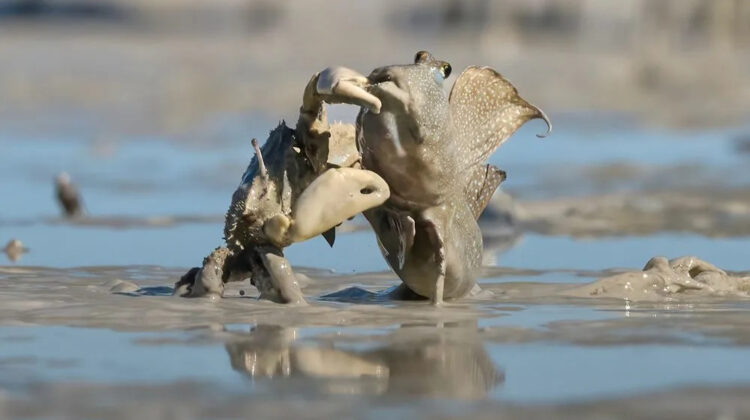
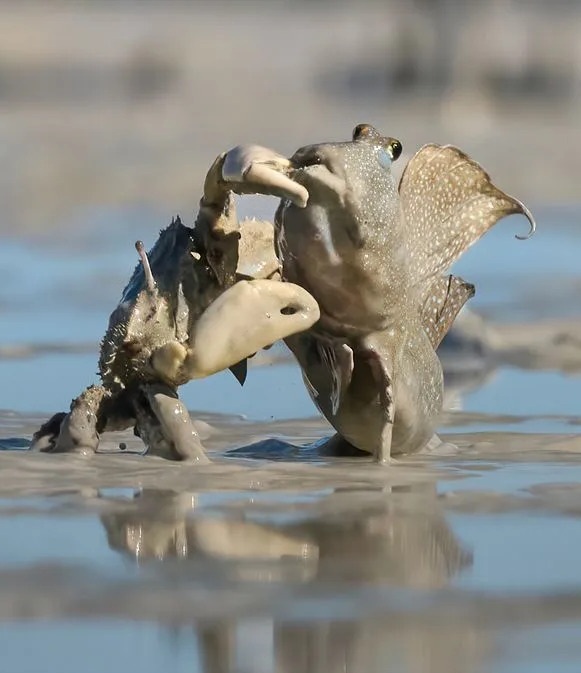
A striking wildlife photograph showing a crab dragging a fish from thick mud has earned international recognition after finishing as runner-up in the Wildlife, Sealife and Birdlife Portfolio category at the Travel Photographer of the Year (TPOTY) Awards.
The image, captured by American wildlife photographer Emma Parker, freezes a dramatic moment as a crab seizes a blue-spotted mudskipper during a hunt on the mudflats near Broome in Western Australia.
Photographed with a Nikon D850 and a 500mm telephoto lens, the split-second encounter highlights the harsh realities of survival in one of Australia’s richest coastal ecosystems. The fate of the mudskipper remains unknown, leaving viewers to wonder whether it managed to escape or became the crab’s next meal.
Parker also photographed another remarkable scene in the same location, showing two mudskippers locked in a territorial dispute with their mouths open and fins fully extended—a reminder that competition in the wild is not only between predators and prey but also among members of the same species.
The vast mudflats around Broome, including Roebuck Bay and Dampier Creek, are internationally recognised wetlands that support hundreds of thousands of migratory shorebirds and one of the world’s most diverse communities of marine invertebrates. The changing tides expose enormous feeding grounds where countless wildlife interactions unfold every day.
Since beginning her wildlife photography career in 2019, Parker has travelled extensively to document animals in their natural habitats, photographing species across the Arctic, Borneo, the Galápagos Islands and Australia.
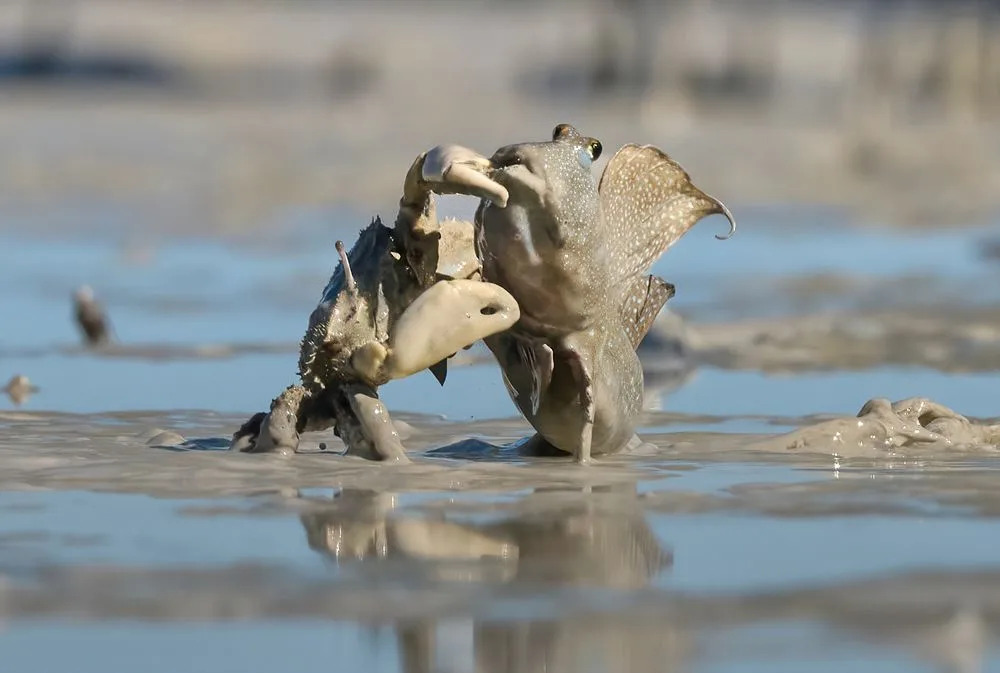
The award-winning image demonstrates how wildlife photography can reveal extraordinary moments that often go unnoticed, offering a rare glimpse into the constant struggle for survival taking place in some of the planet’s most important natural environments.
Why Coastal Mudflats Are Vital for Wildlife
Coastal mudflats are among the world’s most productive ecosystems, providing food and shelter for fish, crabs, migratory birds and countless other species. Although they may appear barren at low tide, these habitats support complex food webs that are essential for biodiversity. Protecting wetlands helps preserve breeding grounds, migration routes and the delicate ecological balance that sustains wildlife across the globe.
Leave a Reply