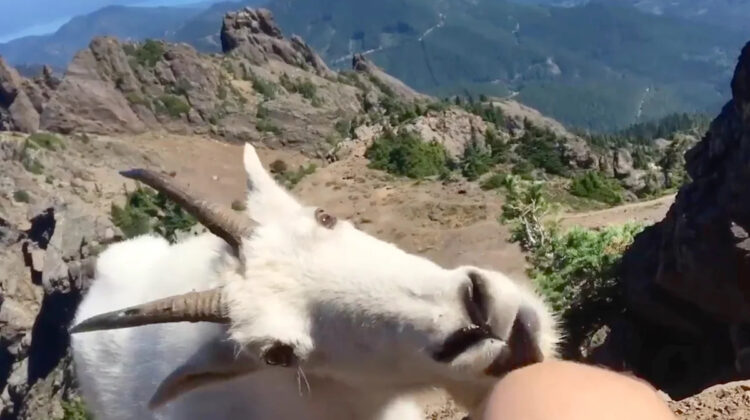
A mountain goat has become an internet sensation after approaching a hiker on a Washington summit and repeatedly licking him in a surprising wildlife encounter. While many viewers described the moment as a sign of friendship, wildlife experts and experienced hikers say the truth may be very different.
What happened?
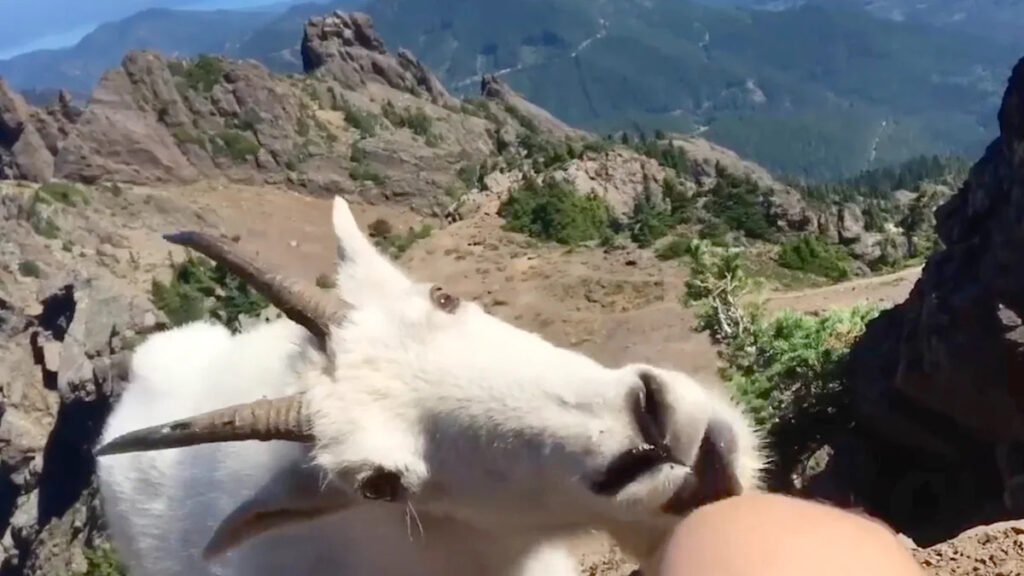
The unusual encounter took place on Mount Ellinor in Washington’s Olympic Mountains. A video showing the mountain goat walking directly toward a hiker and licking him was shared on Reddit, where it quickly attracted thousands of reactions and comments.
Many viewers found the scene amusing and described the goat as “friendly” or as if it was greeting the hiker. However, others quickly challenged that interpretation, explaining that the animal was likely not seeking affection but was attracted to the salt in the hiker’s sweat.
One highly upvoted comment summarized the situation:
“Friendly? That mountain goat just sees the human as a salt lick.”
Wildlife experts say this behavior is well known among mountain goats in the Olympic region. These animals naturally seek minerals and salt that are essential for their bodies, and they can be attracted to human sweat, clothing, and even traces left on hiking trails.
Some hikers explained that finding enough salt can be difficult for animals living at high elevations, which may drive them to approach humans when they detect a potential source.
However, what looks like a harmless interaction can become dangerous. Commenters warned that mountain goats have been known to bite or pull at hikers’ clothing because fabric can absorb sweat. On steep terrain, even a small interaction could cause a person to lose balance and suffer serious injuries.
Why does it matter?
The viral video highlights a bigger issue in the relationship between humans and wildlife.
When wild animals begin associating people with food, minerals, or other rewards, they can lose their natural fear of humans and become increasingly bold. A behavior that appears cute or harmless at first can eventually lead to dangerous encounters for both animals and people.
🔥 Friendly Mountain goat greets hiker at the summit of Mt. Ellinor.
by u/21MayDay21 in NatureIsFuckingLit
The Olympic Mountains have experienced similar conflicts in the past. Wildlife officials have relocated large numbers of mountain goats due to growing interactions with humans, and the region has also recorded a tragic incident in which a hiker was killed after being gored by a mountain goat.
Experts say wildlife incidents are rarely caused by animals being naturally aggressive. Instead, they are often linked to human behavior, habitat changes, or animals becoming accustomed to close contact with people.
The lesson behind this viral moment is clear: a wild animal approaching a person may look like a friendly encounter, but it is often a sign that nature’s boundaries are being crossed.
A cute wildlife encounter has captured global attention, but the real story behind the viral mountain goat video is a warning about human interaction with wild animals. The goat was not necessarily looking for friendship — it may have been searching for the salt left behind by human sweat. While these moments can create amazing photos and unforgettable memories, experts warn that getting too close to wildlife can put both humans and animals at risk. Respecting nature means enjoying these incredible creatures from a safe distance.
Leave a Reply