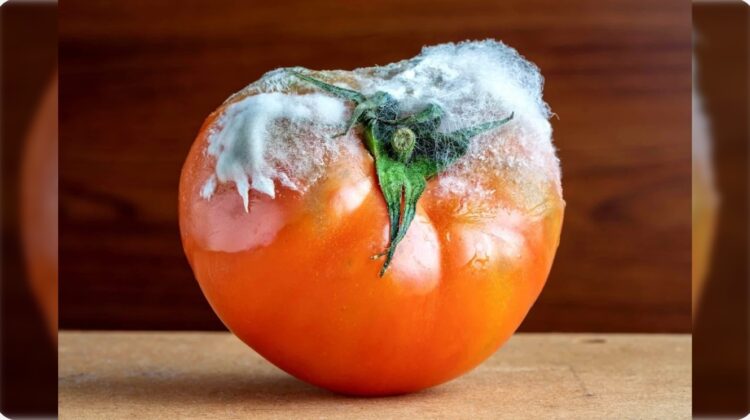
Cutting the mold off a peach and eating the rest feels like basic kitchen common sense — a little frugal, maybe, but careful. A new German government survey suggests that instinct might be giving people more confidence than the science actually supports.
What the Survey Found
Germany’s Federal Institute for Risk Assessment (BfR) surveyed 1,000 people aged 16 and older in spring 2026 about how they think about and handle mold in food, publishing the results on August 27. The findings, summarized by Food Safety News, showed a clear gap between general food-safety habits and specific knowledge about mold toxins, or mycotoxins:
- 30.6% of respondents said that when they spot mold on fresh produce, they simply cut away the moldy section and eat the rest.
- Only 46.9% knew that cooking or baking does not neutralize mycotoxins once they’ve formed in food.
- Roughly half were unaware that industrially processed fruit and vegetable products can carry mycotoxins too.
“As molds are ubiquitous in nature, contamination of food cannot always be completely avoided,” BfR President Prof. Andreas Hensel said in the institute’s statement. “This makes it all the more important to know how to minimise health risks in your own home as far as possible.”
Why “Just Cut It Off” Isn’t a Universal Rule
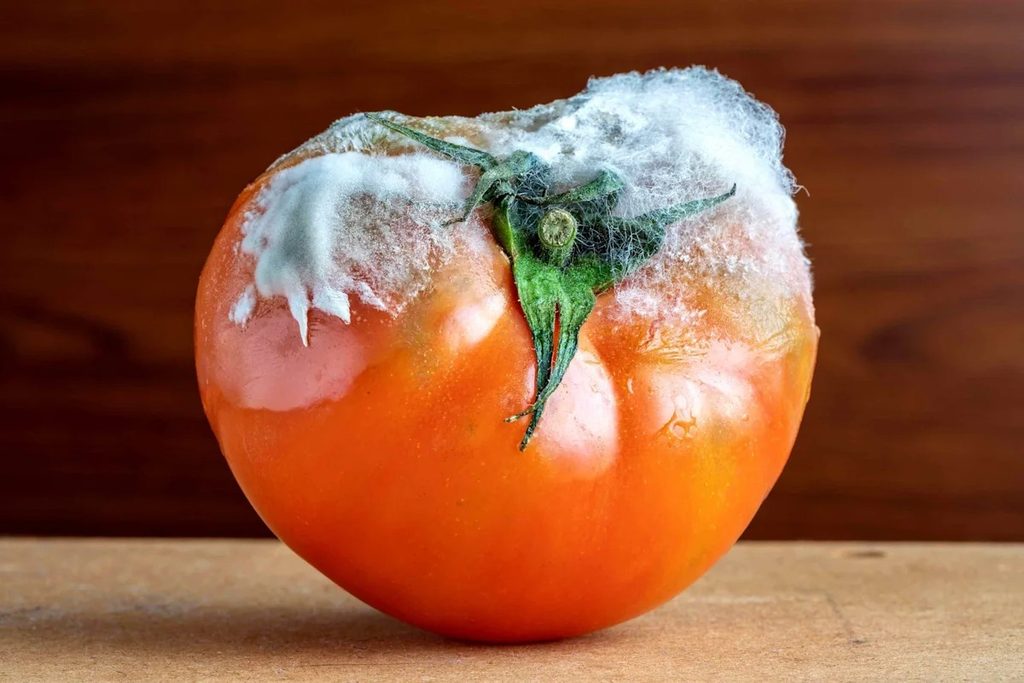
The core issue is that visible mold is often just the surface of a larger problem. According to BfR’s own guidance, cutting or scraping away the visibly affected area isn’t sufficient for soft or water-rich foods, because mycotoxins can already be distributed throughout the product in ways invisible to the eye. That’s different from how dense, low-moisture foods behave, which is why food safety agencies treat this as a food-specific decision rather than one blanket rule.
What’s Actually Safe to Salvage
The U.S. Department of Agriculture’s Food Safety and Inspection Service (FSIS) offers specific, practical guidance:
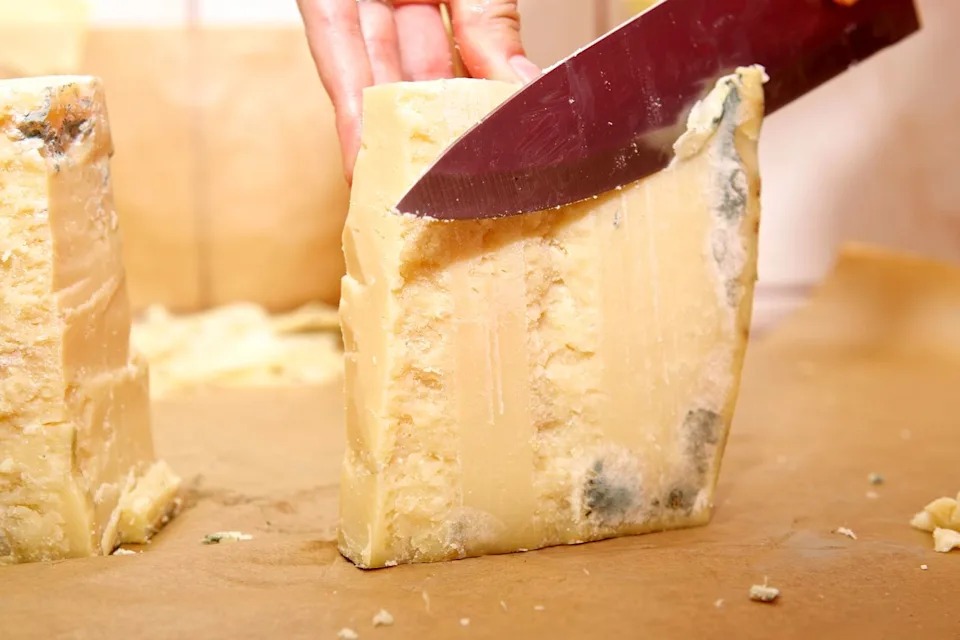
Can usually be saved (cut at least 1 inch around and below the mold):
- Dense produce like cabbage, bell peppers, and carrots
- Hard cheeses — with the extra step of rewrapping in fresh packaging afterward
Contains intentional, safe mold:
- Dry-cured hard salami with its characteristic thin white coating (any other mold on it is not safe)
- Blue-veined cheeses like Roquefort, Gorgonzola, and Stilton (made using Penicillium roqueforti)
- Soft-ripened cheeses like Brie and Camembert, with their white surface molds
Credit: FilmColoratStudio / Getty Images
Should be discarded entirely:
- Soft, sliced, shredded, or crumbled cheese — cutting instruments can spread contamination, and bacteria often grows alongside mold in soft cheese
- Yogurt and sour cream
- Soft fruits and vegetables like cucumbers, peaches, and tomatoes
- Bread and other baked goods, since porous textures let mold spread well below the visible surface
- Peanut butter, nuts, and legumes, which are processed without preservatives and are considered high-risk
- Any home-canned food showing mold, which can indicate a broken seal or insufficient processing during canning
The University of California’s Master Food Preserver Program adds a specific note for home canners: applesauce, thanks to its thick consistency, is a prime candidate for mold growth, and should be heated to at least 180°F before filling jars to ensure proper heat penetration during canning.
Preventing Mold in the First Place
FSIS recommends a few consistent habits: don’t leave perishables out of the refrigerator for more than two hours, eat leftovers within three to four days, and transfer opened canned goods to clean containers promptly. Keeping the refrigerator itself clean matters too — FSIS suggests wiping the interior every few months with a tablespoon of baking soda dissolved in a quart of water, and scrubbing any visible mold on rubber door seals with a diluted bleach solution (three teaspoons per quart of water). Musty-smelling dish towels, sponges, or mops should be replaced rather than reused, since they can spread mold spores around the kitchen. Keeping household humidity below 40% also helps limit mold growth generally.
Frequently Asked Questions
Is it ever completely safe to eat food after cutting mold off? Yes, for specific categories — dense produce and hard cheese, trimmed generously (at least an inch around and below the mold), are generally considered safe by food safety agencies, but soft, high-moisture, or porous foods should be discarded entirely rather than trimmed.
Does cooking food with mold on it make it safe to eat? No — this is one of the most common misconceptions the BfR survey identified. Mycotoxins are heat-stable and aren’t destroyed by cooking or baking temperatures, so heat treatment doesn’t make moldy food safe.
Why is mold on blue cheese or salami sometimes fine to eat? Those products contain specific, intentionally introduced mold strains (like Penicillium roqueforti) that are safe and integral to how the food is made — a fundamentally different situation from unintended mold contamination, which is why the “safe mold” only applies to that specific coating, not any other mold that might appear on the same product.
Sources: BfR (Bundesinstitut für Risikobewertung), Food Safety News, EurekAlert, USDA Food Safety and Inspection Service (FSIS), and the University of California Master Food Preserver Program, cited above.
Leave a Reply