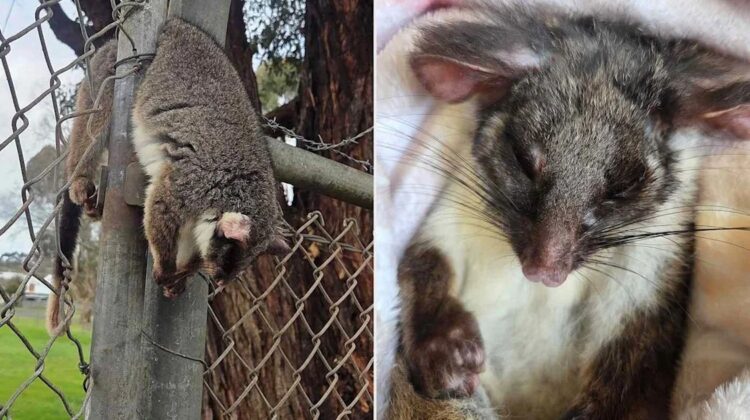
A call about a dead animal usually ends with a rescuer confirming exactly that. On September 13, a volunteer with Hamilton Wildlife Shelter in Victoria, Australia, arrived expecting to do just that — and found something very different waiting between two metal gate posts.
“I Don’t Normally Go Out to Dead Possums”
The shelter had received a report of a ringtail possum found wedged between two fence poles, apparently deceased. As the rescuer later explained in a Facebook post, checking on reported-dead animals isn’t standard practice for the shelter — but this one was in a hard-to-reach spot the member of the public couldn’t inspect themselves, so a volunteer headed out to confirm and, if needed, perform a pouch check before removing the body.
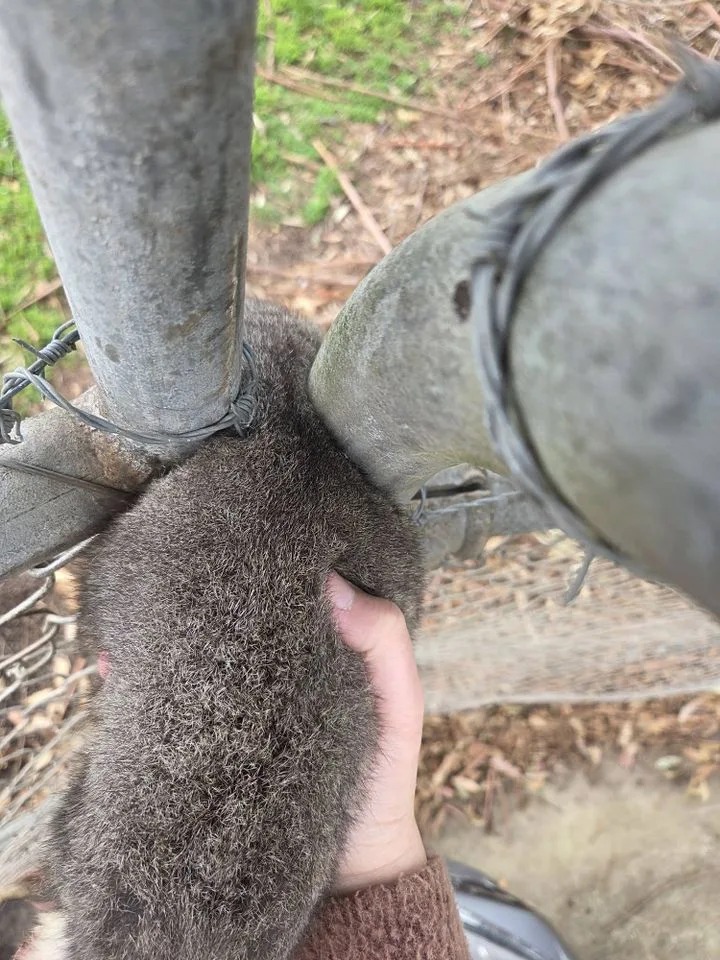
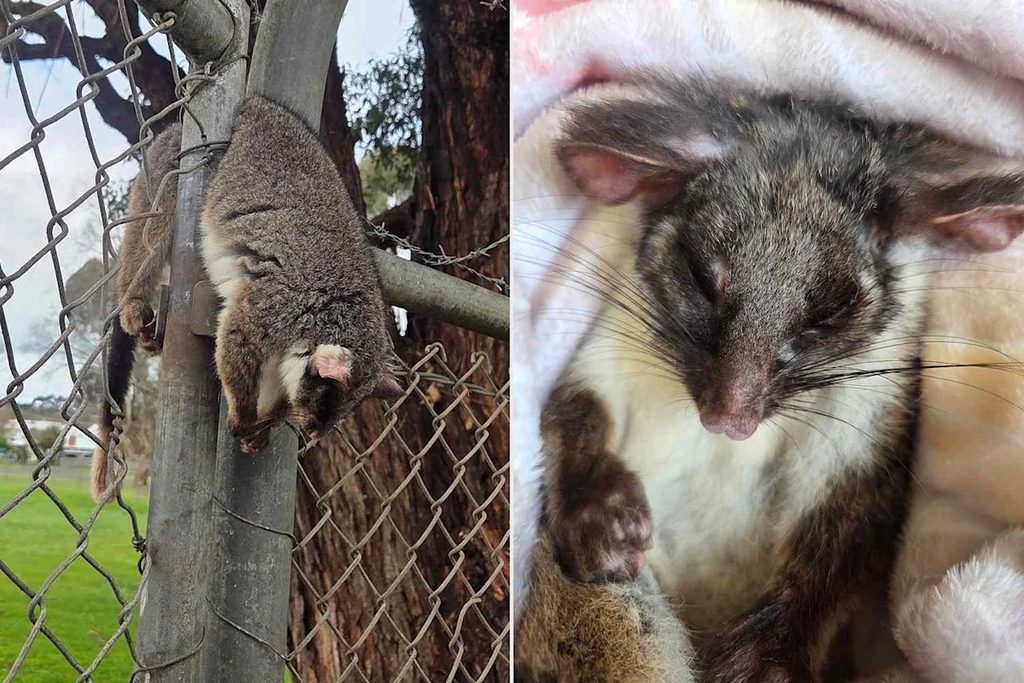
Photos taken at the scene show the possum hanging limp in an upside-down “U” shape, tightly lodged between the two posts. The shelter later clarified the animal hadn’t been placed there or crushed deliberately — it had simply slipped and become stuck in the narrowest part of the fence gap.
Not Dead After All
While preparing to remove what she expected to be a body, the rescuer noticed something that didn’t add up: the possum was still limp rather than stiff, and its belly still held some warmth — details consistent with an animal that had died only hours earlier, or one that hadn’t died at all.
Credit: Hamilton Wildlife Shelter -Victoria Australia
Then its arm moved. Its eyes opened.
“This possum was NOT DEAD!!!” the shelter wrote. “Just unconscious, ice cold and deathly still.”
A Careful Extraction
Freeing the possum wasn’t simple — its position, height on the fence, and nearby barbed wire all complicated the rescue. But once past the barbs, removing the animal itself was more straightforward than it looked. “Nothing was crushing any organs or limbs,” the rescuer explained. “Where he was stuck is the thinnest part of a possum, and I was simply able to lift him out once I got him past the barbed wire barbs.”
Recovery
Credit: Hamilton Wildlife Shelter -Victoria Australia
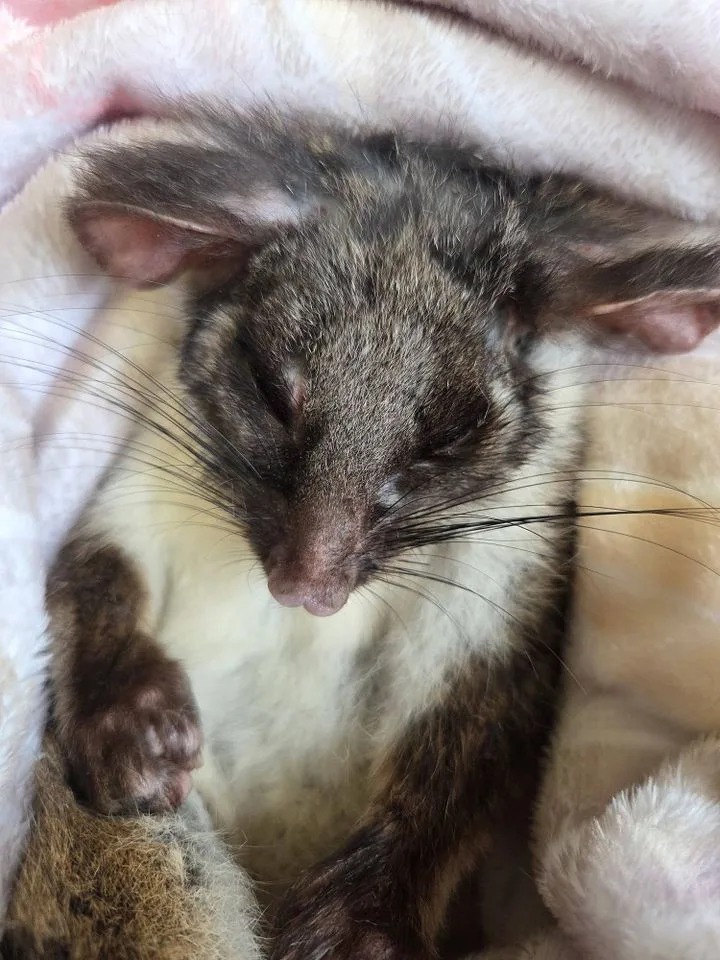
The possum’s condition remained serious immediately after the rescue — cold, barely responsive, badly bruised, and sore. But with warmth and care, he began improving over the course of the day. A follow-up update from the shelter reported him standing and moving all four limbs, though staff noted he could be dealing with myopathy or pneumonia and was receiving fluids and pain relief in a heated brooder while he recovered.
Hamilton Wildlife Shelter also addressed speculation about how the possum ended up stuck in the first place, ruling out deliberate harm: “Nobody stuck him there,” they wrote, suggesting the animal likely used that fence route regularly and simply slipped.
About the Species
The common ringtail possum is one of Australia’s most widespread marsupials, found primarily along the country’s eastern and southern coasts. According to Sydney Zoo, they’re highly skilled climbers that spend the vast majority of their lives in trees, rarely coming down to the ground — which may be part of why an encounter with a low fence proved so unexpectedly dangerous for this one.
Credit: Hamilton Wildlife Shelter -Victoria Australia
Frequently Asked Questions
What should someone do if they find an animal that appears dead but might not be? Contact a local wildlife rescue organization before assuming the worst, especially if the animal is in a position that’s difficult to fully inspect — as this case shows, signs like residual warmth or limpness (rather than rigidity) can indicate the animal may still be alive.
Is it common for possums to get stuck in fences? It’s a recognized hazard, particularly for animals that regularly use the same routes along fences or between trees — a single slip in the wrong spot can leave them wedged and unable to free themselves.
What is myopathy in rescued wildlife, and why does it matter here? Capture myopathy is a stress-induced muscle condition that can affect wild animals after a traumatic event, and it’s a common concern for rescuers monitoring an animal’s recovery in the hours and days following a rescue like this one.
Source: PEOPLE, via Hamilton Wildlife Shelter’s public Facebook posts, cited above.
Leave a Reply