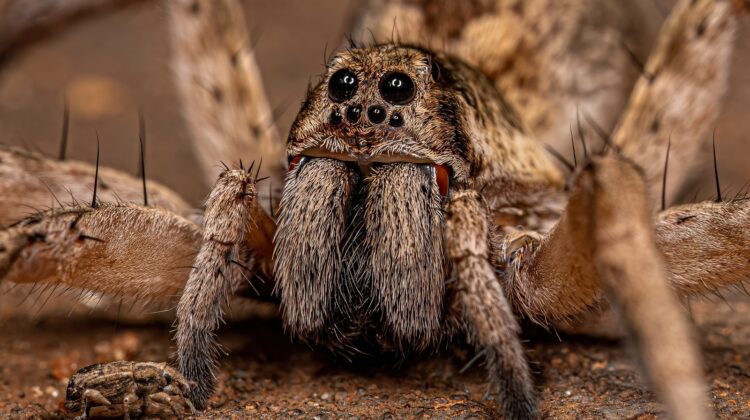
Finding a large, fast-moving spider on your kitchen floor is the kind of thing that can send anyone reaching for the nearest shoe. Before you swing, though, it’s worth a second look — there’s a good chance your unwelcome guest is a wolf spider, and they’re far less dangerous than they look.
What Exactly Is a Wolf Spider?
Wolf spiders belong to the family Lycosidae and live in environments worldwide, from grasslands and forests to deserts and suburban lawns. Their large size and hairy bodies often get them mistaken for something more threatening than they actually are.
Unlike web-building spiders, wolf spiders are solitary ground hunters — they sprint after prey and pounce rather than waiting in a web, often hunting at night. Their diet is mostly ants, crickets, and other spiders, with larger species occasionally taking small frogs or lizards. Once caught, prey is injected with venom that liquefies its internal organs before the spider feeds — a process that should concern insects far more than it concerns you.
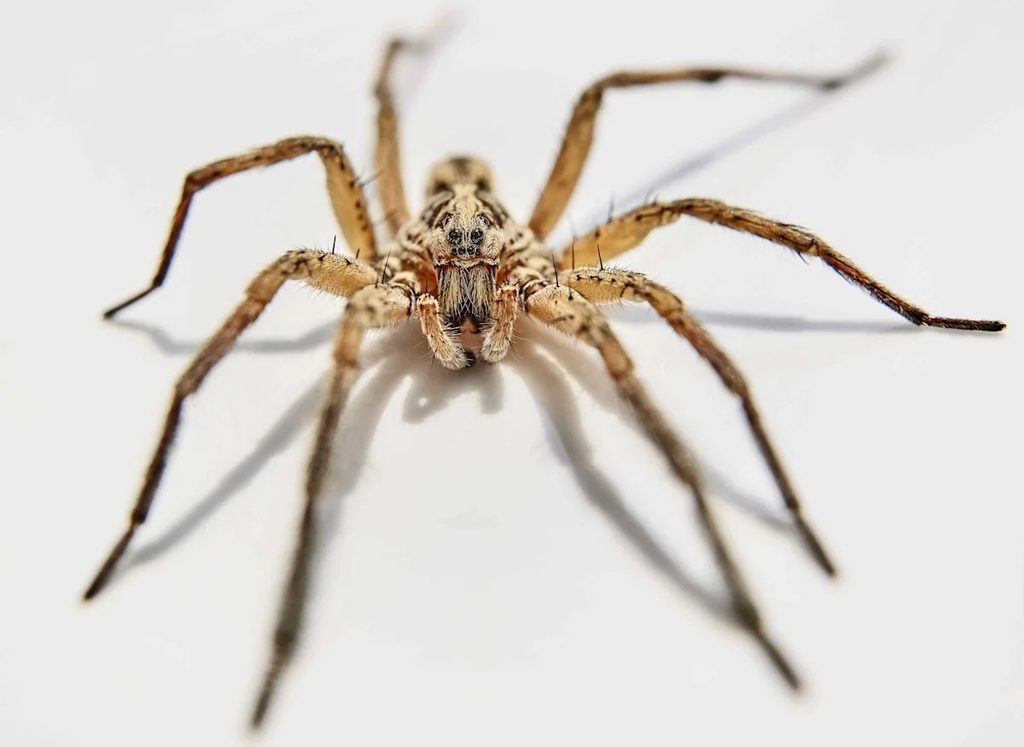
“As is the case with 99.95 percent of spiders around the world, wolf spiders are not dangerous to people or pets,” says Jerome S. Rovner, professor emeritus of biological sciences at Ohio University. “If you force a wolf spider to bite you by pressing it with your fingers, the bite is no worse than a honeybee sting.” Left alone, wolf spiders typically run from people and pets rather than confront them — a pattern consistent with a 1990 clinical study published in the journal Toxicon, which reviewed 515 documented wolf spider bites in São Paulo, Brazil, and found the resulting symptoms were generally mild and self-limiting.
How to Identify One
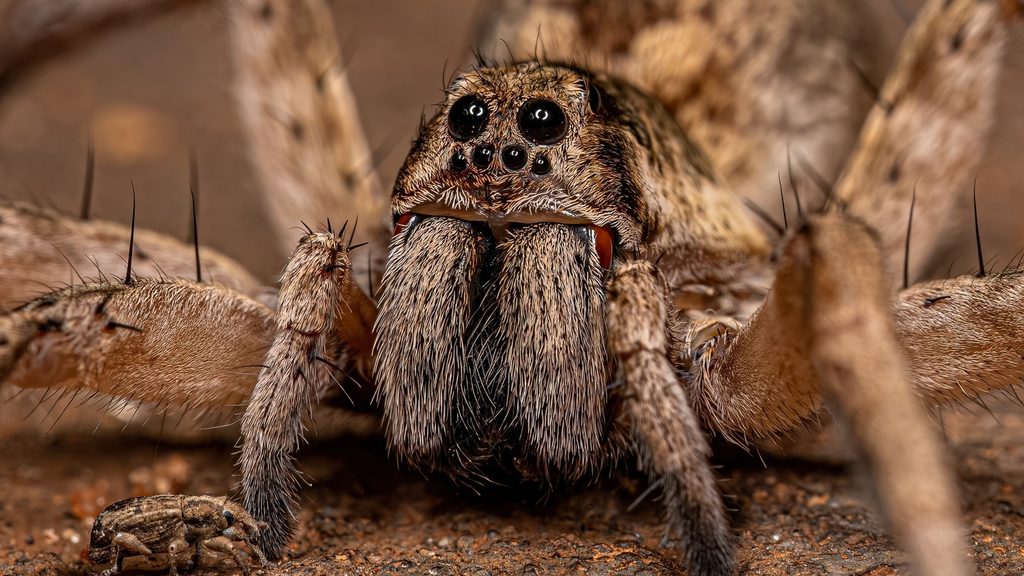
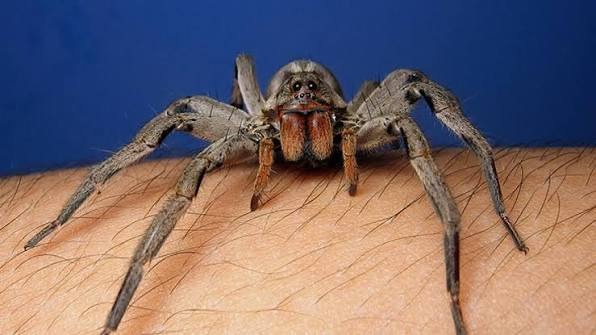
Wolf spiders typically measure ½ inch to 2 inches in body length, in shades of brown, gray, black, or tan, often with dark or light striping. They’re usually hairy, with eight eyes arranged in three rows — though appearance alone can vary meaningfully between species.
Behavior offers a more reliable clue, according to Jason Dunlop, curator of arachnids at the Berlin Museum of Natural History. “Unlike some other spiders, wolf spiders don’t build webs, but — like a wolf — they chase after their prey,” Dunlop explains. “They are visual hunters, which means that two of their eight eyes are quite large, and you might even be able to see these big eyes if you look closely.”
Motherhood is another giveaway. Female wolf spiders carry their egg sac attached directly to their body, and once the spiderlings hatch, she carries them on her back for a period afterward to protect them. “If you see a spider carrying what looks like a white ball attached to her abdomen, or with lots of tiny spiders on her back, then it’s definitely a wolf spider,” Dunlop says.
Don’t Confuse It With a Brown Recluse
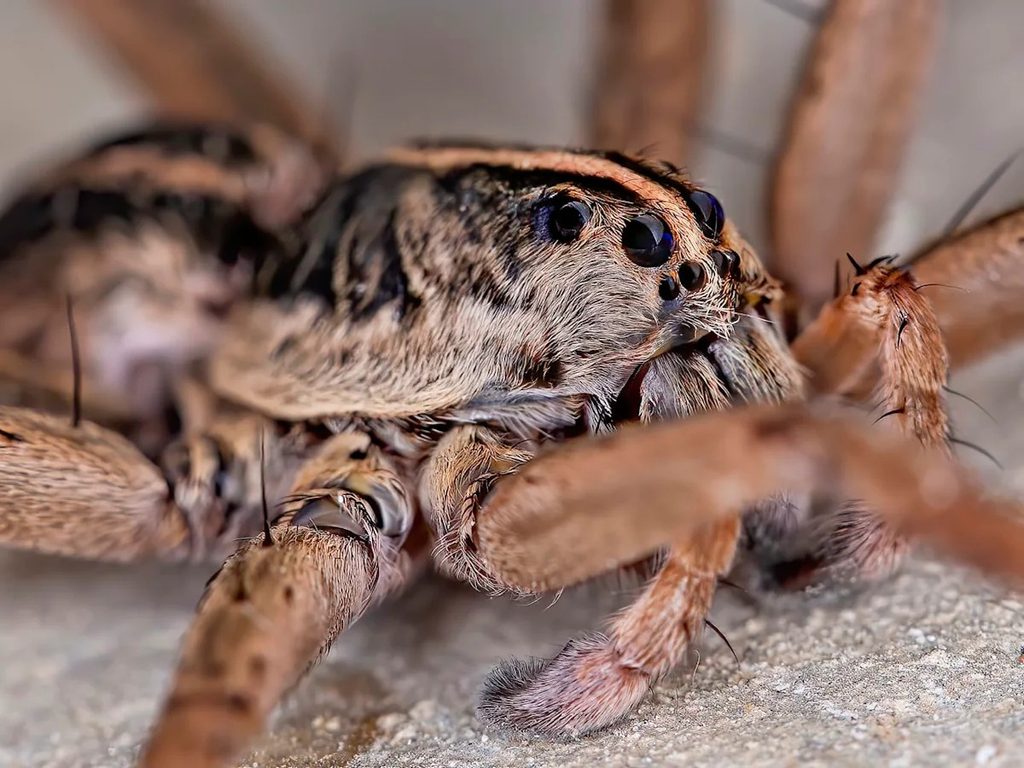
Wolf spiders are frequently mistaken for brown recluse spiders — a genuinely more medically concerning species whose bite can cause necrotic skin lesions and serious reactions, particularly in children, according to Rovner. The reliable distinguishing feature is a violin-shaped marking on the brown recluse’s upper body, absent in wolf spiders, which instead show more extensive striping and patterning across their entire body.
What to Actually Do If You Find One Indoors
Don’t panic — a single wolf spider indoors doesn’t mean an infestation, and since they eat other household insects, their presence can genuinely work in your favor.
To remove one safely, Dunlop recommends the classic glass-and-paper method: place a glass over the spider, slide a piece of paper or card underneath to seal it in, then carry it outside before releasing it. “Wolf spiders are quite nimble though, so you need to be quick, or they’ll run away,” he warns. “If they are scared, they will tend to run towards a dark corner where they feel less exposed.”
If a defensive bite does happen, expect localized pain, redness, and swelling that typically resolves within 24 hours without medical treatment. Symptoms lasting longer than that, or an unusually severe reaction, warrant medical attention.
When It’s Actually Worth Calling Pest Control
An occasional wolf spider sighting generally isn’t worth professional intervention. “Since these spiders are not dangerous, I feel this would be an unnecessary expense,” Dunlop says. “If you have large numbers of something like black widows or the violin spider, which do have a much nastier bite, then it might be worth calling in a professional.” That said, if wolf spiders keep showing up indoors repeatedly rather than as an occasional one-off, it may be worth having a professional inspect for whatever’s drawing them (or their prey) inside.
Keeping Them Out in the First Place
Sealing potential entry points goes a long way. Rovner recommends draft stoppers beneath exterior doors and caulking gaps around exterior walls and window frames. Since wolf spiders follow their food source, reducing insect activity around your home’s perimeter — clearing outdoor clutter and keeping woodpiles away from the foundation — tends to be the single most effective long-term prevention strategy, alongside standard measures like keeping doors and windows closed or fitted with screens.
Frequently Asked Questions
Are baby wolf spiders on their mother’s back dangerous to touch? The spiderlings themselves pose no more risk than an adult wolf spider — the real reason to leave them alone is that a mother wolf spider carrying young is more likely to act defensively if disturbed, not because the babies themselves are hazardous.
Can wolf spiders climb walls or furniture like other house spiders? They’re primarily ground-dwelling hunters and are generally less adept climbers than web-building house spiders, which is part of why you’re more likely to encounter one on the floor than on a wall or ceiling.
Is it true that most reported “spider bites” aren’t actually spider bites? Yes — research on suspected spider bites has repeatedly found that many are misattributed, with other insects, skin infections, or reactions to chemicals frequently responsible, since spiders generally bite defensively as a last resort rather than readily.
Sources: Jerome S. Rovner (Ohio University) and Jason Dunlop (Museum für Naturkunde Berlin), quoted above, and Ribeiro et al., “Wolf spider bites in São Paulo, Brazil: a clinical and epidemiological study of 515 cases,” Toxicon (1990).
Leave a Reply