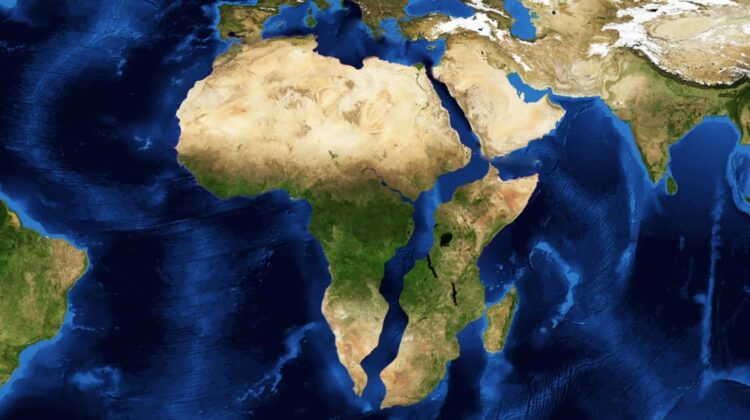
Beneath a remote basin spanning Kenya and Ethiopia, geologists have found something that rewrites two stories at once: how fast a continent can tear itself apart, and why one small patch of East Africa became one of the richest fossil-hunting grounds on Earth.
A Crust Thinner Than Anyone Expected
The study, published in Nature Communications by lead author Christian Rowan — a doctoral candidate at Columbia University’s Lamont-Doherty Earth Observatory — focused on the Turkana Rift Zone, part of the broader East African Rift System that’s slowly splitting the African continent into two separate plates: the large Nubian plate to the west, and the smaller Somali plate carrying much of the eastern coast and Madagascar.
Using high-resolution seismic reflection data originally collected by industry partners in collaboration with the Turkana Basin Institute — the research organization founded by paleoanthropologist Richard Leakey — Rowan’s team mapped the subsurface structure beneath the rift with a method comparable to an ultrasound of the Earth’s interior. What they found: along the rift’s axis, the crystalline crust has thinned to just 12.7 kilometers, plus or minus 2.8 kilometers — compared to more than 35 kilometers along the rift’s outer edges, and more than 25 kilometers in other, less-developed segments of the wider East African Rift System.
Crossing the Threshold Called “Necking”
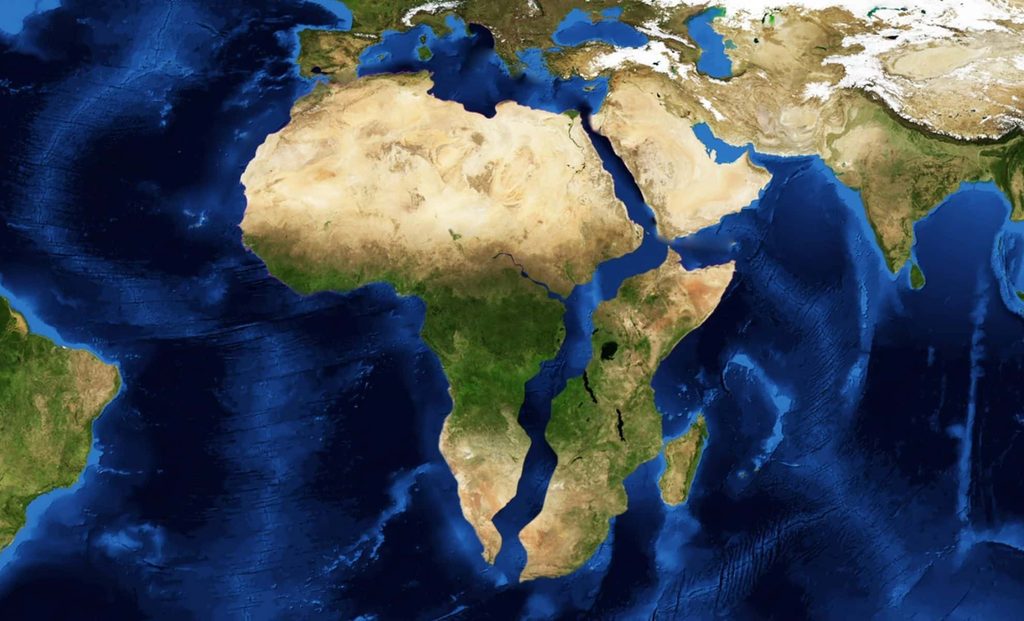
Once continental crust thins below roughly 15 kilometers, it enters a stage geologists call necking — a wedge-shaped thinning pattern that marks the point where continental breakup becomes essentially inevitable rather than merely possible. Researchers calculated “beta values” (a standard measure of crustal thinning) ranging from 1.9 to 3.1 along the rift axis; in rifted margins generally, values above 1.5 are associated with this necking phase rather than the earlier, more reversible stretching phase.
According to the study, the Turkana Rift is the first active continental rift ever identified undergoing this specific stage — meaning scientists now have a rare, real-time opportunity to study a transition that, until now, could only be reconstructed from long-dead, buried rift margins elsewhere in the world.
“The thinner the crust gets, the weaker it becomes, which helps promote continued rifting,” Rowan explained.
What Comes Next, Geologically Speaking
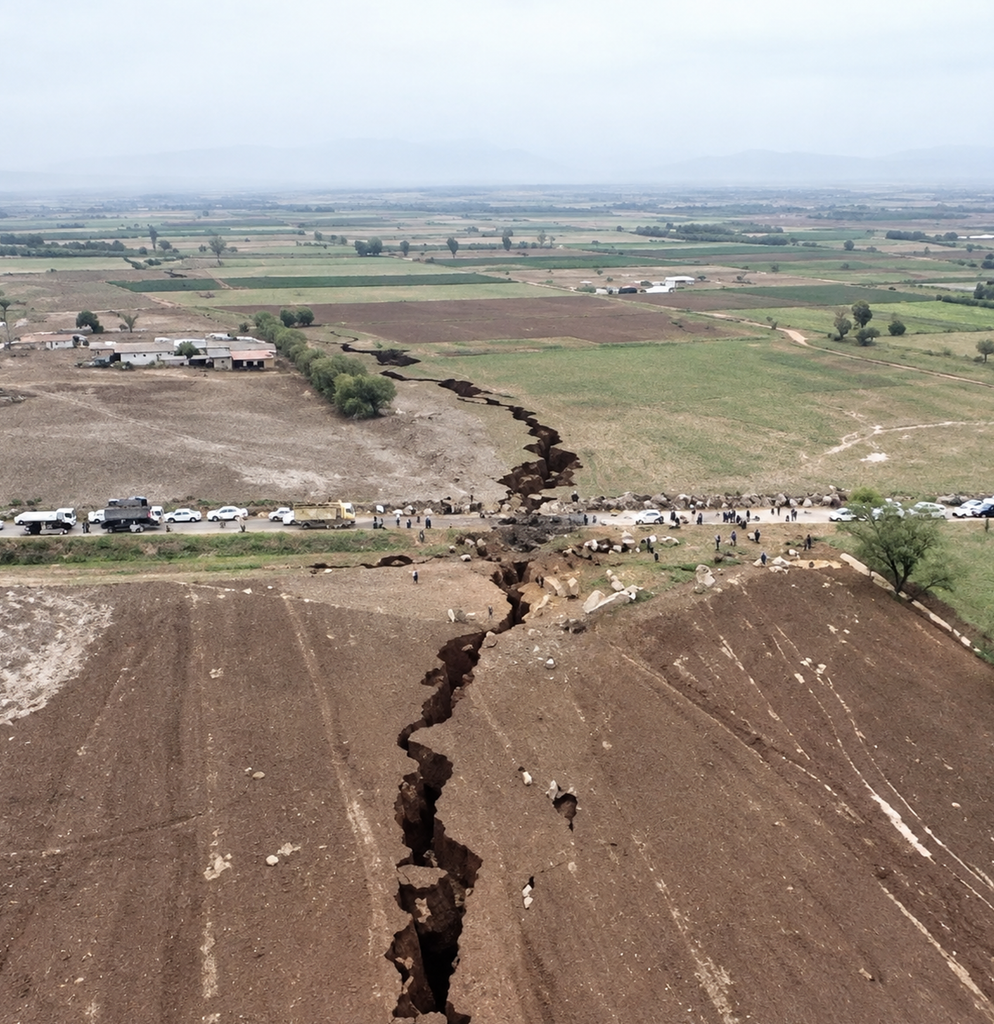
If the process continues on its current trajectory, the rift will eventually enter a final phase called oceanization — where the crust stretches so thin that magma erupts from below, pools, and cools into new seafloor, eventually allowing water from the Indian Ocean to flood in and form an entirely new ocean basin. This process is already visibly underway in the nearby Afar Depression in northeast Africa, near the Red Sea. Researchers estimate the Turkana Rift itself entered its necking phase roughly 4 million years ago — but caution that full ocean formation remains a process measured in millions of years, not something anyone alive today will witness.
An Unexpected Connection to Human Origins
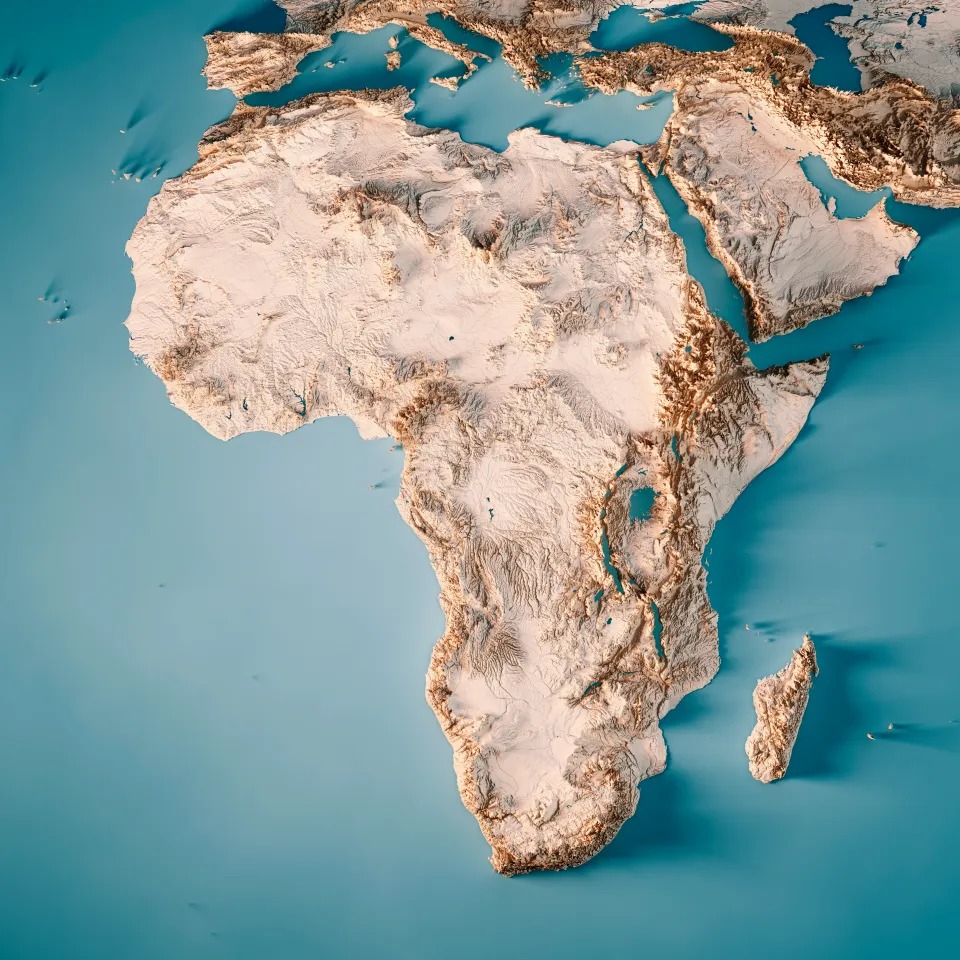
Here’s where the geology gets personal for our own species. The Turkana Rift has yielded more than 1,200 hominin fossils spanning the last 4 million years — roughly one-third of all hominin fossils found anywhere in Africa, including famous specimens like the Homo erectus skull known as “Turkana Boy” (WT 15000) and ER 3733. For decades, many researchers treated the region as an unusually important evolutionary hotspot in its own right.
Rowan’s team proposes a more cautious explanation. The timing of the necking phase’s onset — around 4 million years ago — lines up closely with a major shift in the fossil record’s quality and continuity. Before necking began, the rift held a patchwork of small, disconnected sedimentary basins that filled slowly and unevenly, leaving a thin, broken fossil record. Once necking took hold, the land subsided more rapidly, isolated basins merged into larger, connected systems, and sediment began accumulating far faster — exactly the conditions that bury and preserve bone effectively over long, continuous stretches of time.
“The conditions were right to preserve a continuous fossil record,” Rowan said. In other words: Turkana may not have been uniquely important to human evolution itself — it may simply have been uniquely good at recording it.
Frequently Asked Questions
When will Africa actually split into two continents? Researchers stress this remains a process measured in millions of years — the region has crossed an important geological threshold, but full ocean formation is not something that will happen on any timescale relevant to current or near-future generations.
Does this mean the Turkana Rift wasn’t actually important to human evolution? Not exactly — the fossils found there are still genuine and scientifically invaluable; the new finding suggests the region’s disproportionate fossil abundance may be better explained by unusually favorable preservation conditions than by human ancestors being unusually concentrated there specifically.
How did scientists measure crust thickness so precisely without drilling? The team used high-resolution seismic reflection data — tracking how acoustic waves bounce off underground rock layers — a technique that functions similarly to an ultrasound, allowing researchers to map subsurface structure without physically drilling into the crust.
Sources: Rowan et al., “Necking of the active Turkana Rift Zone and the priming of eastern Africa for continental breakup,” Nature Communications (2026); Science News; and AOL/The Brighter Side of News, cited above.
Leave a Reply