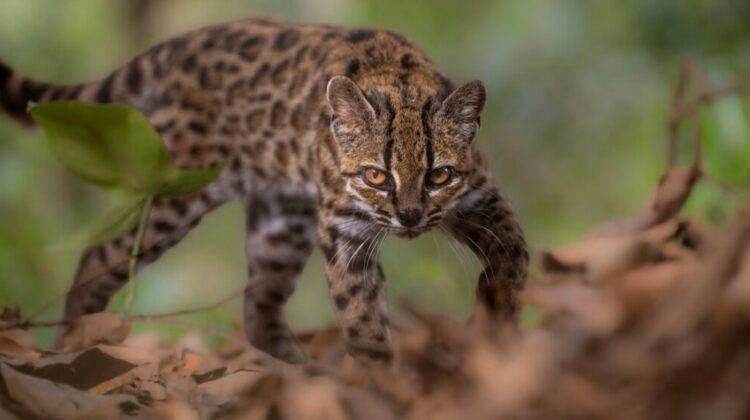
In 2017, a Bolivian wildlife sanctuary called biologist Paola Nogales-Ascarrunz about an unusual animal that had just been surrendered to them — described only as “a weird cat.” Nearly a decade later, that same animal has turned out to be something genuinely historic: the first new species of cat discovered anywhere in the world in more than 100 years.
A Kitten That Didn’t Add Up
The animal had originally been found as a kitten near a forest road by a local man, who assumed it was some kind of domestic breed and raised it at home for about a year before realizing it was clearly wild and would be better off at a sanctuary.
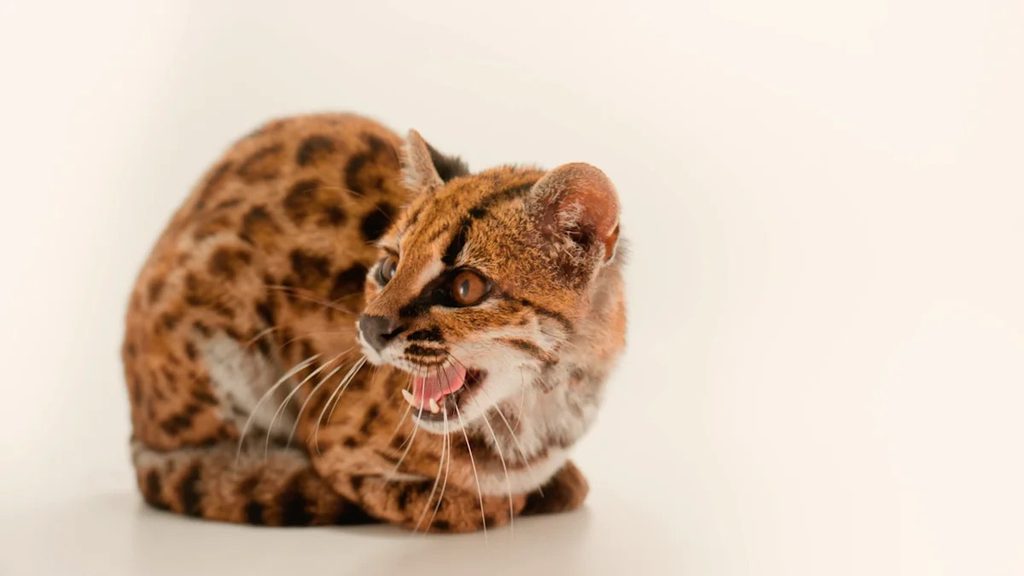
Nogales-Ascarrunz, a National Geographic Explorer and founder of the Bolivian Felids Research Program, traveled to see the cat at the Senda Verde wildlife sanctuary on the subtropical slopes of the Bolivian Andes. Even on sight, something about the animal stood out — a small, scrunched face, short rounded ears, long whiskers, and a leopard-like spotted coat, on a body clearly too small to be an ordinary housecat.
“I took a hundred pictures of it,” Nogales-Ascarrunz recalled. “I was so fascinated.”
A Guidebook That Didn’t Match
At first, she assumed the animal was simply a member of Leopardus tigrinus — a widely distributed small spotted cat known by various names, including tigrina, oncilla, or little spotted cat, first scientifically described in 1775 from a single illustration.
It wasn’t until 2019, while compiling a booklet on Bolivia’s wild cat species, that Nogales-Ascarrunz noticed something odd: her photos didn’t match reference images of L. tigrinus from neighboring Brazil. The rosette markings on her mystery cat were noticeably larger. “This is so wrong,” she remembers thinking.
It would take several more years — and the development of her own genetic analysis skills — before she could investigate properly. Working alongside geneticist Eduardo Eizirik of the Pontifical Catholic University of Rio Grande do Sul in Brazil, and co-lead author Jonas Lescroart of the University of Antwerp, the team finally traced the animal’s true position on the cat family tree.
Named After What Locals Already Called It
The researchers ultimately proposed the name Leopardus tilcayo, borrowing the name already used by people living in the region. When Nogales-Ascarrunz — herself Bolivian — asked locals where the name came from, the answer was simple: nobody quite knew. “My grandpa called it tilcayo, so I call it tilcayo,” one told her. The word doesn’t appear to carry any specific meaning in Spanish or in Quechua, the Indigenous language widely spoken in Bolivia.
So far, scientists know that L. tilcayo lives in Bolivia’s Yungas forest ecoregion, on the eastern slope of the Andes — but almost everything else about its life, from diet to reproduction to population size, remains unknown. “So many basic things are not known,” Nogales-Ascarrunz said.
Redrawing The Cat Family Tree
The discovery, published in the journal Current Biology, is notable for reasons beyond novelty. It isn’t the confirmation of a long-suspected species, nor a subspecies simply being reclassified — both far more common types of findings. This is an entirely new branch on the felid family tree, and the first fully new cat species described since the pampas cat in 1923.
Modern genomic analysis made the discovery possible in a way that physical traits alone couldn’t. Eizirik’s team has spent roughly 25 years working to untangle the relationships within the Leopardus genus, and each closer look has revealed more hidden diversity than expected. A 2013 study first showed that L. tigrinus was actually two separate species. A 2024 study split off a third. The new research pushes that count to five distinct tiger cat species altogether.
“What we once thought to be a single species, we’ve started to see that it was actually a species complex,” Eizirik said.
Genes Reveal What Eyes Can Miss
Small wild cats are notoriously difficult to study — elusive, poorly documented, and often nearly identical to each other on sight or even on trail-camera footage. One museum specimen included in the new study, for instance, had originally been misidentified as a margay, another small spotted cat, and was only correctly identified as a tiger cat based on the direction its nape hairs grew.
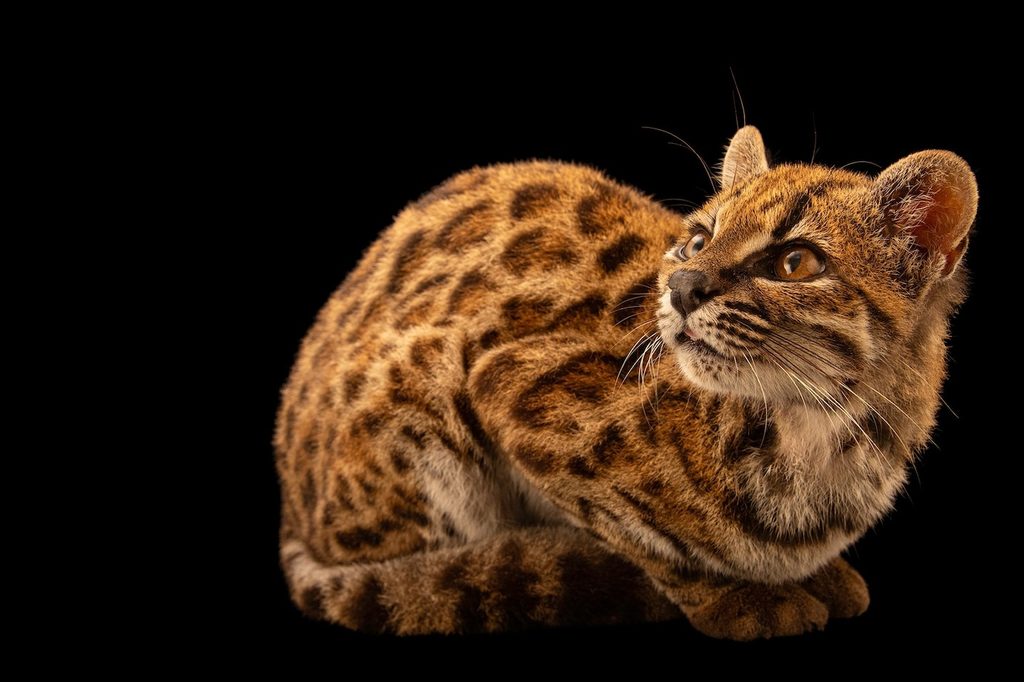
By comparing full genomes from 38 individuals across the Leopardus genus, the researchers found that L. tilcayo wasn’t just distinct from other tiger cat species — it had split off from them roughly 1.4 million years ago, an evolutionary gap comparable to the one separating modern lions from the extinct cave lion.
James Sanderson, founder of the Small Wild Cat Conservation Foundation, who wasn’t involved in the study, said the findings “profoundly change how small cat specialists group small cat species in genus Leopardus.” The same paper also proposes a new tiger cat subspecies in Peru, and Sanderson said the underlying data hints that the margay — long assumed to be a single species ranging from Mexico to Argentina — may actually represent four distinct species, though Eizirik cautioned that a more focused study would be needed before making that claim formally.
Sanderson believes this is likely just the beginning. “It’s by no means a stretch of the imagination that the improved methods used in this study will reveal new species of small wild cats in Africa and Asia,” he said.
Why This Matters For Conservation
Splitting one recognized species into several isn’t just a taxonomic technicality — it can reshape how endangered a given population is considered to be.
“If you think [the tiger cat] is a single thing from southern Brazil all the way to Costa Rica, you’re going to find it’s not endangered,” Eizirik explained. “But if we find that it’s not a single thing, but actually five things, each of them must be assessed separately.”
Sanderson agreed that these distinctions raise the stakes. “Once three species become five species, each population is reduced,” he said. “Therefore conservation efforts must increase, perhaps urgently, depending on estimated population sizes.” For now, researchers don’t yet know how many tilcayos exist in the wild.
The Bigger Picture
For Nogales-Ascarrunz, the science is only part of the story. “Our world is extremely complex,” she said. “Sometimes we think that most of it is known, that there’s not a whole lot to discover, but in fact, it’s the other way around.”
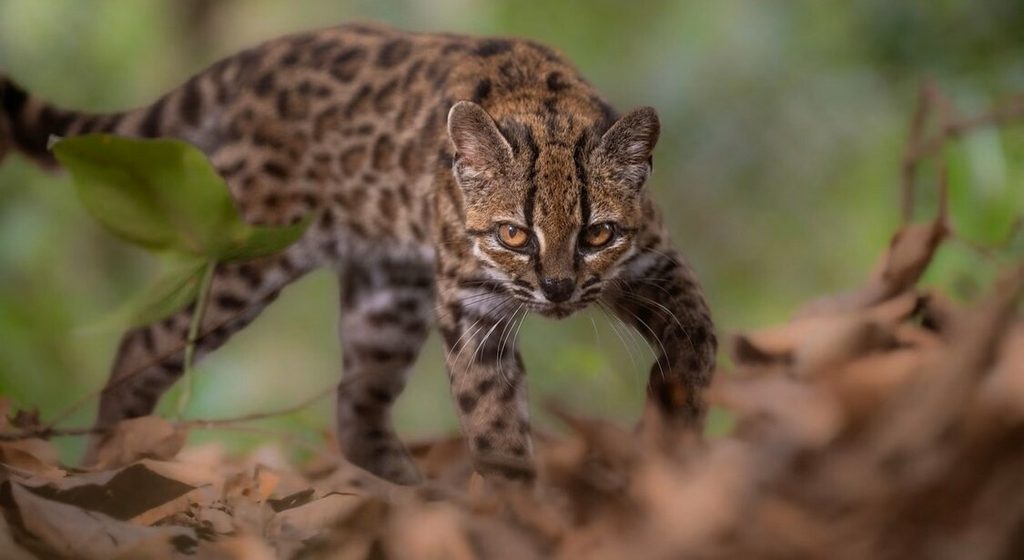
New species discoveries are common in the world of insects, microbes, and other small, easily overlooked organisms — but a five-pound cat is a different story entirely.
“Even in the cats, there are things out there that are undescribed, things that people haven’t found yet,” Nogales-Ascarrunz said. “So let’s go out and find them and protect them.”
Frequently Asked Questions
What is Leopardus tilcayo? It’s a newly described species of small wild cat found in Bolivia’s Yungas forest region on the eastern slope of the Andes, identified through genomic analysis as distinct from other tiger cat species in the genus Leopardus.
Why is this discovery such a big deal? It’s the first entirely new cat species described in more than 100 years — not a reclassified subspecies or a long-suspected species finally confirmed, but a genuinely new addition to the cat family tree.
How was the new species identified? Researchers compared complete genomes from 38 individual cats across the Leopardus genus and found that this population had diverged from its closest relatives roughly 1.4 million years ago — evidence strong enough to support recognizing it as a distinct species, beyond what physical appearance alone could show.
What does the name “tilcayo” mean? It’s the name local people in Bolivia already use for the cat, though its exact origin and meaning have been lost — researchers who asked were simply told it had been passed down from earlier generations.
Could there be more undiscovered cat species out there? Scientists involved in the research believe so. The genomic methods used to identify L. tilcayo have already suggested the margay may actually represent up to four distinct species, and researchers expect similar techniques could reveal new small wild cat species in Africa and Asia as well.
Sources: Current Biology (peer-reviewed study), prior taxonomic research on the Leopardus genus, and additional reporting on related tiger cat species discoveries, cited above.
Leave a Reply