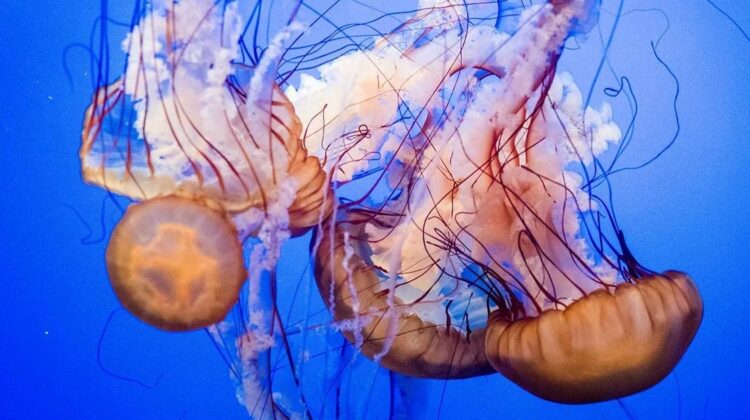
A freediver off the coast of Wales came face-to-face with something he never expected to see in local waters — a jellyfish so large he could only compare it to a bus.
“Three Turned To 10, Then To 20”
Iestyn Morgan, a 21-year-old from Pembrokeshire, was swimming near Trefin Beach when he noticed tentacles drifting through the water around him. What started as a handful quickly multiplied.
“Three turned to 10, and then to 20,” Morgan told the BBC after sharing footage of the encounter on Instagram in late August. “They just kept on coming.”
The animal turned out to be a lion’s mane jellyfish — a species Morgan had never encountered in Wales before — and by his estimate, it measured somewhere between 10 and 15 meters, or roughly 33 to 49 feet. Its tentacles stretched so far that they extended beyond what he could see. At first, Morgan assumed he’d spotted a compass jellyfish, a species native to Welsh waters, before realizing the animal in front of him was far too large to be anything but a lion’s mane.
“It must have been the length of a bus or small train,” he said.
One Of The Longest Animals On Earth
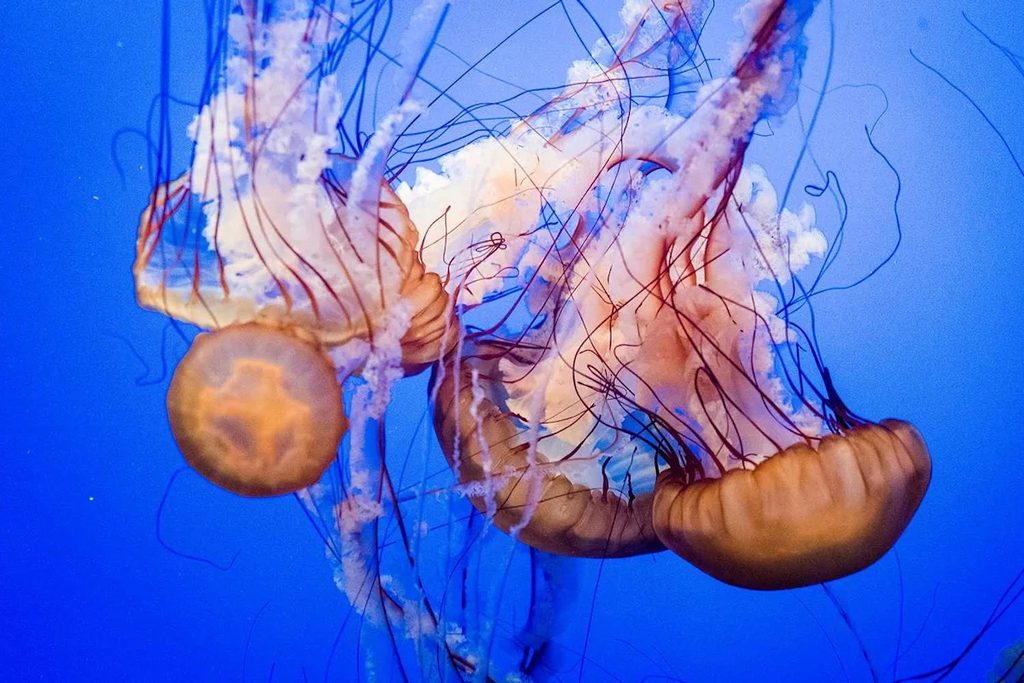
The lion’s mane jellyfish gets its name from the long, flowing tentacles that trail behind its bell, resembling a mane. While the bell itself typically grows up to around 3 meters across, the tentacles can stretch beyond 30 meters — making the species, by some measures, one of the longest animals on the planet.
Dr. Cathy Lucas, a marine biologist at the University of Southampton, said Morgan’s footage captured that scale unusually well. She noted that the tentacles are often so long and fine that swimmers can miss them entirely — recalling that during fieldwork in Scotland, divers would regularly come away with stray bits of tentacle on their gear or skin even when no jellyfish was visible nearby. Detached tentacle fragments, she added, can still deliver a sting.
Lucas described the lion’s mane sting as unpleasant but not dangerous, calling it among the most painful found in UK waters. Her advice for anyone stung: scrape the tentacle off with a stick rather than touching it directly, then rinse the area with warm water.
A Species Drifting Further From Home
Lion’s mane jellyfish are typically found in the colder waters around Scotland, according to Lucas, with Welsh sightings historically rare and generally limited to late summer or autumn. But Morgan believes those rare appearances are becoming less rare.
He’s also noticed other warm-water species turning up more frequently along the Welsh coast, including triggerfish, a species typically associated with the Mediterranean. That observation lines up with what researchers have been documenting: marine heatwaves are gradually favoring species adapted to warmer conditions, while creating harder conditions for marine life adapted to cooler water — part of a broader pattern of species distributions shifting as ocean temperatures change.
Filming The Sea To Protect It
Morgan spends much of his time filming marine wildlife, aiming to make the underwater world feel more accessible to people and to raise awareness of the threats facing UK seas. He was careful to note that his approach to encounters like this one is strictly hands-off.
“I just get in the water, film, and swim,” he said.
Frequently Asked Questions
Is a lion’s mane jellyfish dangerous to humans? Its sting is considered one of the most painful in UK waters, but it is not dangerous in most cases. Experts recommend scraping off any attached tentacle with a stick rather than touching it directly, then rinsing the area with warm water.
Why was this jellyfish spotted so far from its usual habitat? Lion’s mane jellyfish are typically found in the colder waters around Scotland. Researchers say marine heatwaves and shifting ocean temperatures are increasingly pushing species like this one into areas where they were historically rare, including parts of Wales.
How big can lion’s mane jellyfish actually get? Their bell can grow up to around 3 meters across, but their tentacles can extend more than 30 meters, making them one of the longest animals in the world by some measurements.
Can a detached jellyfish tentacle still sting you? Yes. Even tentacle fragments that have broken off from the jellyfish retain their stinging cells and can still deliver a painful sting.
Are more warm-water marine species appearing in Welsh waters? According to observations from divers like Iestyn Morgan and broader scientific monitoring, species more typically associated with warmer waters, such as triggerfish, are being spotted with increasing frequency along the Welsh coast.
Sources: BBC News (via PEOPLE.com), The Wildlife Trusts species database, and University of Southampton marine biology research, cited above.
Leave a Reply