Some award-winning photography stories are about cutting-edge gear. This one is about a photographer, a fjord in Patagonia, and a camera body that was already well into its second decade of use.
A Fleeting, Calm Encounter
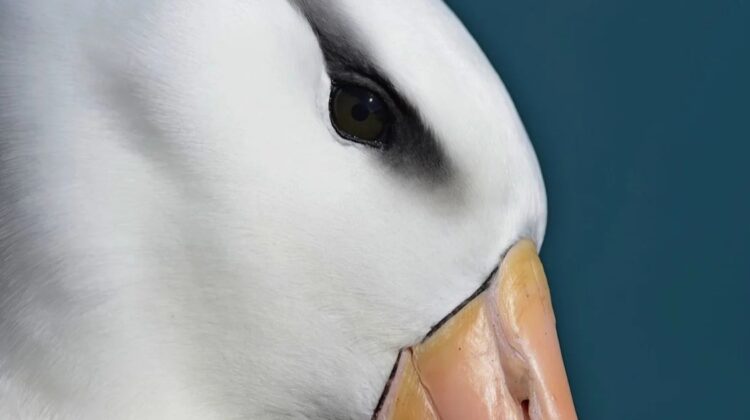
Chilean wildlife photographer Rodrigo González Pairoa won the Birds Without Borders category (Chile and Colombia) in the 2026 Audubon Photography Awards for a frame-filling portrait of a Black-browed Albatross, taken at Albatross Islet in the Almirantazgo Fjord, in Chile’s Magallanes and Chilean Antarctica region.
Conditions were far from ideal. “It was almost impossible to keep the camera steady,” Pairoa recalled. “In the remote Almirantazgo Sound, the biting cold, ever-changing light, and unpredictable wind forced me to readjust my stance and refocus after every blast of photos.”
Despite the difficult setting, the bird itself stayed remarkably calm, letting Pairoa approach slowly. “In an almost comical moment, it tilted its head, as if observing me with the same curiosity with which I was photographing it,” he said. “I filled the frame with its face, revealing the dark outline around its eye and the sculptural texture of its plumage. In that brief moment, the wind ceased.” He described the resulting image as capturing “a fleeting moment of silent, intimate connection with an iconic species of the Southern Seas,” adding that he hoped viewers would feel that same closeness.
The Gear Behind the Shot
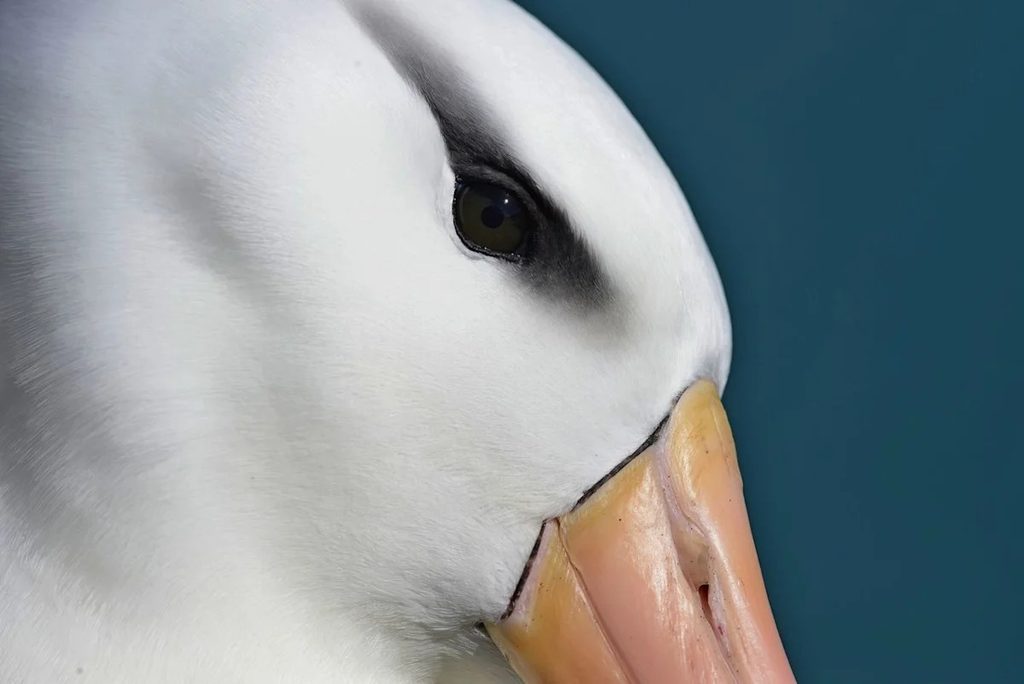
Pairoa captured the winning image using a Nikon D600 — a full-frame DSLR originally released in 2012, making it 14 years old at the time of the award — paired with a Nikon AF-S 300mm f/4D IF-ED lens. His settings: 1/1600 sec, f/11, ISO 400. The camera’s age is a small but genuine detail worth noting in an industry often fixated on the newest equipment: it’s a reminder that technique, patience, and timing typically matter more to a winning wildlife shot than sensor specs.
About the Species
The Black-browed Albatross is one of the smaller and most widely distributed albatross species, breeding on islands across the sub-Antarctic and southern oceans. Its range at sea stretches from the edge of the Antarctic continent north to the offshore waters of Brazil and Australia.
Despite appearing to roam freely across the world’s oceans, research shows individual albatrosses tend to follow more specific migratory patterns tied to where they hatched. Birds from South Georgia Island, for instance, mostly migrate toward waters off southern Africa after breeding season, while birds from the Falkland Islands tend to favor the seas east of South America instead.
What the Judges Saw
Judge Claudio Contreras Koob praised the image’s restraint: “This image caught the judges’ attention because it offers an almost abstract view of the albatross. The skillful use of a modest background, which does not distract the viewer, allows the eye to instead follow the lines and tones that lead us to the albatross’s piercing gaze, the focal point of the composition.”
About the Awards

Now in its 17th year, the Audubon Photography Awards is run by the National Audubon Society to celebrate photography and video that captures both the beauty of birds and the conservation challenges they face. For the second year running, the competition awarded prizes to photographers based in Chile and Colombia alongside those from the United States and Canada — nine prizes went to Chile and Colombia-based entrants in 2026, and eight to U.S. and Canada-based ones, reflecting the contest’s stated goal of using birds to connect people across different geographies and ecosystems.
Frequently Asked Questions
Does using older camera gear put wildlife photographers at a real disadvantage in competitions like this? Not necessarily — this win is a notable example of how composition, patience, and timing can outweigh equipment age, though a longer telephoto lens (like the 300mm used here) remains genuinely important for approaching skittish or distant wildlife safely.
Where specifically was this photo taken? Albatross Islet in the Almirantazgo Fjord, located in Chile’s Magallanes and Chilean Antarctica region — a remote sub-Antarctic area known for extreme, fast-changing weather conditions.
Do all Black-browed Albatrosses migrate to the same wintering grounds? No — research shows migration destinations vary by breeding colony, with birds from South Georgia Island and the Falkland Islands, for example, typically heading to different regions of the ocean after the breeding season ends.
Sources: Digital Camera World, the National Audubon Society, Smithsonian Magazine, and DPReview, cited above.
Leave a Reply