• Skip to main content
  • Skip to primary sidebar
  • Skip to footer
  • Home
  • About Us
  • Copyright Report
  • Submit Content
  • Terms
  • Privacy Policy
  • Legal Disclaimer

Hasan Jasim

Hasan Jasim is a place where you may get entertainment, viral videos, trending material, and breaking news. For a social generation, we are the largest community on the planet.

Why Is It Colder At Higher Altitudes, Despite Being Closer To The Sun?

by Stephen King Leave a Comment

ShareTweet

It’s a well-known rule that the higher you go on Earth, the colder it gets. But there are a few people who haven’t quite grasped why this is the case, with some asking why it is that the tops of mountains are colder when hot air rises and others asking why the tops of mountains are snowy when they are closer to the Sun than the ground is.

First off, it may be instinctive to assume “closer to Sun = hotter,” but your elevation on Earth has little bearing on the energy you receive from the Sun. The heat we feel on Earth is not direct heat energy from the Sun but the result of solar radiation emitted from the Sun (wavelengths across the electromagnetic spectrum, including visible light) interacting with particles on Earth.
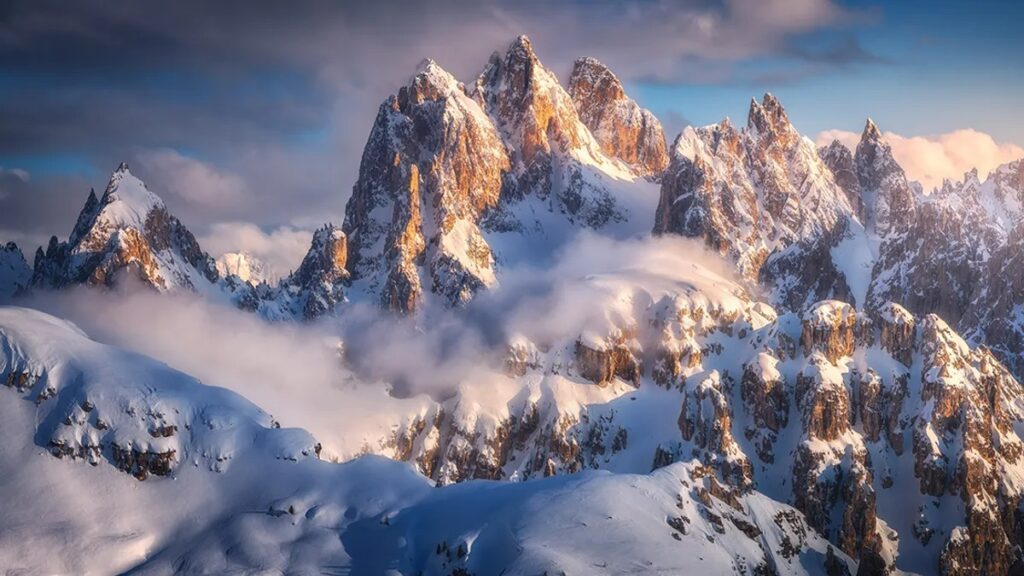
While this has a bearing on the temperature of planets at different distances in our Solar System, the Sun is 151.88 million kilometers (93 million miles) away from Earth, rendering Everest’s impressive 8,849 meters (29,032 feet) height pretty irrelevant.

The real reason why higher elevations are colder is because of how much thicker the atmosphere is at sea level compared to higher altitudes. On Everest, for example, the air pressure is roughly one third of that at sea level, though this fluctuates with the weather.

As air is heated, it expands, making more space between the molecules. In this packet of warm air, the molecules are more spread out. Being less dense than surrounding colder air, it rises due to the buoyant force.

But this doesn’t mean that mountains should be hot either.

“Higher elevations are cooler than lower elevations because of adiabatic cooling. When a parcel of air moves from a low elevation to a high elevation, it expands because it is under less pressure. It has less weight pressing down on it from the air above it. As the air expands, its temperature drops,” NASA explains.

“The cool air temperature freezes precipitation, and snow falls instead of rain. The cold air also cools that ground so that, when snow falls, it is more likely to accumulate than to melt.”

Filed Under: Trends Worldwide Tagged With: altitudes,, being, closer, colder, despite, higher, sun:, trends, worldwide

Reader Interactions

Leave a Reply Cancel reply

Your email address will not be published. Required fields are marked *

Primary Sidebar

More to See

Kenya burns seized ivory in fight against poaching

By Stephen King

A Photographer Captured The ‘Magical’ Moment He Encountered a Rare White Reindeer in The Snow

By Stephen King

Two Creators Filmed The Speed Of Light At 10 Trillion Frames Per Second

By Stephen King

Shelter finds 7 cats left up in taped-up box with no air holes — now they’re getting a second chance

By Stephen King

Adorable Photograph of Two Cute Newts Posing for the Camera Captured by Photographer

By Stephen King

Dog raises alarm about friend trapped in the harbor, leading to life-saving rescue just in time

By Stephen King

Round Balance: Tanya Preminger’s Land Art Transcends Boundaries and Challenges Perception

By Stephen King

Footer

About hasanjasim.online

Hasanjasim.online is a digital platform dedicated to publishing diverse articles and content, with a strong focus on topics related to the animal kingdom, nature, and the environment. The website offers engaging stories and visual content aimed at raising awareness about animal welfare and showcasing the wonders of the natural world, making it a great destination for nature lovers and curious readers alike.

Recent

  • Scientists Discover Orcas Deliberately Smashing Giant Sunfish Until They Explode
  • This Rare Turtle Can Breathe Through Its Rear — And Scientists Say It’s One of Earth’s Most Extraordinary Reptiles
  • Do Whales Have Hair? The Surprising Truth About These Giant Ocean Mammals
  • Scientists Think They’ve Finally Worked Out Why This Image Freaks You Out
  • Tragic update on story of bear stuck on top of telephone pole
  • Royal Mail Worker Accused of Kicking Blind Dog Sparks Outrage as Fellow Postal Staff Defend His Actions
  • Photographer Travels 900 Miles to Capture One of the World’s Rarest Snowy Owls

Search