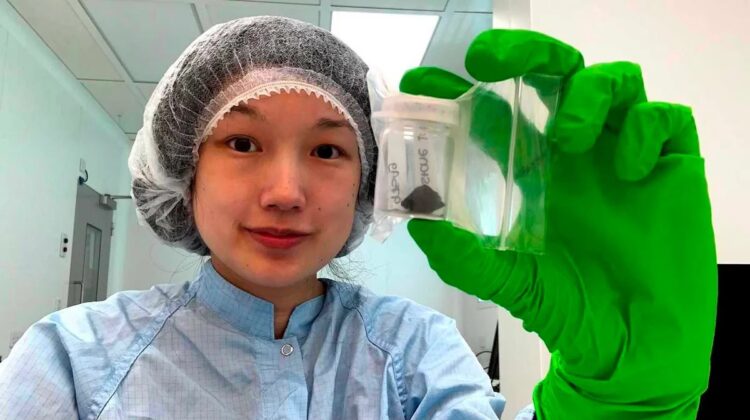
The meteorite that thousands of people witnessed fall over Winchcombe, Gloucestershire in 2021 contains organic compounds that may help explain the origins of life and may represent a new meteorite class.
The discovery of amino acids – organic compounds essential for life on Earth – confirmed the significance of the UK’s first meteorite in 30 years, collected after being seen falling. The concentrations of amino acids and polycyclic aromatic hydrocarbons (PAHs) are lower than in other asteroid remnants (1.1 and 6.2 parts per million, respectively), but this may make the discovery even more intriguing.
According to a new paper, the Winchcombe meteorite not only contains organic materials, but it also appears to represent a new class of meteorites. Some of the materials in it have been altered in ways that indicate at least three brief outbursts of liquid water on the asteroid body from which it originated.
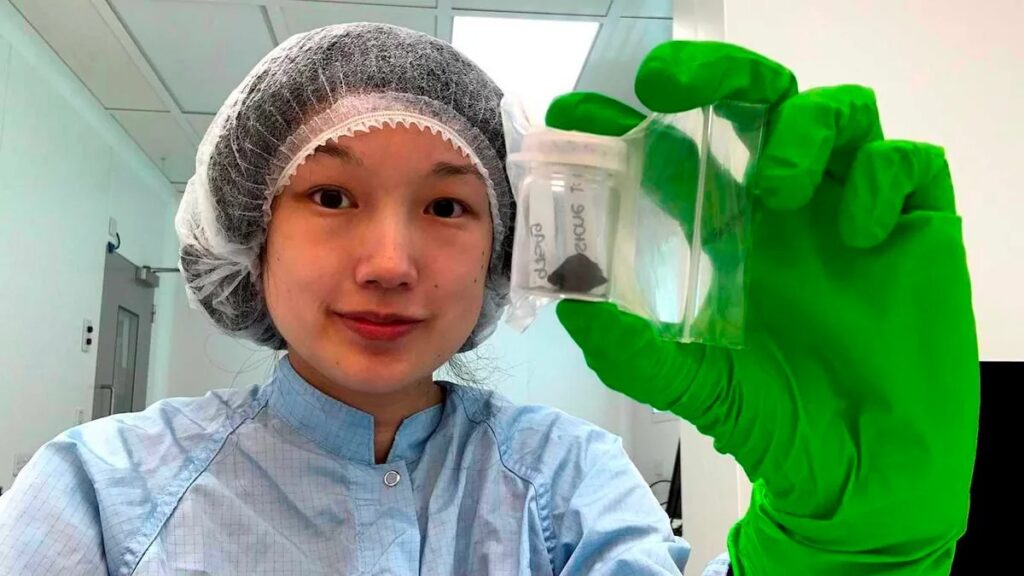
Meteorites do not land without causing a spectacular sky show, at least at night. Because of the proliferation of personal cameras and fireball tracking networks, we are increasingly able to determine objects’ flightpaths and use this information to calculate the orbits of asteroids from which meteorites originate. When the composition of a meteorite and its former orbit can be matched, the potential contribution to understanding solar system evolution is greatly increased. Winchcombe was one of the first 40 meteorites whose origins could be traced back to the asteroid belt, thanks to information from the UK fireball network.
Almost immediately, it was clear that this was a significant discovery; within two weeks, the presence of water-bearing minerals was reported. Winchcombe stood out as a carbonaceous chondrite, which makes up only 4% of meteorites and may have seeded life on Earth.
“Studying the organic inventory of the Winchcombe meteorite provided us with a window into the past, showing how simple chemistry kicked off the origin of life at the birth of our solar system,” said Dr Queenie Chan of the Royal Holloway University of London in a statement. “Discovering these organic molecules of life’s precursors allowed us to understand the fall of similar material to the Earth’s surface prior to the emergence of life on our own planet.”
The fact that the first of four surviving pieces was collected within 12 hours of landing, leaving little time for contamination, increased the value of the meteorite. Indeed, because the abundance of organic material in the meteorite was ten times lower than in other carbonaceous chondrites, the meteorite might not have been distinguishable from Earthly contamination if it had not been recovered so quickly. Some of the amino acids discovered are extremely rare on Earth, confirming their extraterrestrial origins.
The Winchcombe stones had several characteristics not previously seen in meteorites, including low amino acid abundance for a carbonaceous chondrite but unusual amino acid and PAH ratios. When combined with the incomplete conversion of Winchcombe’s components into solid rock, the authors speculated that Winchcombe could represent a previously unknown class of meteorite.
Very little of the Winchcombe meteorite made it to the ground, possibly due to its weak structure. Only 600 grams (1.3 pounds) have been recovered, compared to a carbonaceous chondrite weighing 27 kilograms (60 pounds) that landed in Costa Rica in 2019. This hampered certain types of analysis that require large numbers of samples.
Winchcombe, like most asteroids, is thought to have been part of a larger asteroid, with the piece that hit the Earth’s atmosphere being knocked off in a collision before wandering in space for a long time.
Leave a Reply