
Most wildlife rehabilitation centers go their entire existence without seeing a single albino cardinal. Raven Ridge Wildlife Center in Lancaster County, Pennsylvania, took in two within about six weeks of each other this summer.
Found During a Brutal Heat Wave
The first bird arrived on July 1, 2026, after a woman found him struggling beneath a parked car in Lancaster City during a heat wave that pushed temperatures to 99°F, with heat index values well above 100. According to Tracie Young, who founded Raven Ridge Wildlife Center 11 years ago in Washington Boro, staff initially assumed the fledgling was simply white — until they opened the box and realized what they were actually looking at.
“The chances of seeing an albino cardinal are extremely low,” the center wrote in a Facebook post. “Albino cardinals are considered one of the rarest bird sightings, with estimates suggesting that the odds of encountering any cardinal displaying white feathers are about 1 in 30,000.” True albinism — a complete absence of pigmentation, distinct from the broader category of white-feathered cardinals — is rarer still.
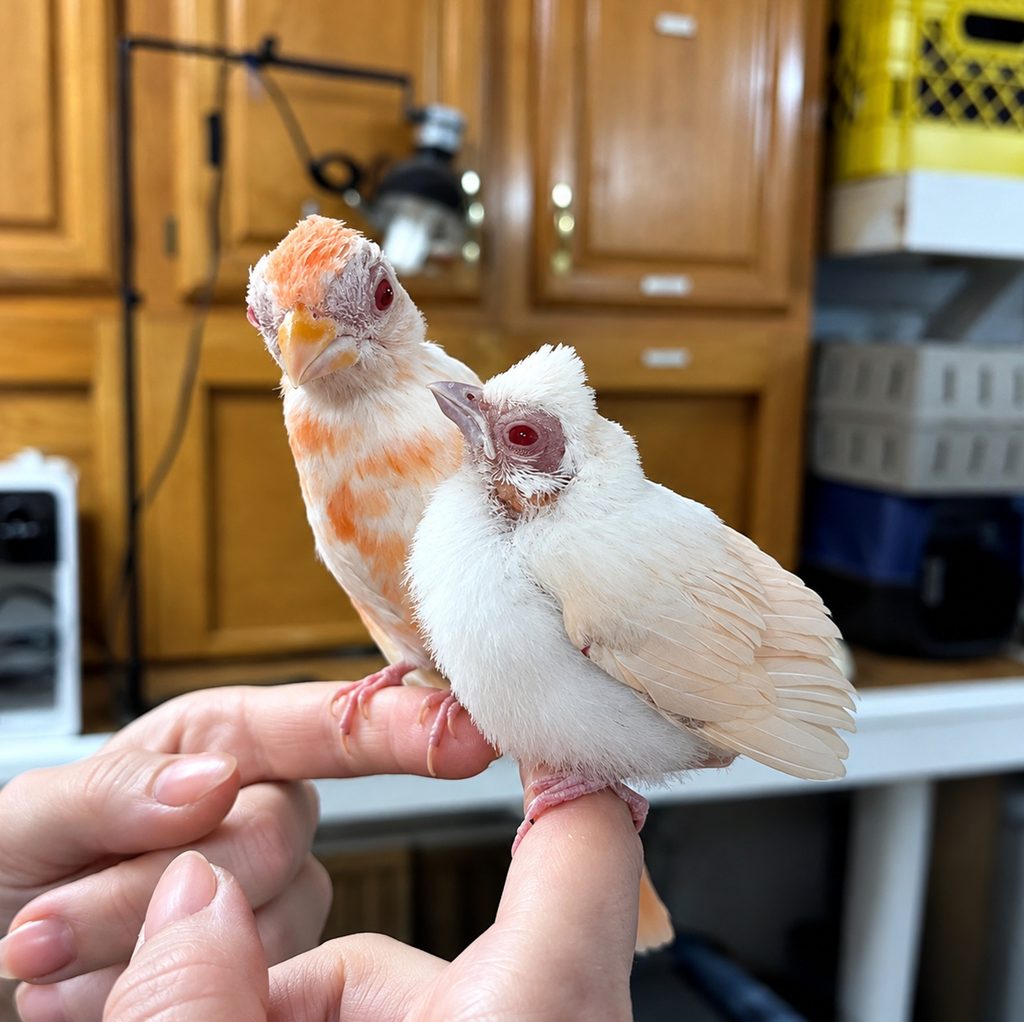
Meet Frosty
Staff named the fledgling Frosty. True albino cardinals lack melanin entirely, giving them white plumage, pink or red eyes, and pale legs and beaks — a combination that leaves them both easier for predators to spot and less able to see well themselves, a serious double disadvantage in the wild. Given those risks, Raven Ridge decided Frosty would remain in their permanent care rather than be released.
Young told LancasterOnline that Frosty adjusted quickly to life at the center, hopping into staff members’ hands at feeding time and showing an unusually easy-going temperament. “He’s very easy to take care of, very friendly,” she said. “We have a lot of birders on staff, and everyone is just in awe of him.” Staff have said he may eventually become an animal ambassador, helping with public education events once he’s old enough to gauge his suitability for that role.
Gelato Arrives — and a Harder Outcome
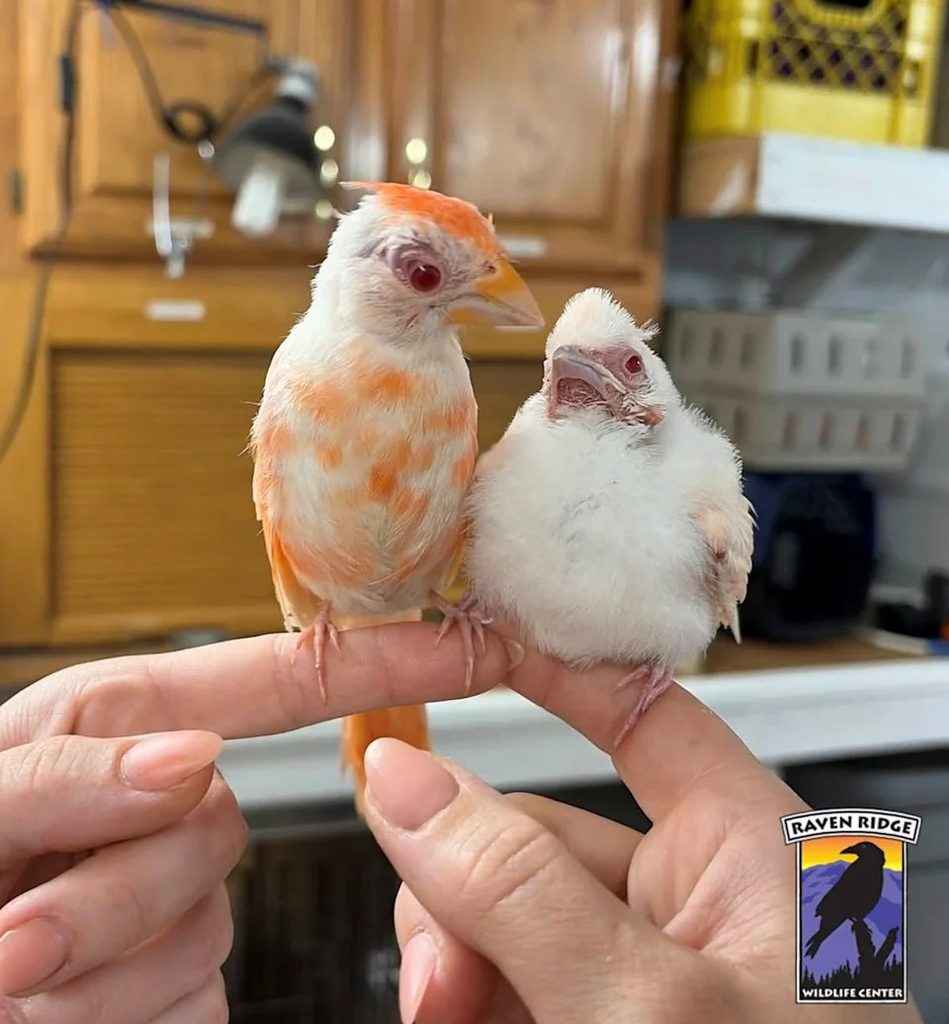
About six weeks later, in mid-August, Raven Ridge admitted a second albino cardinal fledgling. “We couldn’t believe that now we had two!” the center wrote. They named this one Gelato.
Gelato’s case was more medically complicated from the start: the bird arrived with a severe ear infection. Despite the center’s efforts, Gelato didn’t survive. Raven Ridge noted that albino cardinals generally have shortened lifespans compared to normally pigmented birds, a pattern tied to the same vision and predator-visibility issues that affect their odds in the wild.
Why Albinism Is So Rare in Cardinals Specifically
Albinism results from a genetic mutation that prevents an animal from producing melanin, the pigment responsible for coloring in feathers, skin, and eyes. In songbirds, this mutation is uncommon to begin with, and it carries a steep survival cost: a bright white cardinal has essentially no camouflage against predators, and impaired eyesight — common in albino animals generally — makes it harder to spot threats or find food independently. That combination is likely why most wild albino birds don’t survive long enough to be documented at all, making sightings like Frosty and Gelato’s arrival genuinely rare data points for wildlife rehabilitators.
Frequently Asked Questions
What’s the difference between an albino cardinal and a leucistic cardinal? True albinism involves a complete lack of melanin production, resulting in white feathers and pink or red eyes, while leucism causes partial pigment loss and can leave some color present, along with normal eye color — leucistic cardinals are more commonly reported than true albinos.
Why can’t Frosty be released into the wild? His lack of pigmentation makes him highly visible to predators, and albino animals often have impaired vision, both of which significantly reduce survival odds compared to a normally pigmented cardinal in the wild.
How rare is it for a wildlife center to see two albino cardinals in one summer? Extremely rare — most wildlife rehabilitators go their entire careers without encountering one, which is part of why Raven Ridge described admitting two within about six weeks of each other as a “once-in-a-lifetime” experience.
Sources: LancasterOnline, PhillyVoice, and Local21News, cited above.
Leave a Reply