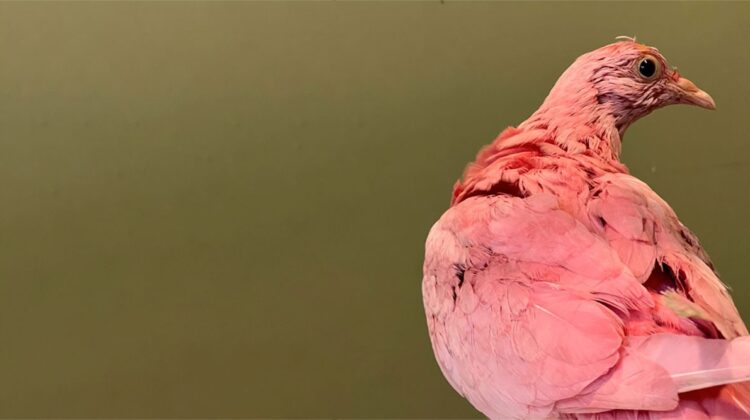
A domestic pigeon found wandering New York City’s Madison Square Park in bad shape turned out to have a far more disturbing backstory than a simple case of a lost bird. He’d been dyed bright pink — and abandoned once whatever event he was used for was over.
Found in Bad Shape
A passerby spotted the pink-colored pigeon near the Flatiron District park in late January 2023 and brought him to the Wild Bird Fund, a nonprofit wildlife rehabilitation center. Staff named him Flamingo. He showed signs of long-term malnutrition and was, in the center’s words, “barely older than a fledgling” with “no survival skills.”
King pigeons — the breed Flamingo belonged to — are a domestic variety typically raised for food or exhibition, not built for life in the wild. Rescuers believed he’d likely been purchased from a poultry market, dyed, and used as a prop for a celebration — most commonly speculated to be a gender reveal party — before being released or discarded once no longer needed.
A Direct Warning From the Rescue
The Wild Bird Fund used Flamingo’s case to issue a blunt public warning, posted to its social media: “Please never release domestic birds to the wild. Not for weddings, funerals, celebrations, art projects, anything… They will starve or be preyed on. If you see an all-white pigeon in the wild, or any tame bird standing around looking lost, it needs your help. Please catch the bird and bring it to a pigeon rescue or animal sanctuary near you.”
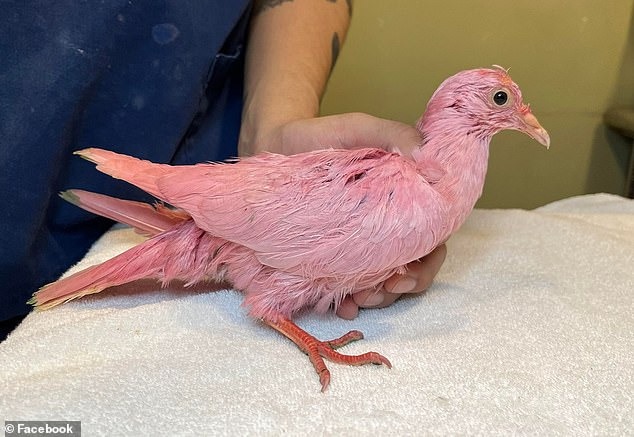
Domestic pigeons like Flamingo can’t forage effectively, fly with full agility, or evade predators the way wild birds can — meaning release into an urban park functions, in practice, as a death sentence regardless of intent.
Treatment and Decline
Staff tried multiple methods to remove what they believed was hair dye — including mayonnaise, dish soap, and vegetable oil, methods normally effective on substances like tar or motor oil — without success. The dye carried a strong chemical odor, and because birds are highly sensitive to airborne toxins, staff grew concerned it posed a direct respiratory risk on top of the malnutrition.
Flamingo was placed on heat support, oxygen, and subcutaneous fluids, along with medication to counter the toxin’s effects on his digestive system. Despite the care, he died about a week after being found. The Wild Bird Fund said in a statement it believed the cause was inhalation of toxic fumes from the dye, worsened by the fact that birds spend roughly a third of their day preening — repeatedly exposing him to the chemicals coating his own feathers.
A Police Investigation Follows
Flamingo’s death drew international attention, and the NYPD’s Animal Cruelty Investigation Squad opened a formal inquiry into the case shortly after. It was never publicly confirmed who dyed or released him.
The Bigger Pattern: Live Animals as Party Props
Flamingo’s story is part of a broader, recurring problem conservationists have flagged for years: live animals — doves, pigeons, butterflies, even fish — used as short-lived decorations for weddings, gender reveals, and similar events, often with no plan for what happens to the animal afterward.
Safer, animal-free alternatives exist for nearly every version of this trend — biodegradable confetti or powder for gender reveals, artificial or paper doves for wedding releases, and reputable “trained dove release” companies (a distinct, legitimate practice) that use homing breeds specifically trained to return safely to a loft rather than release non-homing domestic birds into unfamiliar territory.
Frequently Asked Questions
Why is releasing a domestic bird into the wild so dangerous? Domestic breeds like king pigeons are raised in captivity and haven’t developed the foraging skills, flight endurance, or predator awareness that wild birds rely on to survive — release effectively removes their access to food and safety at the same time.
Are “dove release” events at weddings always harmful? Not necessarily — legitimate dove release companies use homing breeds specifically trained to fly back to their loft after release, which is different from releasing an untrained domestic bird (like a dyed pigeon) with no ability to find its way anywhere safely.
What should someone do if they find a tame or brightly colored bird outdoors? Wildlife rescue organizations recommend safely containing the bird if possible and bringing it to a local wildlife rehabilitation center or animal shelter rather than assuming it can fend for itself.
Sources: NBC News, NPR, and the Wild Bird Fund’s public statements, cited above.
Leave a Reply