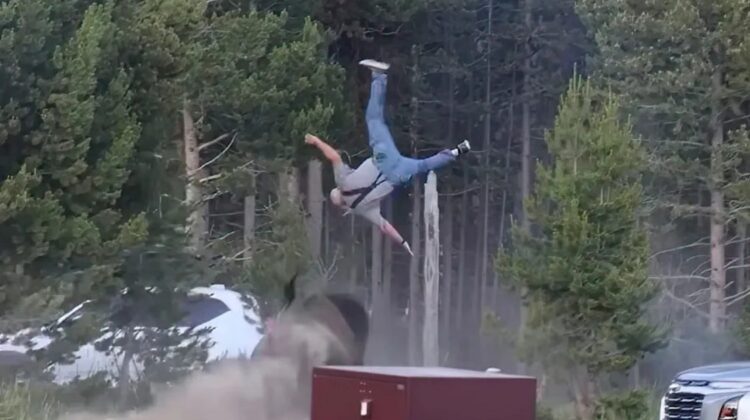
A visitor to Yellowstone National Park suffered serious injuries after being charged and tossed by a bison during a frightening encounter that was captured on video.
Carl McDaniel, 65, from Washington state, was watching the animal with his grandson on Friday when the bison suddenly charged. Footage of the incident shows the pair running through a wooded area before the animal caught up with McDaniel and launched him into the air with its horns.
His grandson escaped without injury, while McDaniel was taken to hospital with multiple broken bones. Later, he reassured friends on social media, writing: “Thank you everyone, I am OK.”
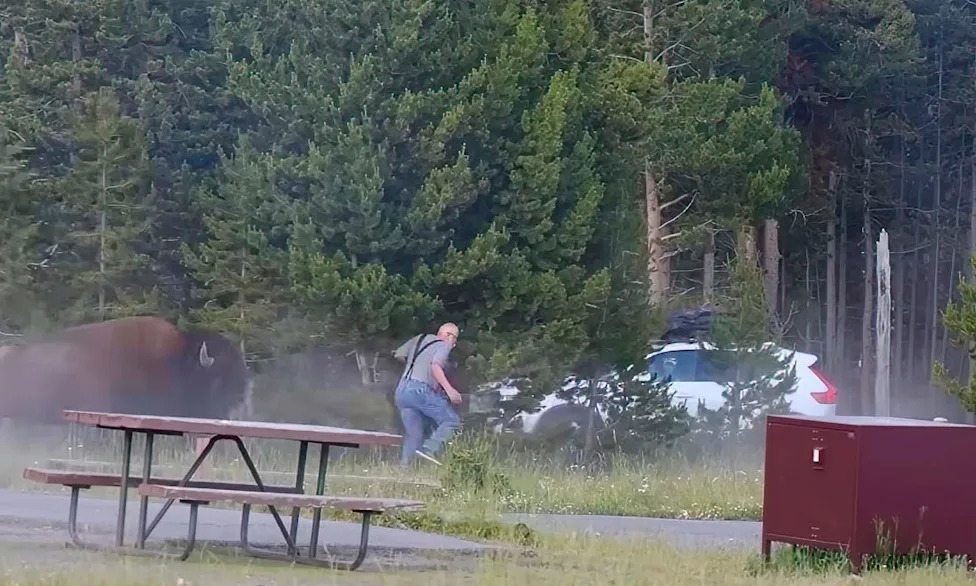
The video, filmed by another visitor, has drawn widespread attention online because the incident appeared to begin even though the family believed they were observing the bison from a safe distance.
Witnesses said the bull had reportedly charged toward a group of children moments earlier before turning its attention to McDaniel and his grandson. It remains unclear exactly how far they were from the animal when it began running toward them.
Yellowstone National Park requires visitors to stay at least 25 yards (23 metres) away from bison, which are responsible for more injuries to park visitors than any other large animal. Park officials repeatedly warn that bison can sprint much faster than humans and may become aggressive without warning.
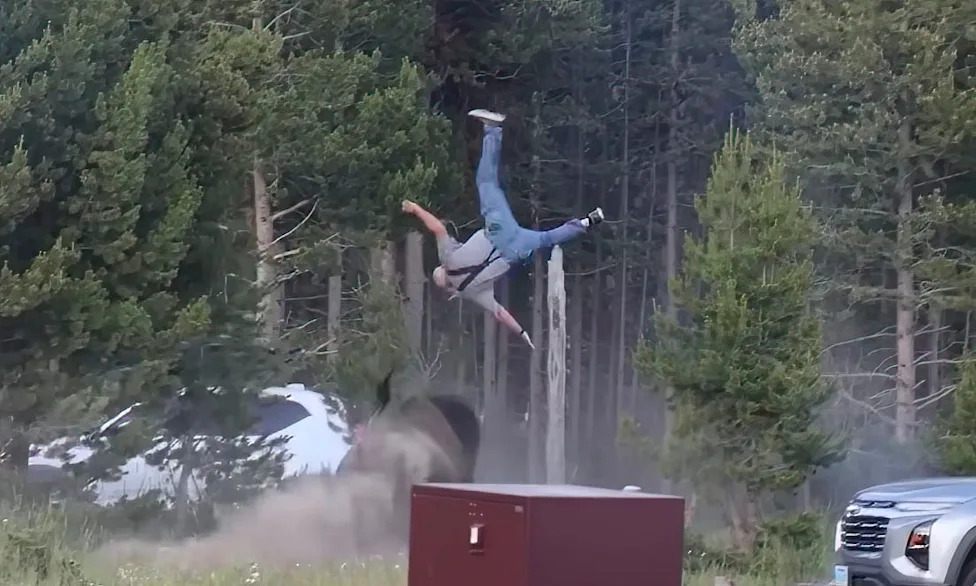
Wildlife experts note that the incident occurred as the annual bison breeding season begins, a period when males often become more territorial and unpredictable. Even animals that appear calm can react suddenly if they feel threatened or disturbed.
The encounter serves as another reminder that Yellowstone’s wildlife, despite attracting millions of photographers and tourists every year, remains completely wild. Keeping a safe distance and avoiding any attempt to approach or follow large animals is considered the best way to protect both visitors and wildlife.
Why bison are among North America’s most dangerous wild animals
Bison can weigh up to 2,000 pounds (900kg) and reach speeds of more than 35mph (56km/h), making them far faster than most people expect. Wildlife experts advise visitors to remain alert, keep the recommended viewing distance, and never run toward wildlife for photos or videos. Respecting these safety guidelines helps reduce dangerous encounters while allowing animals to behave naturally in their habitat.
Leave a Reply