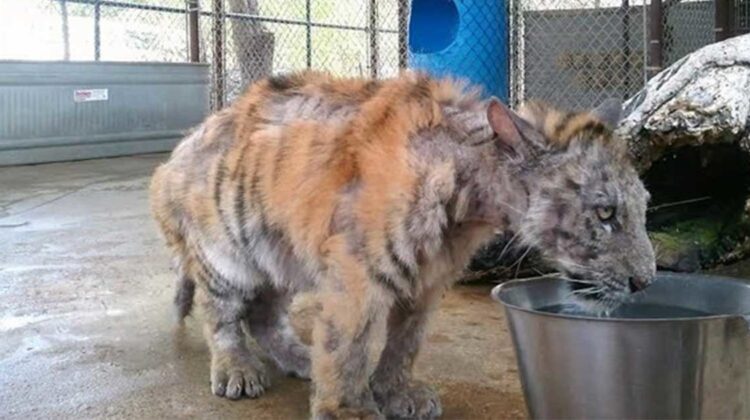
When a USDA inspector spotted a nine-month-old Bengal tiger named Aasha in a traveling circus in March 2011, something was clearly wrong. She was far too small, and her skin was in terrible shape. What happened next turned one of the sad stories of circus life into a rescue success.
A Cub Far Too Small
The inspector contacted Vicky Keahey, founder of In-Sync Exotics Wildlife Rescue and Educational Center in Texas, hoping to move Aasha into her care. Keahey was stunned by the cub’s size. “I asked how could a 9-month-old tiger be that small,” she told The Dodo.

Aasha weighed only about 30 pounds, roughly what a three-month-old cub should. She had shared a cage with a much larger tiger who frequently picked on her, and she had open wounds that Keahey assumed were bite marks.
Ringworm and Bald Patches
One look told Keahey what was wrong: ringworm, a fungal skin infection. A vet confirmed it. Bald spots covered nearly Aasha’s whole body, and her skin was dry, cracked and bleeding. She was moved into an isolated enclosure at the sanctuary.
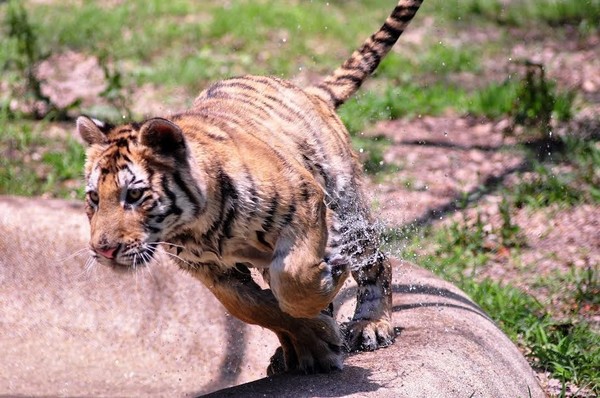
Keahey went in twice a day with medications. Aasha also needed medicated baths, and at first the cub wanted no part of them, so Keahey had to chase her around the enclosure. After about eight weeks, her fur began to grow back, and she slowly started to enjoy bath time. Even after her treatment ended, the baths continued, just for play.
Meeting Smuggler
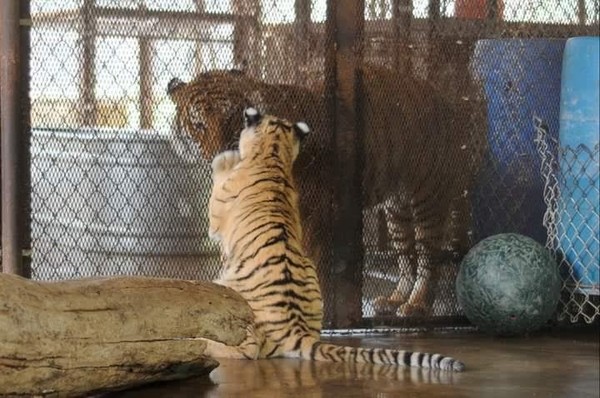
About eight months into her recovery, Aasha looked like a healthy tiger. The team decided to see how she’d react to other cats and introduced her to Smuggler, a bigger male tiger. He “went crazy for her,” Keahey said, and spent his time showing off. After supervised visits, the two moved in together.
Sanctuary tigers aren’t there to breed. In-Sync Exotics says rescued animals are either neutered or housed where they cannot reproduce, to reduce the number of big cats in captivity.
Life After the Circus
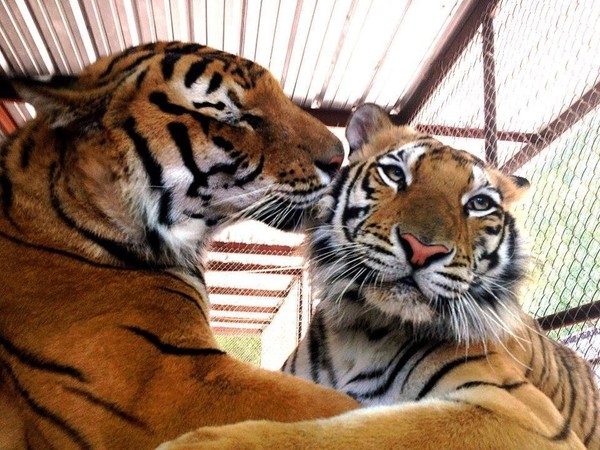
By the time Aasha marked five years at the sanctuary, she was a healthy, playful adult who loved to swim. She can’t be released into the wild because growing up in captivity means she never learned the skills she’d need to survive, but she has the safe, steady life she never had under the big top.
How to Help Animals Like Aasha
Rescues like this depend on public support. A few ways to pitch in:

- Give directly. A donation to a big cat sanctuary covers vet care, food and enclosures.
- Visit responsibly. Compare wildlife sanctuary tours and accredited zoo memberships that fund conservation.
- Choose animal-free entertainment. Family circus tickets for shows without wild animals send a clear message.
- Protect your own pets. Pet insurance can help with vet bills for skin infections and other conditions. Ringworm can also spread to people, so see a vet promptly.
Frequently Asked Questions
Where did Aasha come from? Aasha was living in a traveling circus when a USDA inspector became concerned about her and arranged for her transfer to In-Sync Exotics in Texas in March 2011.
What was wrong with her? She had ringworm, open wounds and bald patches across her body, and she was stunted from poor early care, weighing about 30 pounds at nine months old.
Who is Smuggler? Smuggler is a larger male tiger at the sanctuary who bonded with Aasha, and the pair now live together.
Can Aasha be released into the wild? No. Having grown up in captivity, she didn’t develop the survival skills she would need.
Sources: Good Things Guy and Upworthy, both covering the 2011 rescue of Aasha the Bengal tiger from a traveling circus, with reporting from The Dodo and the sanctuary In-Sync Exotics.
Those times have past when exotic animals were only seen in places like that. It is not appropriate, humane or necessary for this nowadays. I therefore hope and pray these wonderful creatures are treated with the respect they deserve and that circuses cease humiliating animals in their shiws