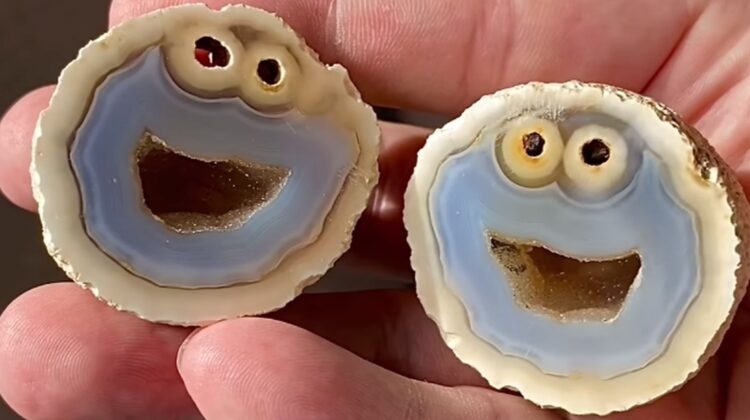
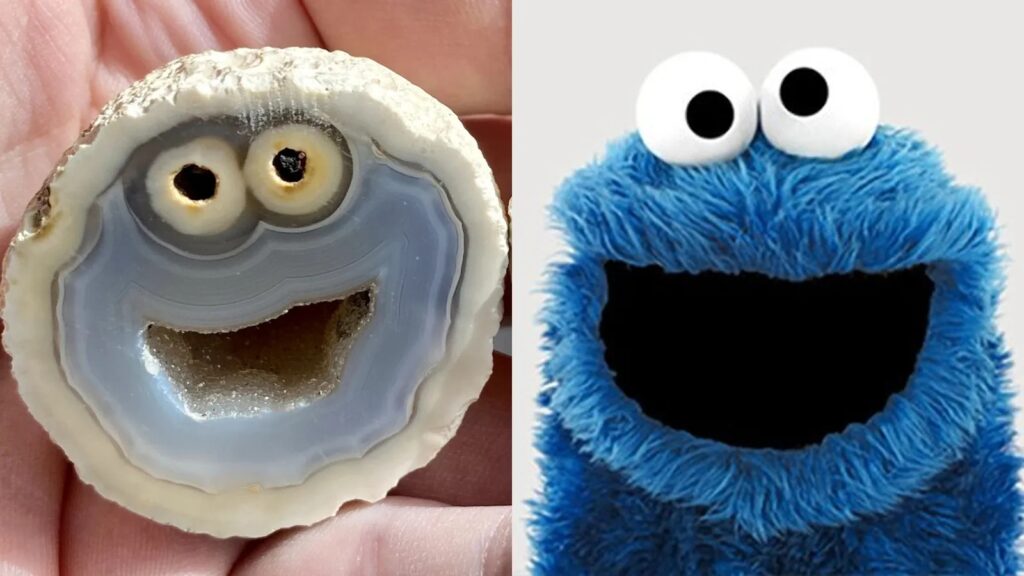
A rare agate rock discovered in Brazil went viral in 2021 for an uncanny resemblance to a very famous face: Cookie Monster from Sesame Street. The stone’s split interior reveals two blue, googly-eyed halves that look almost too perfect to be natural — but geologists confirm it is.
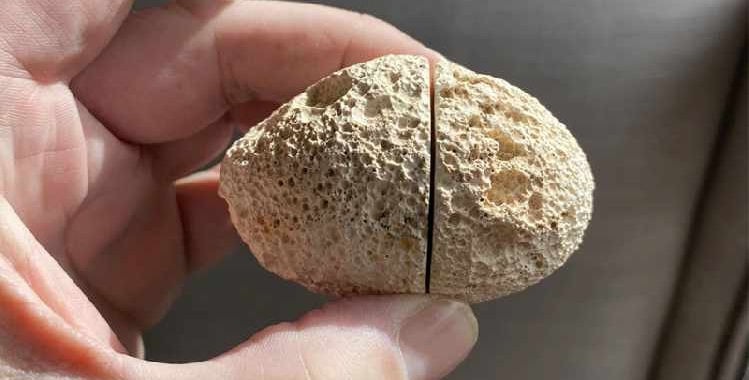
How the Rock Was Found
The agate was discovered in November 2020 by Brazilian gemologist Lucas Fassari while working in the volcanic cavities of the Rio Grande do Sul region of southern Brazil — an area known as a hotspot for precious stones. Fassari passed the stone to American mineral collector Mike Bowers of California, who posted a video of himself splitting it open, set to a Sesame Street soundtrack, according to Live Science. The video quickly went viral, drawing coverage from outlets across the US, Australia, and Israel — and even a reply from Cookie Monster’s own official Twitter account: “Me no geologist, but me think dat rock look a lot like me.”
What Makes This Agate So Rare
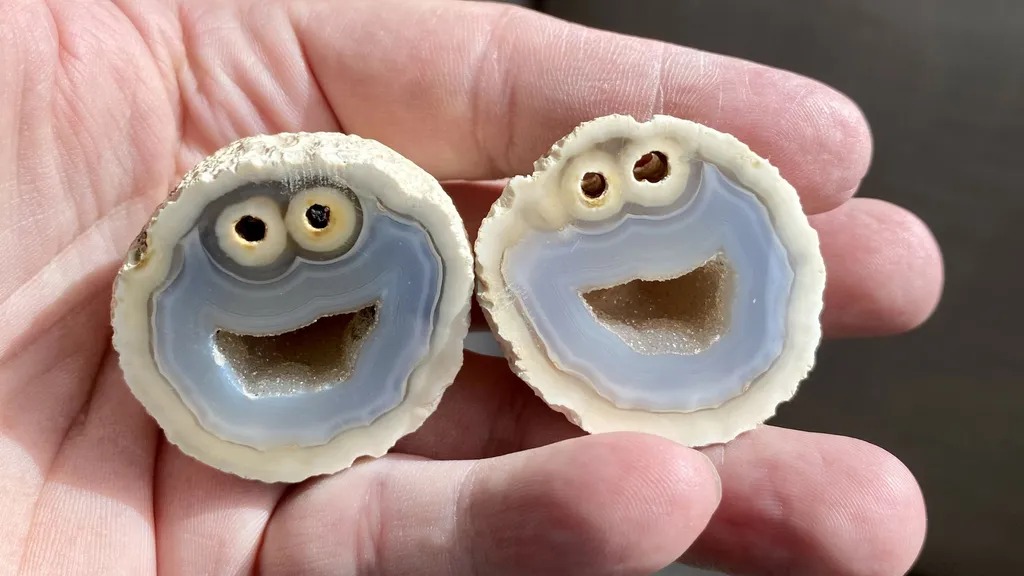
Bowers, who specializes in unusual rock formations, said the stone stood out even among the small category of agates known for resembling recognizable shapes. “There are a few famous agates out there: the owl, the scared face… there are many approximate ones but rare to find clear well defined like that,” he said. What made this particular stone especially unusual is that the face-like pattern appears as a near-perfect mirror image on both cut halves — something Live Science notes is uncommon, since the internal cavities that produce these patterns rarely line up so symmetrically.
Bowers said he received offers exceeding $10,000 from multiple buyers, though he indicated he planned to hold onto the stone rather than sell it right away.
The Real Science Behind Agate Formation
Despite the internet-friendly comparison, agate formation is a genuinely interesting geological process. According to ScienceAlert, agates form inside gas bubbles trapped in cooling volcanic lava. Over time, groundwater rich in dissolved silicon dioxide seeps into these cavities. As the water slowly evaporates, it leaves behind layers of microcrystalline quartz on the cavity walls — building up the colorful, banded patterns agates are known for.
The specific colors within an agate — browns, blues, reds, grays — come from trace mineral impurities in the water at the time each layer formed, meaning the banding inside a single stone is essentially a physical record of changing water chemistry over the (often very long) period the cavity took to fill.
Agate has a long history beyond internet virality, too — the stone has been used ornamentally since Ancient Greece, appearing in jewelry and the seal stones carried by Greek warriors.
Frequently Asked Questions
Is the Cookie Monster resemblance real, or has the photo been altered? It’s real — fact-checkers including Snopes confirmed the agate is a genuine, unaltered volcanic rock; the face-like pattern is a product of natural mineral banding, not digital editing.
Why do some agates form face-like or animal-like patterns? It largely comes down to the random shape of the original gas cavity in the volcanic rock combined with how the layered quartz deposits fill it — geologists describe it as similar to seeing shapes in clouds, where the human brain is quick to spot familiar patterns in irregular formations.
How much is a rare novelty agate like this worth? Value depends heavily on rarity, clarity, and how recognizable the pattern is — this particular stone reportedly drew offers upward of $10,000, though most agates are worth far less and are valued primarily as decorative or collector pieces.
Sources: Live Science, ScienceAlert, and Snopes, cited above.