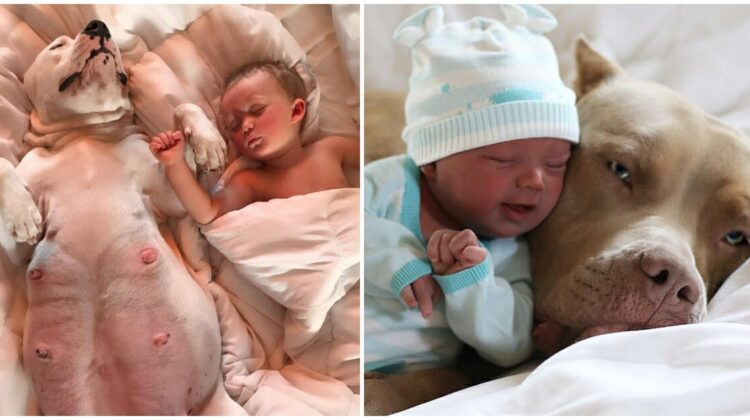
Few dog breeds carry as heavy a reputation as the pit bull. For years, the breed has been associated — fairly or not — with aggression, and that reputation has real consequences: pit bulls are among the most common breeds in U.S. shelters, and some cities and insurance providers still restrict or ban them outright based on breed alone.
Jarad Derochey, who runs MVP Kennels and breeds a pit bull-type dog known as the American Bully, has spent years pushing back against that narrative — including footage of his dogs cuddling and napping with his young children, which has repeatedly drawn both admiration and sharp criticism online.
“It’s Like I Live In A Day Care”
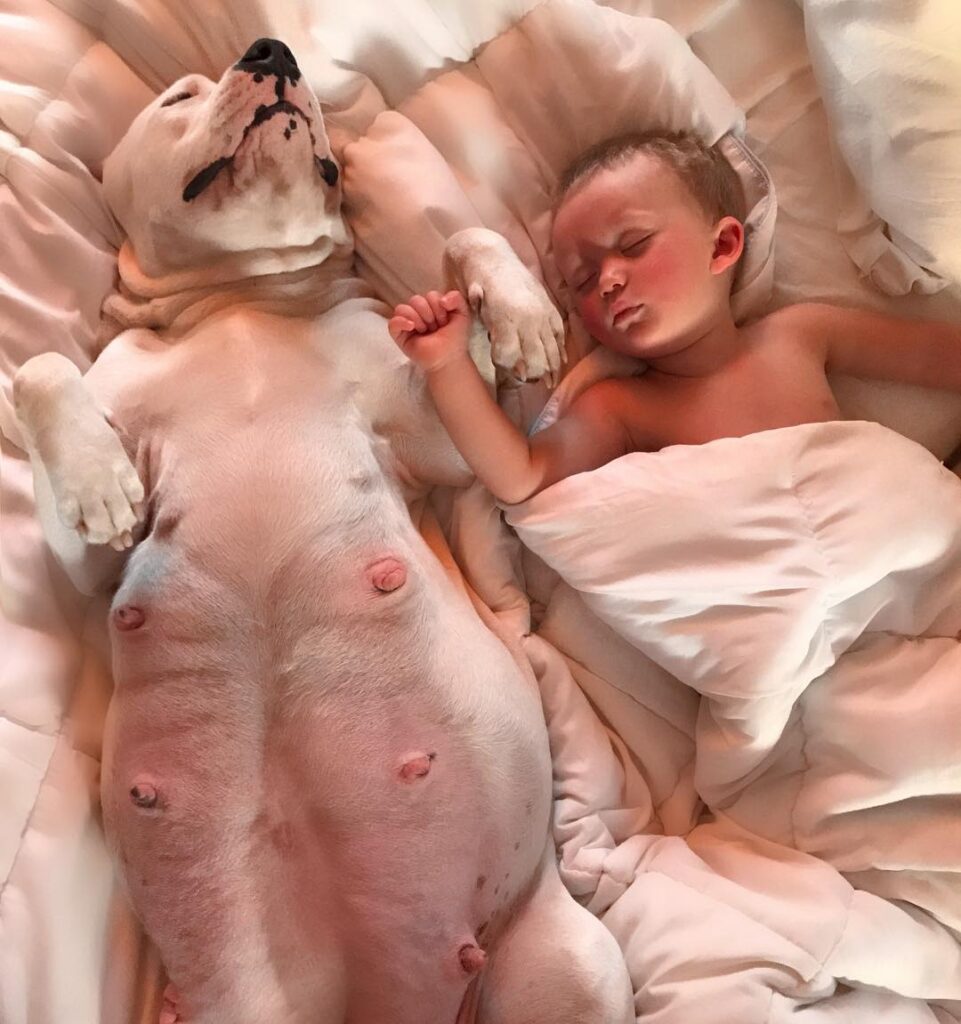
Derochey’s Instagram account, which documents his dogs’ day-to-day life, has become a recurring flashpoint in the broader debate over pit bull safety. One widely shared clip showed his one-year-old son, Jax, peacefully napping beside one of the family’s large American Bullies.
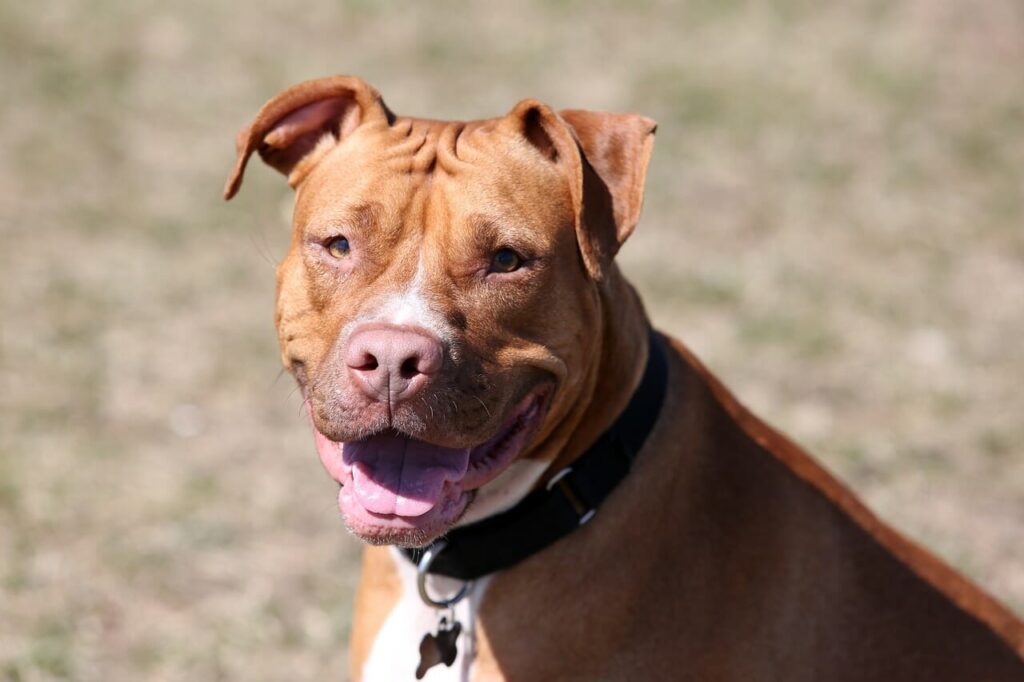
“My dogs are sweet, intelligent,” Derochey told Inside Edition. “It’s like I live in a day care because they play with my kids so much,” according to PetsRadar.
Not everyone was convinced. Some commenters accused him of putting his children at risk by allowing a large, powerful dog breed to sleep and cuddle so closely with a baby. Derochey has consistently defended the decision, arguing that his dogs’ temperament, not their breed label, is what matters.
What “Pit Bull” Actually Means
Part of the confusion fueling the debate is the term itself. “Pit bull” isn’t a single breed — it’s commonly used to describe several related breeds, including the American Pit Bull Terrier, American Staffordshire Terrier, Staffordshire Bull Terrier, and the American Bully that Derochey breeds, per iHeartDogs. That blurred terminology is part of why advocates argue that broad “pit bull” stereotypes are built on an inconsistent category to begin with.

Derochey has pointed to canine temperament testing to support his case, citing data suggesting pit bull-type dogs pass standardized temperament evaluations at a higher rate than the average dog breed. Temperament testing organizations do publish breed-level pass rates along these lines, though animal behaviorists caution that such tests have real limitations: they typically evaluate a self-selected sample of dogs brought in by owners, which may skew results, and a single standardized test can’t capture the full range of an individual dog’s behavior or training history.
Behavior, Not Breed, Most Experts Say
Derochey’s central argument — that a dog’s upbringing and environment shape its temperament more than its breed does — lines up with the position of most major veterinary and animal behavior organizations. The American Veterinary Medical Association has stated that breed is a poor predictor of a dog’s likelihood to bite, pointing instead to factors like socialization, training, neutering status, and how the dog is treated and supervised.
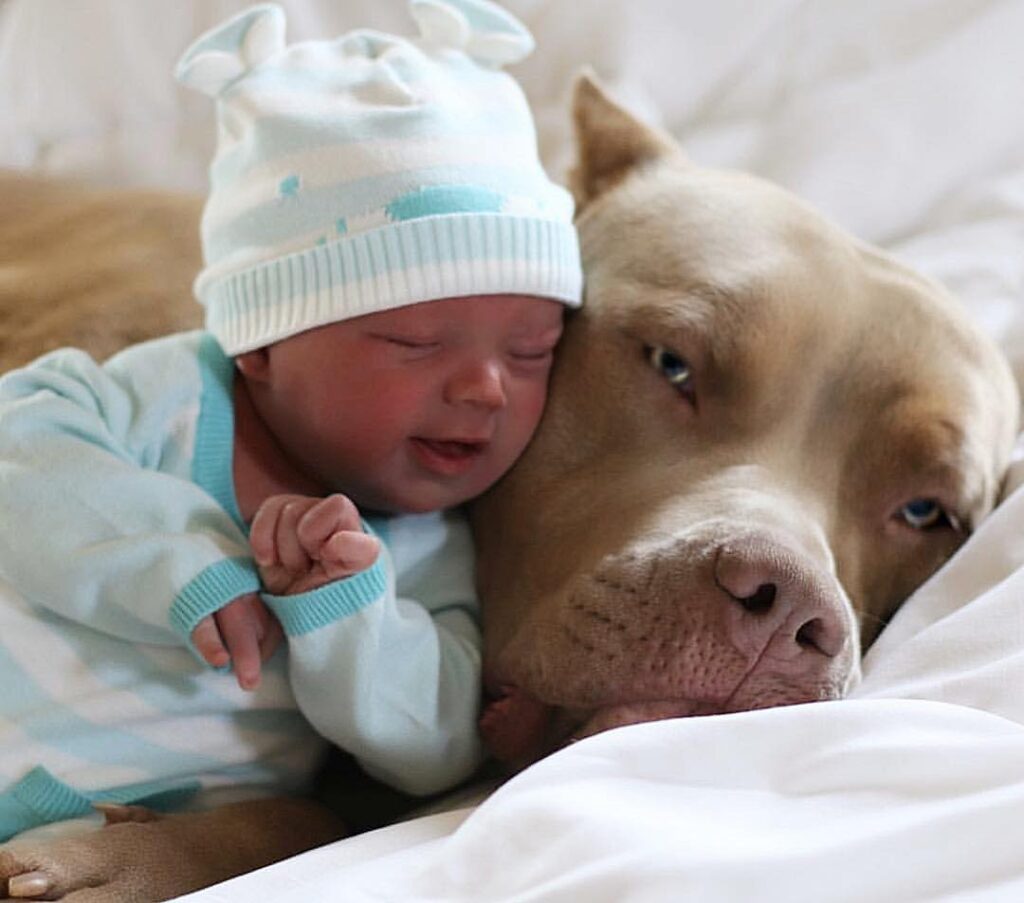
That said, veterinarians and child-safety experts also consistently emphasize one point regardless of breed: no dog, however gentle, should be left completely unsupervised with an infant or young child, given dogs’ size, strength, and the unpredictability of any animal’s response to being startled, in pain, or over-stimulated. Supervision, not breed alone, is typically cited as the key safety factor in preventing dog-related injuries to children.
A Debate That Isn’t Going Away
Derochey has continued posting footage of his dogs with his children since the initial backlash, and he says the response has grown more positive over time, with more commenters echoing his view that upbringing matters more than breed. Still, the broader debate around pit bull-type breeds, including disputes over breed-specific legislation and insurance restrictions, remains active and unresolved in many parts of the U.S. and beyond.
Frequently Asked Questions
What breed does Jarad Derochey actually raise?
He breeds the American Bully, a breed commonly grouped under the broader “pit bull” label along with the American Pit Bull Terrier, American Staffordshire Terrier, and Staffordshire Bull Terrier.
Is it true that pit bulls score well on temperament tests?
Some standardized temperament testing data has shown pit bull-type breeds passing at rates comparable to or higher than average, though experts note these tests have real methodological limitations and shouldn’t be treated as a guarantee about any individual dog.
What do veterinary organizations say about breed and aggression?
Groups including the American Veterinary Medical Association have said breed alone is a poor predictor of bite risk, pointing instead to factors like socialization, training, and supervision.
Is it safe to let any dog sleep unsupervised with a baby?
Experts generally advise against leaving any dog, regardless of breed or temperament, completely unsupervised with an infant, given the unpredictability of animal behavior and the size and strength differential involved.
Why do pit bulls make up such a large share of shelter dogs?
A combination of breed stereotypes, housing and insurance restrictions, and historic association with illegal dog fighting has made pit bull-type dogs harder to place in homes, contributing to their overrepresentation in shelters.
Sources: PetsRadar, iHeartDogs, and Inside Edition’s original interview with Jarad Derochey.
Thank you for helping dispel the horrible stereotypes of pitties. Love 💜 my pit!