
It’s rare for a routine day of crab fishing to turn into a wildlife rescue, but that’s exactly what happened to a boat crew off the coast of Labrador, Canada. Crew members Mallory Harrigan, Cliff Russell, and Alan Russell were heading out to check their fishing gear when they spotted something unusual sitting on top of a small, mushroom-shaped iceberg drifting several kilometers from shore.
How the Crew Spotted the Fox
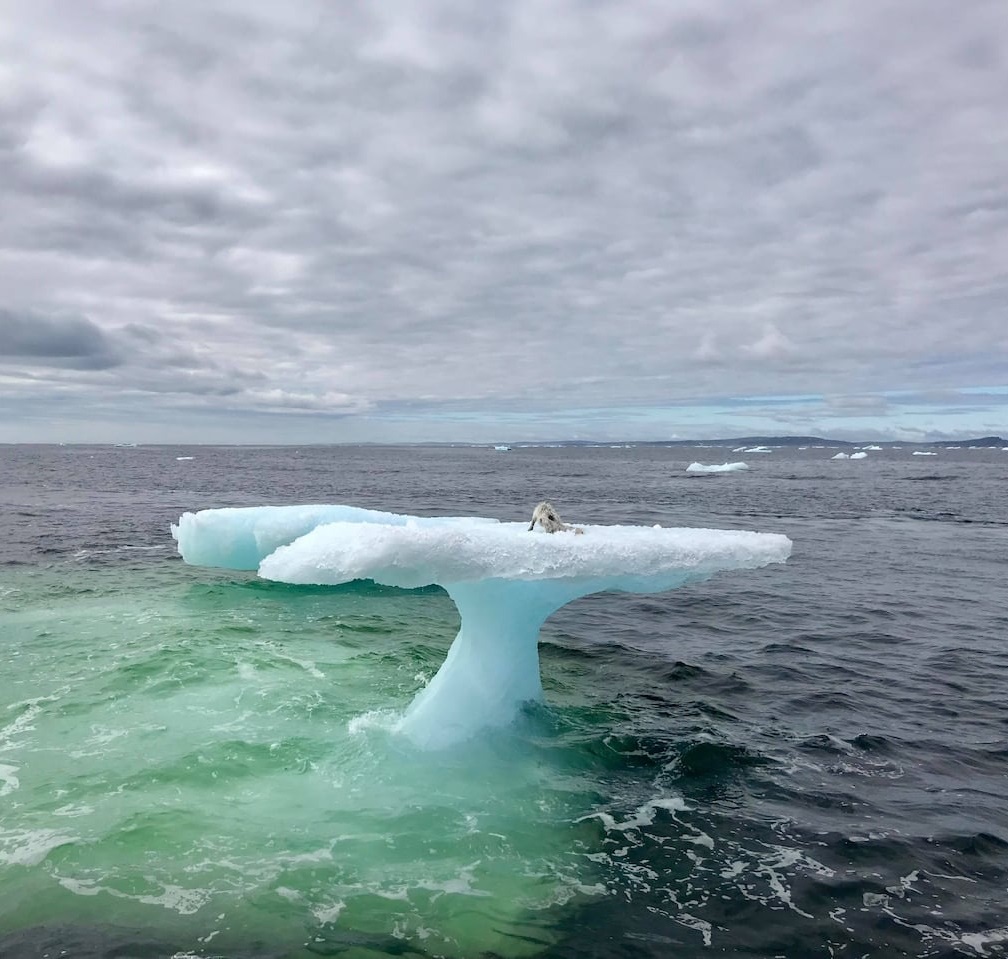
At first glance, the crew assumed the shape on the ice was a baby seal. As their boat, the Northern Swan, drew closer, they realized it was actually a young Arctic fox — soaked, exhausted, and stranded far from land. Shifting winds had likely broken the ice apart while the fox was out searching for food, carrying it out to sea on a fragment too small and unstable to survive on for long.
A Risky Rescue at Sea

Rescuing a frightened wild animal from open water is never simple. The fox initially refused to let the crew get close, curling into a corner of the ice in fear. Unable to safely lift him directly off the unstable ice pan, the crew used the boat to break the ice apart and then scooped the fox out of the freezing water with a dip net.
Once aboard, the fox was still too stressed to eat. The crew gave him space in a makeshift shelter, and after some time, he calmed down enough to accept food — reportedly starting with simple items like crackers before eventually eating a tin of Vienna sausages, a detail later confirmed by fact-checking outlet Snopes when it verified the story with the crew directly.

Nursing the Fox Back to Health
After warming up and resting on the journey back to shore, the fox regained enough strength to move on his own. Once the boat reached land near Pinsent’s Arm, Newfoundland and Labrador, the crew released him into a safer area away from open water. Locals in the area have reported occasional sightings of the fox since, appearing healthy and adapted to life on land again.

Why Arctic Foxes End Up Stranded on Sea Ice
Arctic foxes are strong swimmers and regularly travel across sea ice in search of food, often following polar bears to scavenge leftover kills. But as ice conditions shift with weather and temperature changes, chunks can break away unpredictably, leaving an animal stranded on a fragment too small to support a safe journey back to shore — exactly what likely happened in this case.


How to Help Arctic Wildlife
Encounters like this are a reminder of how vulnerable Arctic wildlife is to unpredictable ice conditions, a risk that has grown as sea ice patterns become less stable. Readers who want to support Arctic fox conservation can look into wildlife rescue and rehabilitation organizations active in northern Canada, many of which rely on public donations and volunteer reporting of stranded or injured animals. Boaters and coastal residents in northern regions are also encouraged to report sightings of stranded wildlife to local wildlife authorities rather than attempting a rescue alone, since approaching a frightened wild animal on unstable ice carries real risk to both the animal and the rescuer.
FAQ
Is this Arctic fox rescue story real? Yes. The event was independently reported by People Magazine and later fact-checked and confirmed by Snopes, which spoke directly with a crew member.
Where did the rescue take place? Off the coast of Labrador, Newfoundland and Labrador, Canada, several kilometers from shore near Pinsent’s Arm.
Why was the fox unable to leave the iceberg on its own? Shifting sea ice and wind conditions had carried the ice fragment too far from shore for the fox to safely swim back.
What happened to the fox after the rescue? After being warmed, fed, and given time to recover on the boat, the fox was released near shore and has reportedly been seen healthy in the area since.
Thnku so much…I too feel like I’m rescued today about reading this story. Sometimes we have days where we need rescuing. I was there for rescuing my boss and work magic in a very nice healing touch for a young mom who hasn’t had a massage in 7 years. And a mother of 3 boys…it is trying for anyone these days to raise young people. Thank you to all the lovely people who rescue in the world.