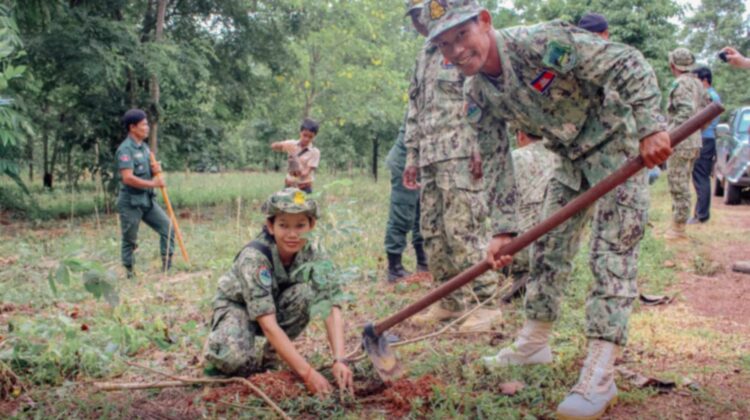
Elephants, pangolins and dholes still walk through a patch of forest in northwestern Cambodia, and the rangers who watch over them come from the villages around it.
A Forest, Not a Private Estate
The forest in question is the Samlaut Multiple Use Area, a protected zone of 60,994 hectares (about 150,720 acres) spread across Battambang and Pailin provinces near the Thai border. Despite headlines suggesting otherwise, Angelina Jolie does not own it. Her organization, the Maddox Foundation, formerly the Maddox Jolie-Pitt Foundation, helps look after the area in partnership with Cambodia’s Ministry of Environment. Jolie is reported to have personally bought only about 39 hectares of land there.
Figures published by the foundation say its patrols removed close to 7,800 meters of wire snares in 2025, roughly 4.8 miles.
It All Started With Landmines
Jolie first came to Cambodia to film Lara Croft: Tomb Raider and adopted her son Maddox from a Battambang orphanage in 2002. The foundation, named after him, was founded in 2003. Its initial mission was clearing landmines from some of the most heavily mined land in the country so that villagers could live and farm safely. Over time, the work expanded into conservation, livelihoods, health clinics and schools.
In 2006, the foundation took on the protection of Samlaut, a region once known as a Khmer Rouge stronghold and now home to about 57,000 people. It trained local residents as forest rangers, and in 2016 those rangers became government officials under the Ministry of Environment.
What the Cameras Found
To learn what lives there, the foundation commissioned conservation group Fauna & Flora to survey the forest with the Ministry of Environment between October 2021 and June 2022. The resulting Samlout Biodiversity Report, released in 2024, described the area as “one of the last remnants of forest in north-western Cambodia.”
Camera traps recorded 44 species, including 10 independent records of Asian elephants, four of Sunda pangolins and three of dholes, an Asian wild dog. Bird surveyors counted 142 species. The cameras also showed the threats: one photographed a hunter with a gun, and another captured a sambar deer missing a foot, likely caused by a snare.
Honey That Needs Standing Trees
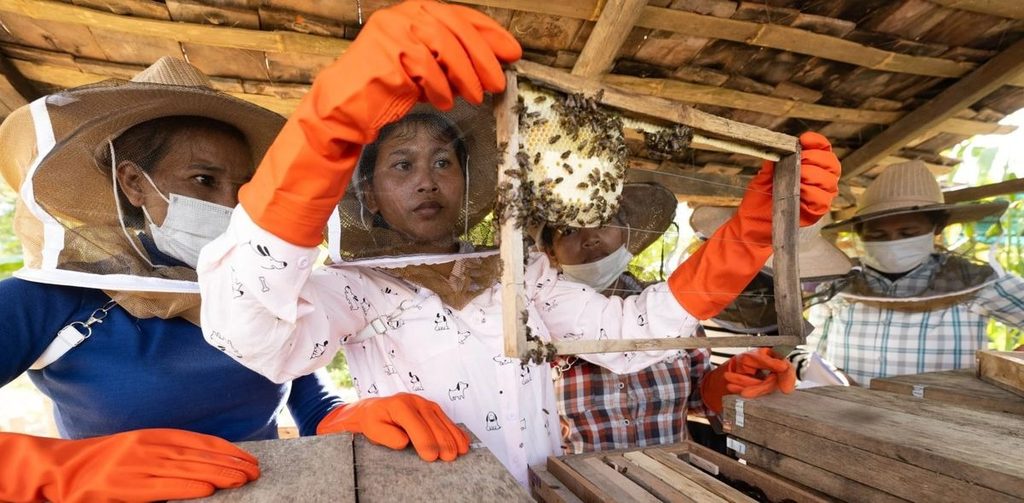
The foundation launched a beekeeping program in 2019, training local farmers in sustainable methods and encouraging women to take part. In 2025, local beekeepers produced 1,392 liters (368 gallons) of honey. According to the foundation, the program does more than provide income. “Beekeeping offers something rare: an income that depends on the forest staying intact,” its field note says. The program has also reduced pesticide use on participating farms, the foundation says.
Reforestation is measured by survival, not planting. In April 2023, rangers, forestry officers and villagers surveyed five replanted sites in the Sangker River Basin with the International Centre for Environmental Management. Between 71 and 94 percent of the seedlings had survived.
The Pressures That Remain
The foundation names land encroachment, illegal logging and hunting as the biggest threats. In 2017, the Phnom Penh Post reported that a ranger and a village chief were questioned over alleged land grabbing in the protected area. Samlaut also lies close to the Cambodia-Thailand border, where armed clashes broke out in July 2025.
Want to Support Wildlife Conservation or Visit Cambodia?
Travelers and supporters can take part in conservation in several ways:
- Travel planning. Compare Cambodia travel packages, eco-lodges in Cambodia, Angkor Wat tours and international travel insurance.
- Support rangers. Consider wildlife conservation donations, anti-poaching charities and reforestation programs.
- Shop sustainably. Look at sustainable honey, fair-trade products and carbon offset programs.
- Study the field. Explore online environmental science degrees and wildlife conservation courses.
Frequently Asked Questions
Does Angelina Jolie own the Samlaut forest? No. Her foundation helps protect the 60,994-hectare Samlaut Multiple Use Area together with Cambodia’s Ministry of Environment, and she is reported to own only about 39 hectares there.
What is the Maddox Foundation? It is a nonprofit founded in 2003 and named after Jolie’s son Maddox. It began by clearing landmines and now runs conservation, livelihood, health and education programs in Cambodia.
How many snares did rangers remove in 2025? About 7,800 meters of wire snares, or roughly 4.8 miles, according to the foundation’s figures.
Which animals live in the forest? Camera traps recorded Asian elephants, Sunda pangolins and dholes among 44 species, alongside 142 bird species counted by surveyors.
How does beekeeping help the forest? It gives local families an income tied to healthy trees, and the foundation says it has encouraged farmers to use fewer pesticides.
Sources: Ecoticias, Herald Business, Meteored, La Nación, and the Phnom Penh Post, all covering the Maddox Foundation’s 20 years of work in Cambodia’s Samlaut forest, its 2025 snare-removal figures and the 2024 Samlout Biodiversity Report.
Leave a Reply