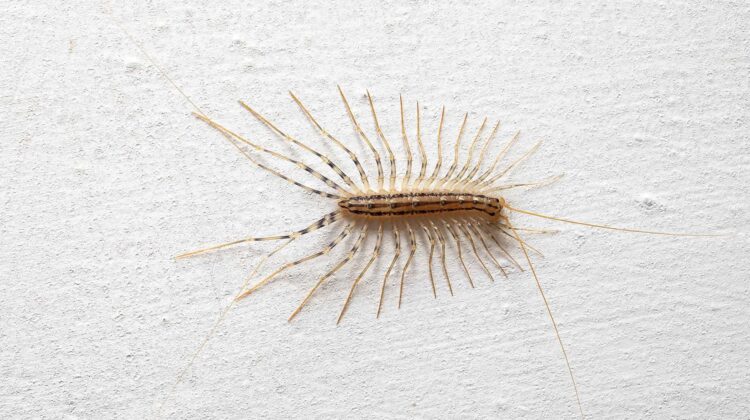
That burst of long, spindly legs skittering across the bathroom floor at 2 a.m. is alarming for good reason: house centipedes are built for speed. What they’re not built for is hurting you — and squashing one may be doing your house a disservice.
What You’re Actually Looking At
The house centipede, Scutigera coleoptrata, is native to the Mediterranean but has spread to homes worldwide, thriving in damp basements, bathrooms, and crawlspaces. It’s easy to tell apart from other household bugs: 15 pairs of long, banded legs, a yellowish-gray body with dark stripes, and a top speed of roughly 1.3 feet per second, which makes it one of the fastest arthropods you’re likely to encounter indoors.
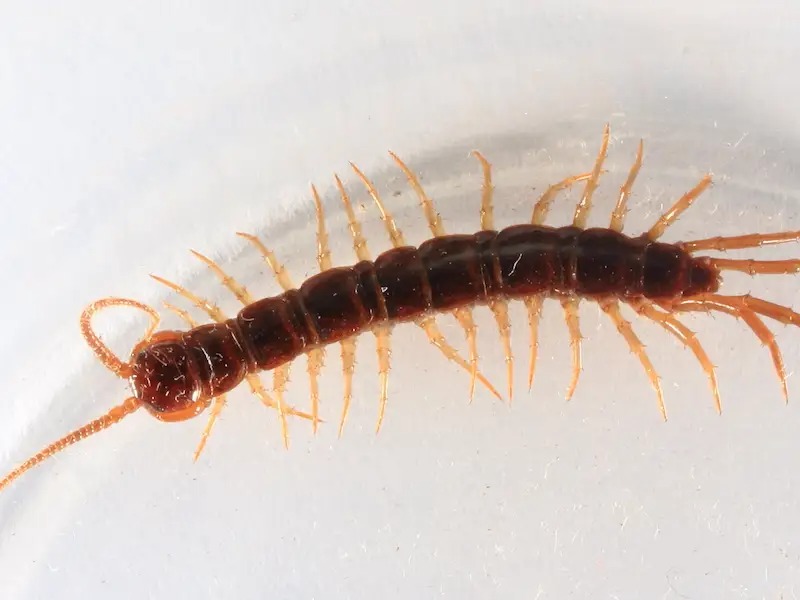
Why It’s Actually Good to Have Around
House centipedes are predators, and picky ones — they only eat live prey. Their diet includes many of the pests homeowners actively want gone: cockroaches, spiders, silverfish, termites, ants, bed bugs, and moths. They hunt using sensitive antennae rather than their surprisingly well-developed eyes, and once they catch something, they retreat somewhere quiet to eat it. They don’t build webs or nests, don’t touch your food or furniture, and aren’t known to carry disease.
When Their Numbers Get Out of Hand
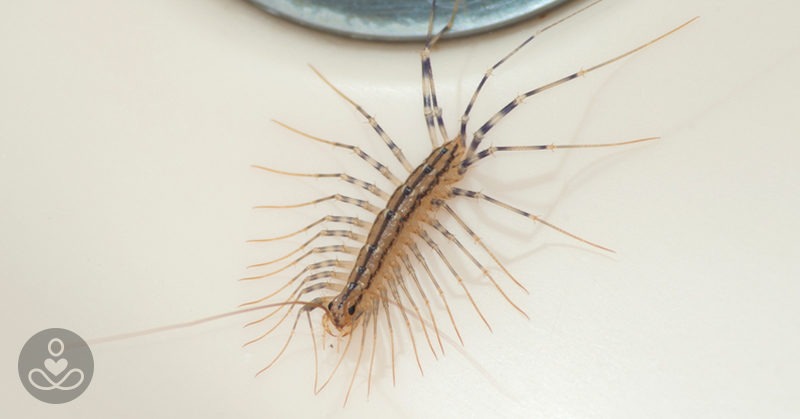
Finding an occasional house centipede is often a sign there’s something else worth addressing: they show up where there’s moisture and where their prey is plentiful. If you’re seeing them often, a few steps tend to help:
- Cut the moisture. Fix leaks, run a dehumidifier, and improve ventilation in bathrooms and basements — their preferred habitat.
- Seal them out. Caulk or weatherstrip cracks around windows, doors, and foundations.
- Clear the clutter. Debris gives both centipedes and their prey places to hide.
- Go after their food source. Fewer roaches, spiders, and silverfish means fewer centipedes drawn to your home in the first place.
- Try natural deterrents. Cedarwood or peppermint oil are commonly used as mild repellents, though results vary.
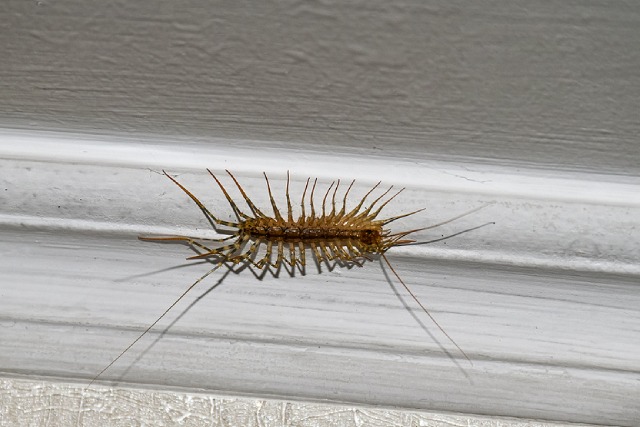
For a more direct approach, vacuuming up strays, sticky traps, or diatomaceous earth — which works by drying out an insect’s exoskeleton rather than poisoning it — can help. Insecticides and professional pest control are options for persistent infestations, but are rarely necessary for the occasional sighting.
A Word on Bites
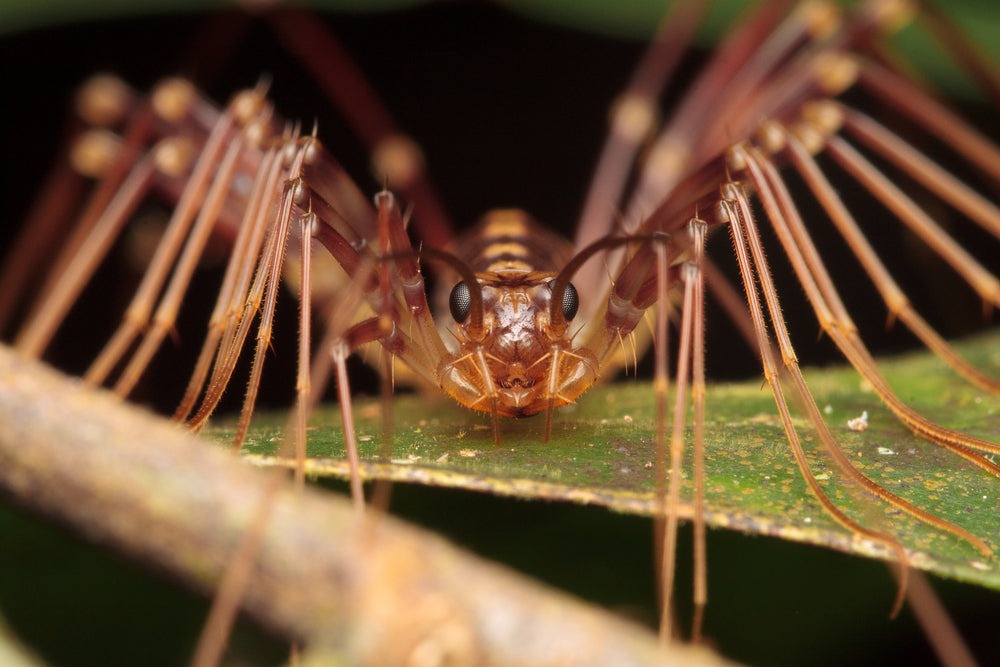
House centipedes are not aggressive and would much rather flee than fight. Their fangs are often too weak to break human skin, but a bite is possible if one is handled or stepped on barefoot, and it can sting similarly to a bee. It’s not dangerous for most people, though the wound should be cleaned like any other bite or sting.
Frequently Asked Questions
Are house centipedes dangerous? No, not in any meaningful sense. Bites are rare and, when they happen, typically no worse than a bee sting.
Do they carry disease? No documented evidence that house centipedes transmit disease to humans.
Will killing the centipedes I see get rid of my other bug problem? No — it’s the reverse. Centipedes show up because other pests are already present. Addressing that underlying pest population is more effective than targeting the centipedes themselves.
Sources: Animal Diversity Web (University of Michigan); Wikipedia (Scutigera coleoptrata); Michigan State University Extension; University of Wisconsin–La Crosse.
Do they also eat earwigs?