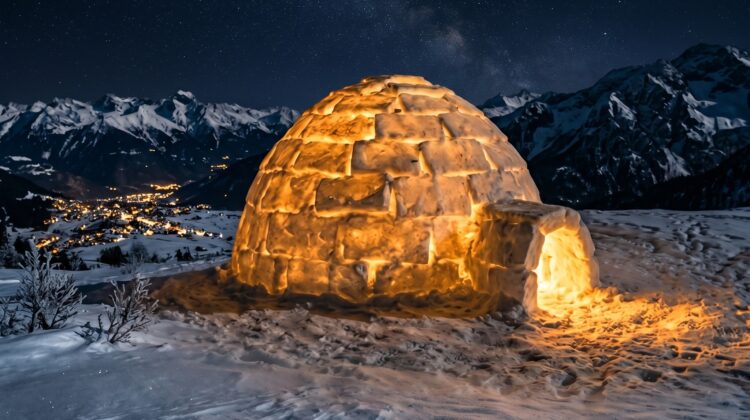
Build a fire inside an igloo, and the inner walls will slightly melt, then refreeze into a smooth ice layer. This thin layer seals gaps and boosts insulation, helping the shelter remain surprisingly warm even when outside temperatures plummet well below freezing.
Igloos work because compacted snow is a natural insulator. Snow traps air within its crystalline structure, slowing the loss of heat and creating a barrier against frigid winds. When a small heat source—such as a candle or a fire—is introduced, the inner surface melts just enough to form a thin, smooth ice layer. This layer fills tiny cracks, preventing drafts and improving the structure’s ability to retain warmth.
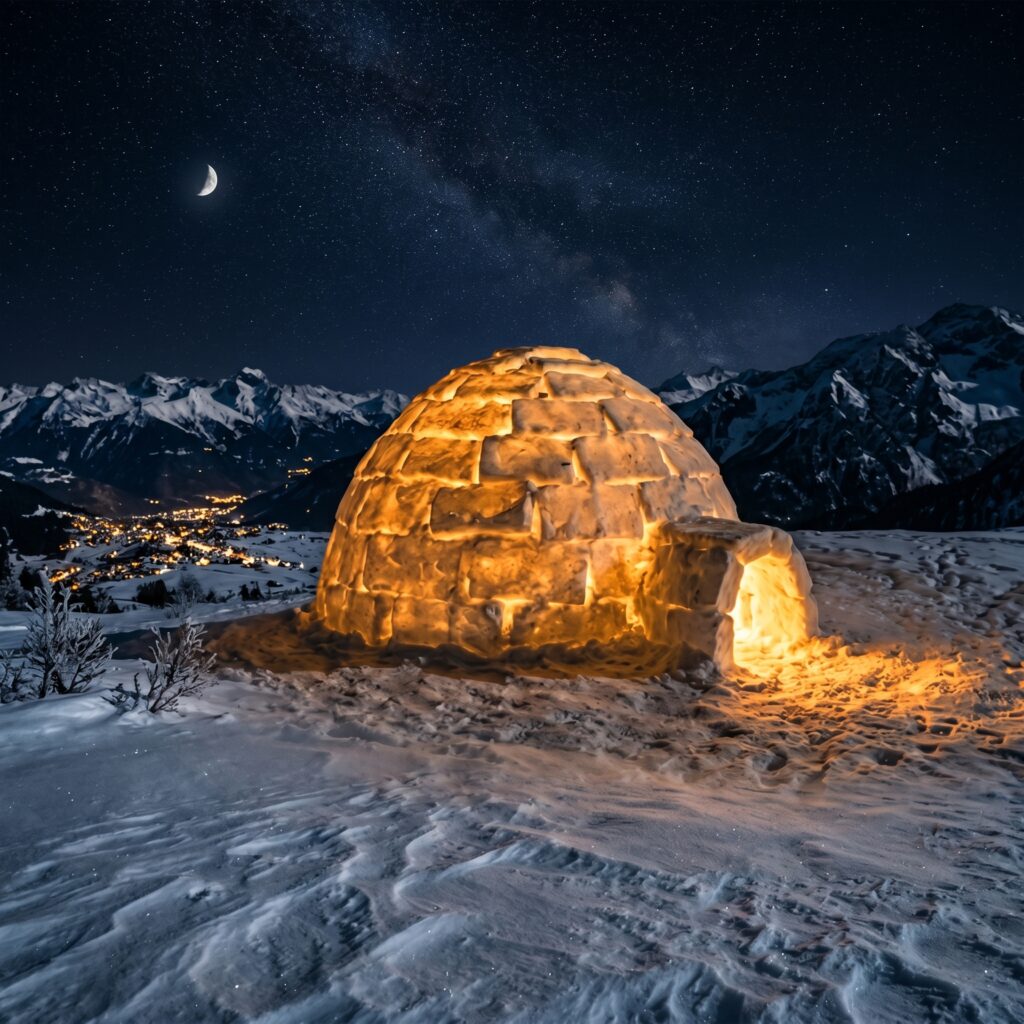
Inside, temperatures rarely reach what most people would call room temperature. Typically, the interior hovers around or just below freezing. While this may seem cold, it is often 30–40°C warmer than the Arctic outside. The comfort comes not from actively heating the space but from a combination of insulation, clever design, and reduced wind exposure.
Historical and Cultural Context
The igloo is more than just a practical shelter—it is a symbol of human ingenuity. Indigenous Inuit communities have used snow dwellings for centuries, mastering the art of construction in extreme environments. The classic dome shape of the igloo is not only structurally strong but also efficient in retaining heat. Blocks of snow are cut and layered in a spiral, with each successive block leaning slightly inward to support the next. The entrance is typically a low tunnel, which traps cold air near the floor and prevents it from entering the main living space.
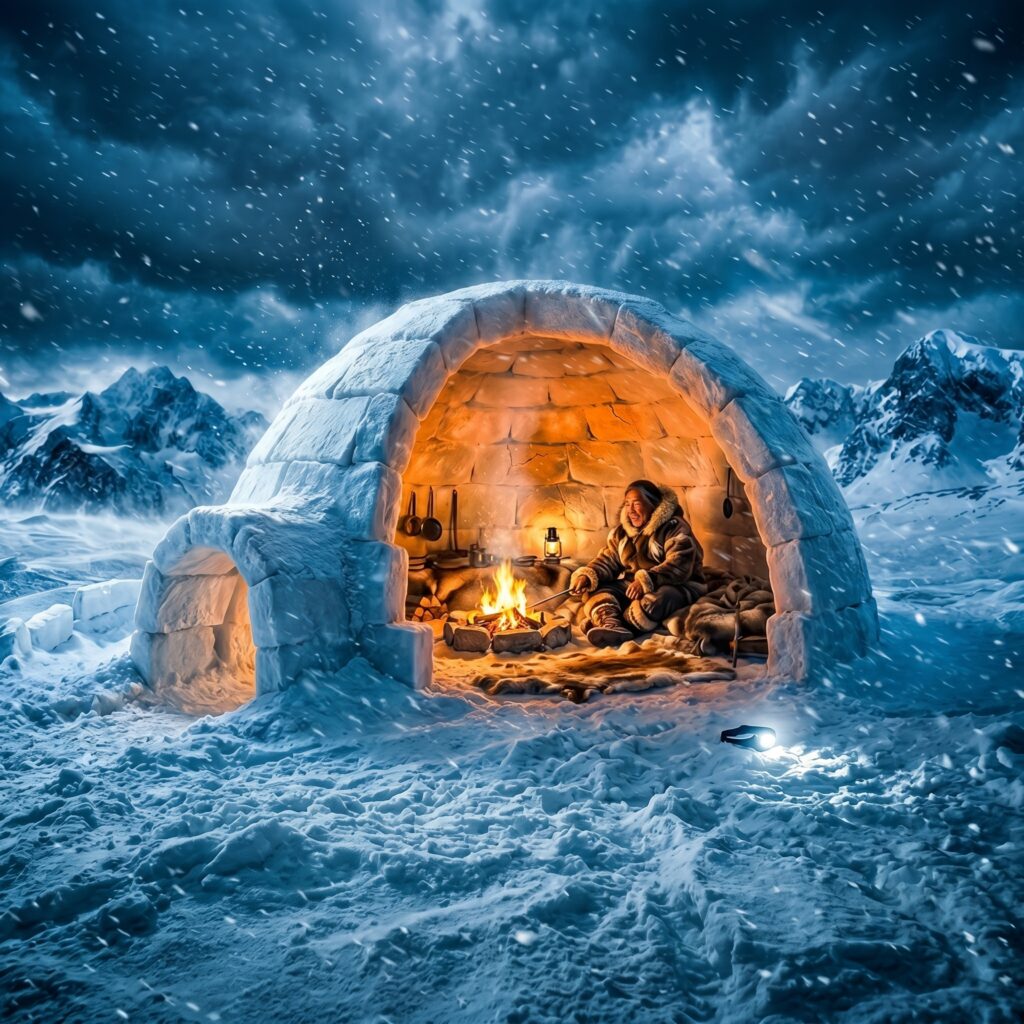
Some Inuit igloos also feature a small ventilation hole at the top, allowing smoke from fires to escape without sacrificing warmth. Sleeping platforms inside the igloo are elevated slightly, taking advantage of the fact that warm air rises. Together, these techniques create a shelter that is remarkably livable, even in temperatures that can fall below −40°C.
Ultimately, the igloo is a testament to the power of observation, experimentation, and respect for the environment. By combining simple natural materials with an understanding of heat, airflow, and structural design, Inuit communities created a shelter that turns the harshest of landscapes into a habitable space. In an age of high-tech architecture, the igloo remains a powerful reminder that survival in extreme climates depends as much on ingenuity and intimate knowledge of nature as on tools or technology.
Leave a Reply