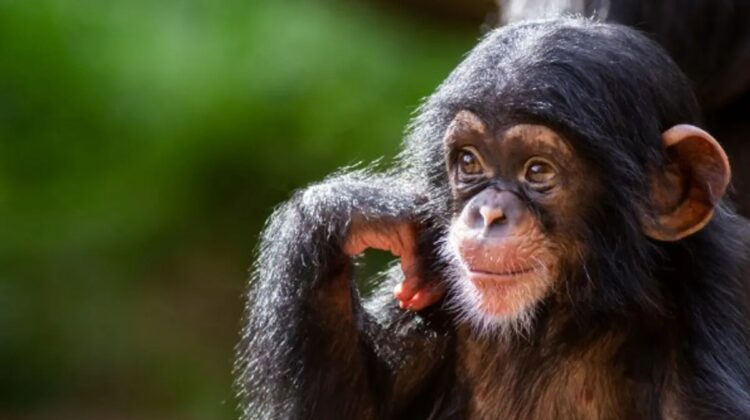
We also share around half of our genes with bananas.
Chimpanzees, along with bonobos, are humanity’s closest living relatives, sharing a genome that is strikingly similar to our own. Despite this genetic resemblance, chimps don’t drive cars, speak Danish, or play the clarinet. So, if we’re so genetically alike, how can we be so different in our appearance and behavior?
How similar are we really?
Humans and chimpanzees are believed to have diverged from a common ancestor around six million years ago, which is relatively recent in evolutionary terms. In the mid-2000s, scientists successfully sequenced the genome of a chimp named Clint, revealing that, in absolute terms, the species’ genetic code is 96 percent identical to ours.
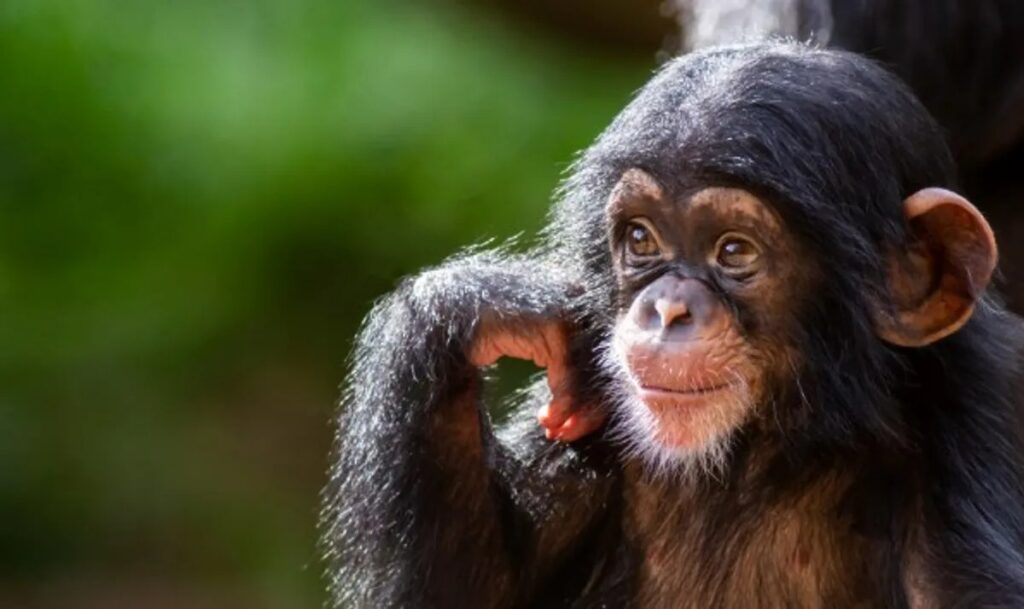
Image credit: Patrick Rolands/Shutterstock.com
However, much of this difference is due to duplication, where sections of the genome are repeated in one species but not the other. In terms of actual genes, though, we’re 98.8 percent alike, meaning only 1.2 percent of our genetic code is not found in chimpanzees.
This may not sound like much, but considering the human genome consists of around three billion base pairs, or bits of genetic information, this small percentage adds up to approximately 35 million discrepancies between the two species.
Where are the differences?
Many differences between the human and chimp genomes are found in regions that account for transcription factors, which act like genetic switches that tell different genes when to become activated and when to remain dormant. In other words, much of our human-ness has nothing to do with genes that are specific to our species but is attributable to the fact that the genes we share with chimps are expressed uniquely.
For instance, the genes that code for neurons in each of our brain regions are pretty much the same as those found in chimpanzees, but their pattern of activation ensures we develop more of these cells – and therefore larger brains – than other primates. All that separates us is a small section of the genome that controls the degree of cell division within the nervous system, rather than the actual genes that code for the creation of different neurons.
In this way, genomes that appear almost identical can produce wildly different phenotypic characteristics. The genes can be the same, but subtle differences within the parts of the genome that control gene expression can totally transform the end product.
Human genes
Scientists are still sifting through the data to figure out exactly how the 1.2 percent of our genome that is uniquely human actually works. So far, they’ve managed to identify certain sections that appear to code for particular characteristics.
For example, a gene called ASPM is likely related to neurogenesis and brain size in humans, while another called FOXP2 may be associated with speech development. Yet another, called KRTHAP1, influences the pattern of keratin expression in the human hair follicle and may account for differences between our hair and that of our more hirsute apelike relatives.
Many of the genes we don’t share with chimpanzees are related to immune function and result in significant differences in disease susceptibility. For instance, chimps are resistant to malaria and certain flu viruses that humans struggle with, although we’re better at dealing with tuberculosis.
Looking at the bigger picture
The minor differences between the human and chimpanzee genomes exemplify the wonderful economy of DNA. Rather than requiring a complete re-draft of the code to create a new species, all it takes is a few minor tweaks, and you’ve transformed a chimp into a person.
Leave a Reply