• Skip to main content
  • Skip to primary sidebar
  • Skip to footer
  • Home
  • About Us
  • Copyright Report
  • Submit Content
  • Terms
  • Privacy Policy
  • Legal Disclaimer

Hasan Jasim

Hasan Jasim is a place where you may get entertainment, viral videos, trending material, and breaking news. For a social generation, we are the largest community on the planet.

In Case of Extreme Heat, Bees Ejaculate Themselves to Death

by Hasan Jasim Editorial Team Leave a Comment

ShareTweet

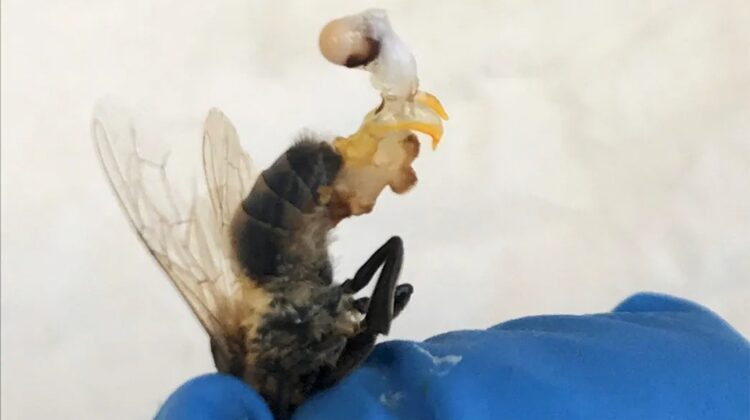
It turns out that when drones die in intense heat, their last move is to ejaculate out a section of their own abdomen, so if you’ve ever seen a dead bee that looks like it has partly exploded, there’s a strong chance it died a more NSFW death than you’re envisioning.

Dr. Alison McAfee, a postdoctoral scholar at UBC’s Michael Smith Laboratories and an authority on bee health, stated in a statement that when drones die from shock, they spontaneously ejaculate. “The size of their own abdomen, their complex endophallus protrudes from their body. Extremely intense.”

In a study on bee die-offs during British Columbia’s high heatwaves, McAfee and her team looked for methods of chilling hives to stop them from, in the words of the University of British Columbia, “explosively ejaculating to death.”
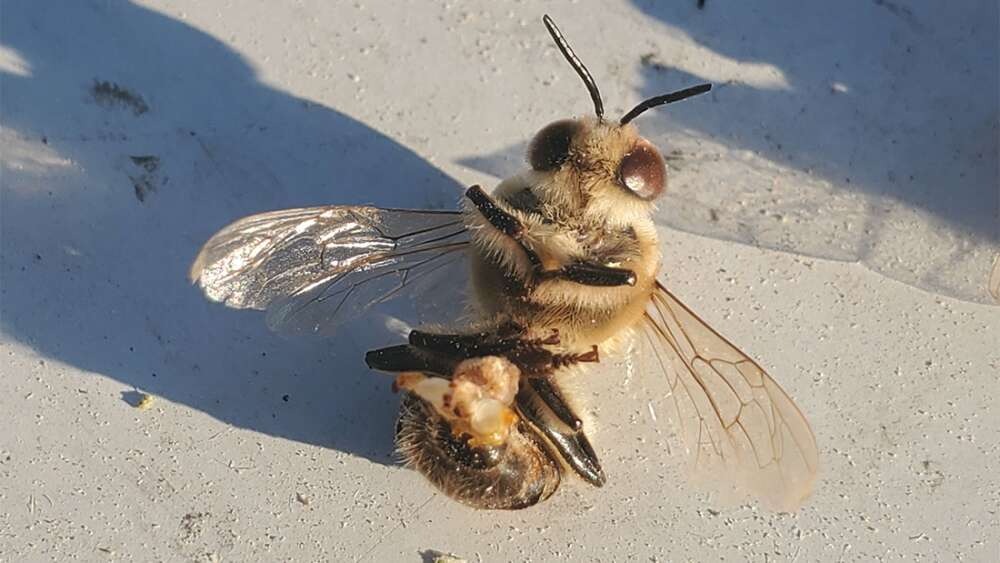
“Well that’s never happened before”. Image credit: Emily Huxter/University of British Columbia.

When a beekeeper in the area sent McAfee pictures of dead drones during a heat wave in 2021, the company learned that other beekeepers in the region had also seen significant die-offs, especially among their tiny beginning colonies, or “nucs.” Some beekeepers noticed a mortality rate of up to 50% in their nucs.

McAfee discovered that drone die-offs could be significant in addition to his usual focus on queen bees as a means of monitoring the environment.

According to McAfee, half of drones will die from heat exhaustion after six hours at 42 degrees. “At two or three hours, the more delicate ones start to die. They shouldn’t ordinarily be exposed to that temperature, yet we observed drones becoming fatally stressed.”

Less genetic variety results from fewer drones, which also reduces the resources bees utilize to build new colonies. Less resistance to disease and other issues might result from this.

Only 40% of queen bees successfully mated during the heat wave under study, as opposed to 75% to 80% in more ideal circumstances. McAfee attempted a few methods of cooling the hives while keeping an eye on the temperature throughout the heatwave to avoid these issues.

One strategy involved providing the bees with a feeder filled with sugar syrup as a makeshift cooling station.

According to McAfee, “bees would instinctively seek out water to bring back to the hive and fan it with their wings to cool down, achieving evaporative cooling much like we do when we perspire.” Giving them syrup nearby should enable them to accomplish this, and the sugar in the syrup encourages them to consume it more quickly.

The alternative approach, albeit less cute, was more successful: covering the hives with Styrofoam covers. Cooling station-equipped hives were 1.1°C (1.98°F) colder than control hives, while styrofoam lid-equipped hives were about 3.5°C (6.3°F) colder.

Additionally, styrofoam insulation helped to stabilize temperatures, keeping the hive warmer at night and cooler during the day. This allowed bees to be protected from the cold during the winter and from ejaculating themselves to death during the summer.

Filed Under: Trends Worldwide Tagged With: bees, case, death, ejaculate, Extreme, heat,, themselves, trends, worldwide

Reader Interactions

Leave a Reply Cancel reply

Your email address will not be published. Required fields are marked *

Primary Sidebar

More to See

Battleship Island: The Eerie Ruins and Coal-Dark History of Japan’s Hashima

By Hasan Jasim Editorial Team

Nature’s Chameleon: The Zaretis Itys and the Art of Disappearing

By Hasan Jasim Editorial Team

Horse Makes Emotional Reunion With Two Long-Lost Friends After 4 Years

By Hasan Jasim Editorial Team

Antarctica’s Fiery Spectacle: Exploring the Enigmatic Mount Erebus and Its Unique Ice Towers

By Hasan Jasim Editorial Team

Linguists Speak Of A New Language Dialect Evolving In The US

By Hasan Jasim Editorial Team

The moment this dog is reunited with her missing puppies is just beautiful

By Hasan Jasim Editorial Team

Spice shakers are used by a couple dressed as bees to spread native wildflower seeds over San Francisco

By Hasan Jasim Editorial Team

Footer

ABOUT HASANJASIM.ONLINE

Hasanjasim.online is a digital platform dedicated to publishing well-researched articles about the animal kingdom, nature, and the environment. Our editorial team works to source stories from credible outlets, scientific research, and verified reports, aiming to inform as much as we entertain. From wildlife conservation and animal behavior to natural wonders and environmental science, we cover the topics that help readers better understand and appreciate the natural world. Whether you're a lifelong nature lover or simply curious about the planet we share, Hasanjasim.online aims to be a trustworthy destination for stories worth reading — and worth citing.

Recent

  • Euphorbia Hirta (“Asthma-Plant”): What Traditional Use and Real Research Actually Show
  • A Mystery Animal Has Been Randomly Attacking People in New Hampshire — Here’s What We Know
  • A Woman Was Filmed Sharing Her Ice Cream With Her Dog — Here’s What Vets Actually Say About It
  • Dolphin Calf Incident in Ceuta Sparks Outrage After Disturbing Beach Footage Emerges
  • Lactuca Serriola Root: Traditional Uses of Prickly Lettuce (Wild Lettuce) Root
  • The Puppy a Firefighter Couldn’t Leave Behind — and the Story Didn’t End There
  • A Mother Dog Dove Into Floodwater Again and Again — Until All 7 of Her Puppies Were Safe

Search