
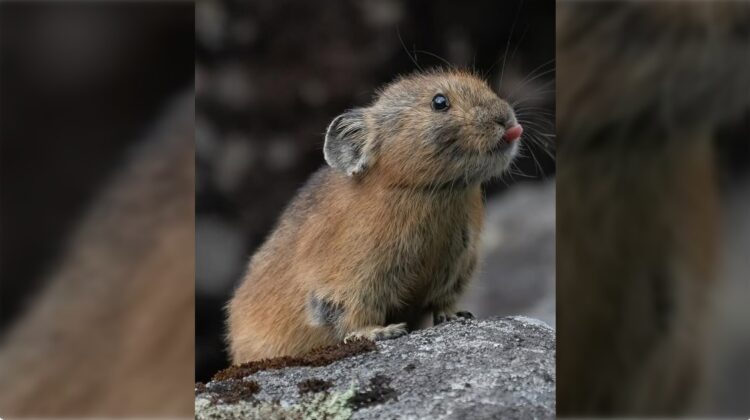
A Japanese pika sticking out its tongue may look irresistibly cute, but behind that moment lies one of nature’s most remarkable survival stories.
The Japanese pika is a small, rabbit-like mammal native to the mountainous regions of Hokkaido, Japan. With its rounded ears, dense insulating fur, and sharp, high-pitched calls, it is often described as a living relic of the Ice Age—a species that has endured where few mammals can.
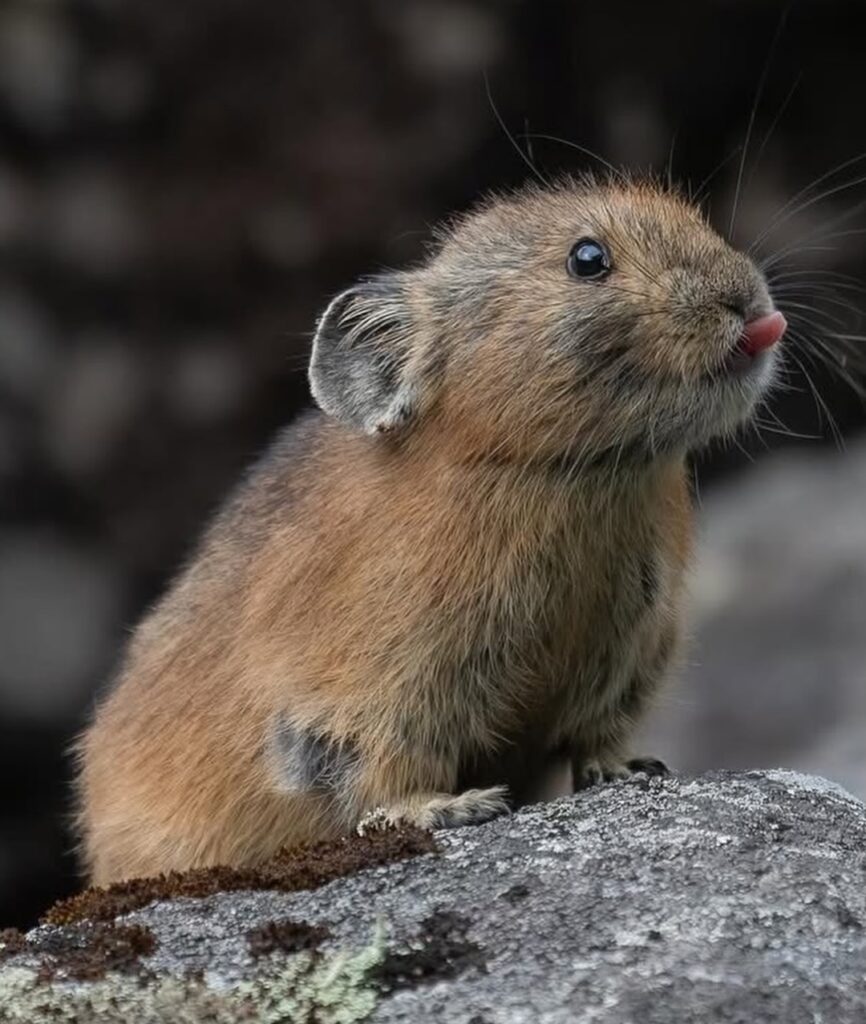
Unlike animals that hibernate, the Japanese pika remains active year-round. During the warmer months, it carefully gathers grasses, herbs, and plants, drying and storing them in hidden caches. These food reserves allow it to survive months of deep snow and extreme cold, even though its small body loses heat quickly.
This strategy of preparation, rather than migration or hibernation, highlights the pika’s extraordinary adaptation to harsh alpine environments. Its continued survival is a reminder of how fragile and specialized mountain ecosystems truly are.
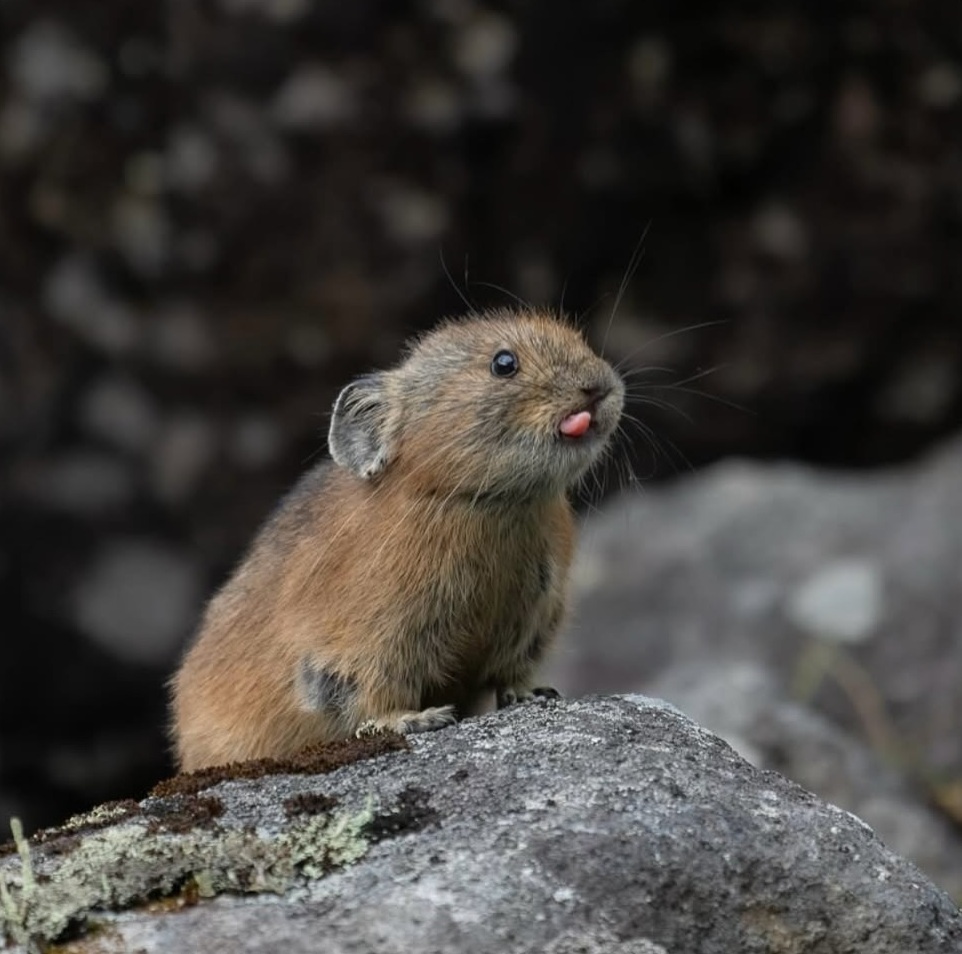
Photographs capturing intimate moments—like a pika briefly showing its tongue—offer more than visual delight. They give us a rare glimpse into the quiet lives of animals that exist on the edge of environmental tolerance.
Why Mountain Species Like the Japanese Pika Matter
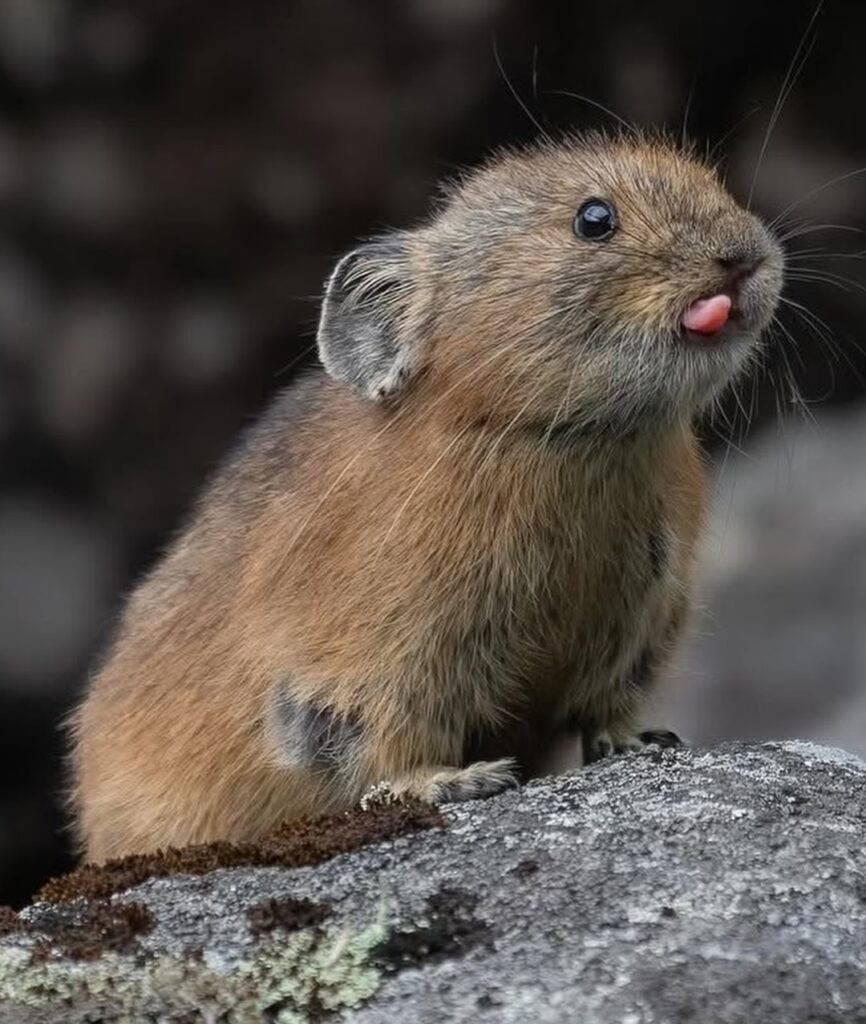
High-altitude animals such as the Japanese pika play an important role in maintaining ecological balance within fragile mountain systems. Their sensitivity to temperature changes also makes them valuable indicators of climate shifts, biodiversity health, and ecosystem stability. Learning about these species deepens our understanding of conservation, habitat preservation, and the long-term impacts of environmental change.
Leave a Reply