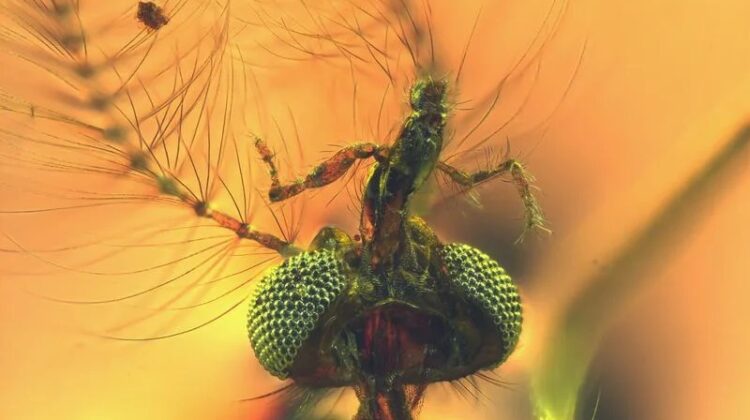
In a groundbreaking discovery shedding light on the ancient history of mosquitoes, researchers have uncovered the oldest-known fossils of these blood-thirsty insects. Dating back 130 million years to the Cretaceous Period, the fossils, two male mosquitoes found encased in amber near Lebanon’s Hammana town, challenge conventional wisdom about mosquito evolution.
While modern mosquitoes are infamous for transmitting diseases and parasites, their evolutionary ancestors seem to have exhibited a surprising behavior. The male mosquitoes from the Cretaceous Period, preserved in exquisite detail, displayed elongated piercing-sucking mouthparts—features typically associated only with females in present-day mosquitoes.
Paleontologist Dany Azar, lead author of the study published in Current Biology and affiliated with the Chinese Academy of Sciences’ Nanjing Institute of Geology and Paleontology and Lebanese University, expressed the significance of the find, stating, “Clearly, they were hematophagous,” indicating a blood-eating behavior. This discovery marks a pivotal moment in the evolutionary timeline of mosquitoes.
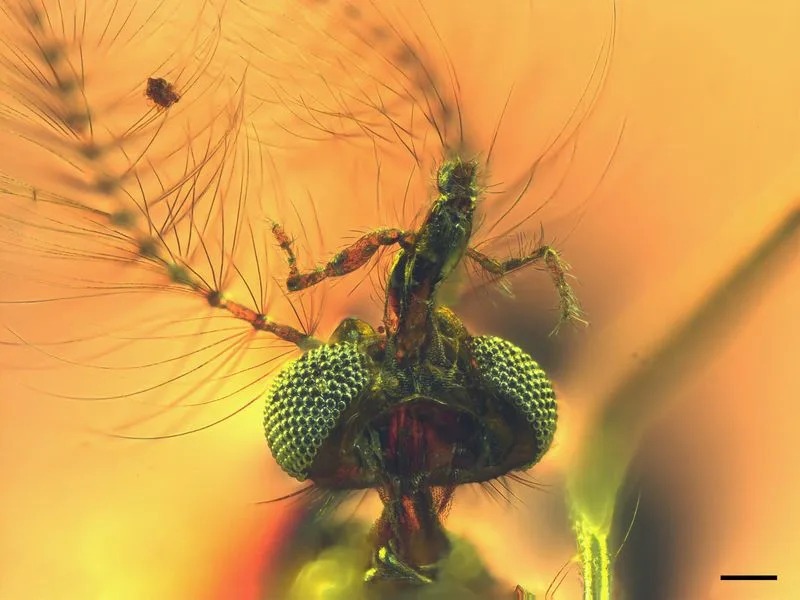
The fossilized mosquitoes, representing an extinct species, closely resemble their modern counterparts in size and appearance, although their blood-feeding mouthparts are shorter than those of contemporary female mosquitoes. In today’s mosquitoes, only fertilized females indulge in blood meals to acquire proteins necessary for egg development, while males and unfertilized females typically feed on nectar.
Surprisingly, hematophagous males are observed in some flying insects, like tsetse flies, but not in modern mosquitoes. Azar and his colleagues speculate that mosquitoes may have evolved from insects that did not feed on blood, with their mouthparts originally adapted for piercing plants to access nutrient-rich fluids.
The researchers propose that plant evolution played a crucial role in the divergence of feeding habits between male and female mosquitoes. During the Cretaceous Period, as the two mosquitoes became ensnared in amber, flowering plants were emerging, possibly influencing the insects’ dietary shift.
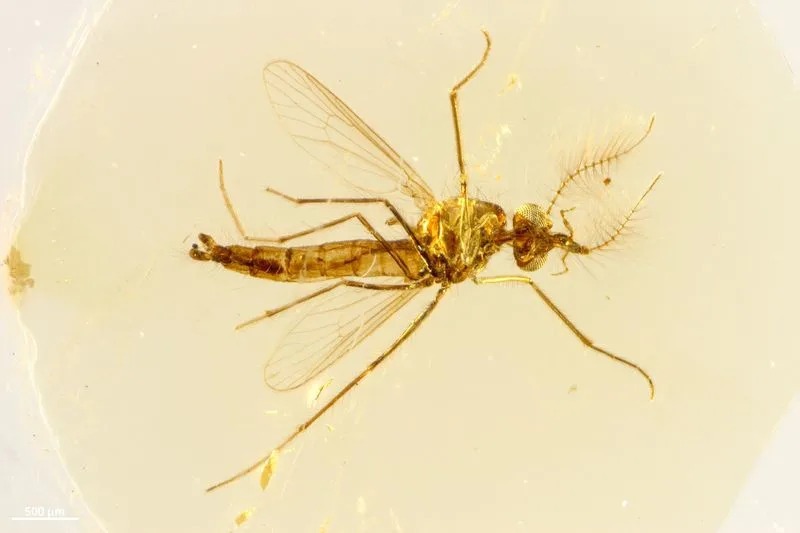
“In all hematophagous insects, we believe that hematophagy was a shift from plant liquid sucking to bloodsucking,” explained Azar. The presence of bloodsucking males in these ancient mosquitoes suggests that, initially, all mosquitoes, regardless of gender, were hematophagous. Later, hematophagy may have been lost in males, potentially due to the proliferation of flowering plants concurrent with the formation of Lebanese amber.
While these fossils are the oldest-known mosquitoes, molecular evidence suggests that mosquitoes may have originated even earlier, during the Jurassic Period, approximately 200 to 145 million years ago. The discovery provides a glimpse into the intricate evolutionary history of mosquitoes, creatures that have persisted for millions of years, evolving alongside Earth’s diverse ecosystems.
With over 3,500 mosquito species globally, found everywhere except Antarctica, these insects play a role as both pests and contributors to ecological balance. Some species, unfortunately, serve as vectors for deadly diseases like malaria, emphasizing the need for ongoing research to understand their biology and evolution. As humanity navigates the coexistence with these ancient bloodsuckers, scientific revelations offer valuable insights into the intricate dance between mosquitoes and the ever-changing natural world.
Leave a Reply