• Skip to main content
  • Skip to primary sidebar
  • Skip to footer
  • Home
  • About Us
  • Copyright Report
  • Submit Content
  • Terms
  • Privacy Policy
  • Legal Disclaimer

Hasan Jasim

Hasan Jasim is a place where you may get entertainment, viral videos, trending material, and breaking news. For a social generation, we are the largest community on the planet.

Scars of World War I: The Battlefield of Verdun

by Hasan Jasim Editorial Team Leave a Comment

ShareTweet

One of the longest and deadliest battle of the First World War was fought over a small parcel of land in north-eastern France, near the commune and town of Verdun. The Battle of Verdun lasted over 300 days from 21 February 1916 until 19 December 1916 and caused an estimated casualty of over 700,000 dead, wounded and missing.

The attack on Verdun came about because of a cunning plan by the German Chief of General Staff, von Falkenhayn. Verdun wasn’t strategically important to the Germans, but had a historic sentiment for the French. The area around Verdun contained twenty major forts and forty smaller ones that had historically protected the eastern border of France for centuries. Falkenhayn knew that the French simply could not allow these forts to fall into the hands of the enemy because of the national humiliation that would follow. Falkenhayn believed that France would fight for this piece of land to the last man, and by doing so would lose so many men that the battle would change the course of the war. His plan was not to capture the city, but simply to kill as many Frenchmen as possible, or to quote him, “bleed the French army white”.
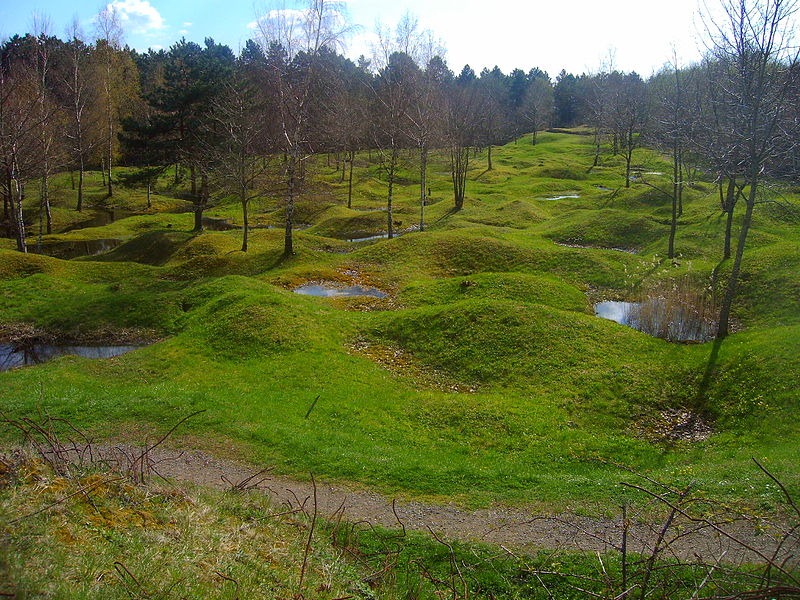
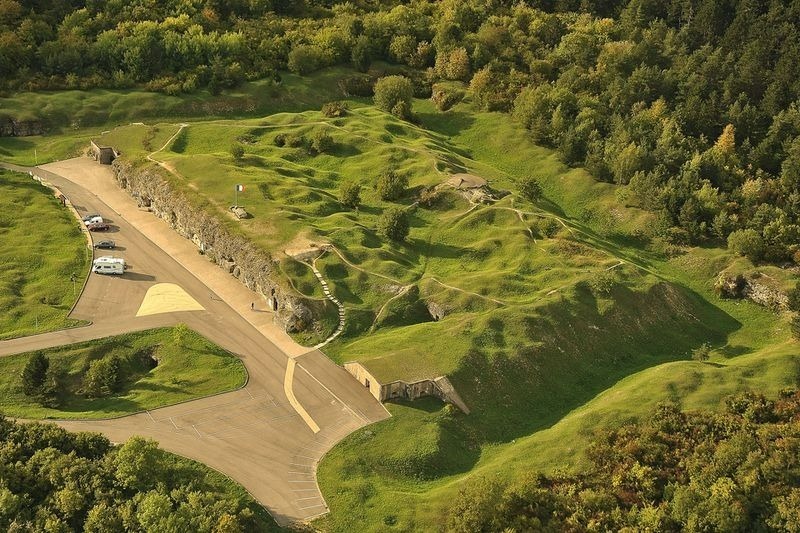
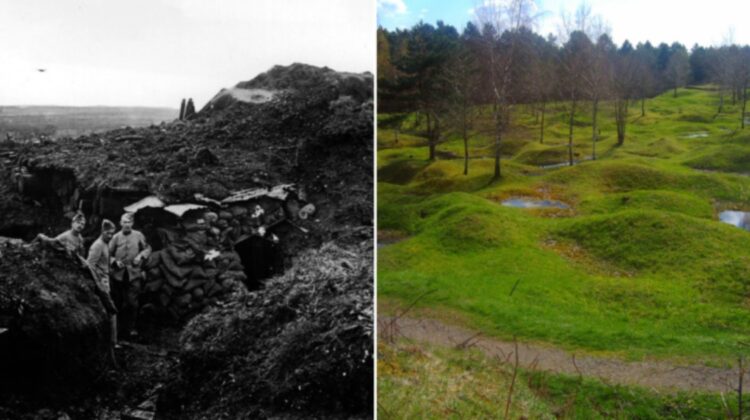
The battlefield of Verdun scarred with shell craters. Photo credit

On the first day alone, the Germans sent 140,000 soldiers to attack the French town. Supported by 1,200 artillery guns, they blasted hundreds of thousands of shells at the Verdun region. Over the course of the next eleven months, the two armies fired an estimated 65 million artillery shells at one another that not only decimated both armies but completely devastated the land. So many shells were fired that the top of one particular hill vanished. Many troops at the battle never saw an enemy soldier, experiencing nothing but artillery fire.

The massive amount of artillery tore up the ground turning it into a wasteland of mud pools when the rain came. Forests were reduced to tangled piles of wood. Even today the soil is contaminated with heavy metals such as copper, lead and zinc, and poisonous chemicals such as arsenic and ammonium perchlorate, which were used in detonator shells. Only the most toughest plants managed to survive. Millions of unexploded shells still litter the region. Everywhere you look the brutal scars of war are visible in the many over lapping craters.

As for the war, Falkenhayn had seriously underestimated the French, for whom victory at all costs was the only way to justify the sacrifices already made. By July, the increased counter attack from the French army forced the Germans to go into defensive. By then the war had dragged for so long that a victory at Verdun became a matter of German prestige as much as it was for the French. Eventually, the collapse of the southern front in Russia and the power of the Anglo-French attack on the Somme, reduced the German armies to holding their positions as best they could. The German defenses collapsed in December and those surviving were taken prisoners. After the failure at Verdun, Falkenhayn was removed from his position
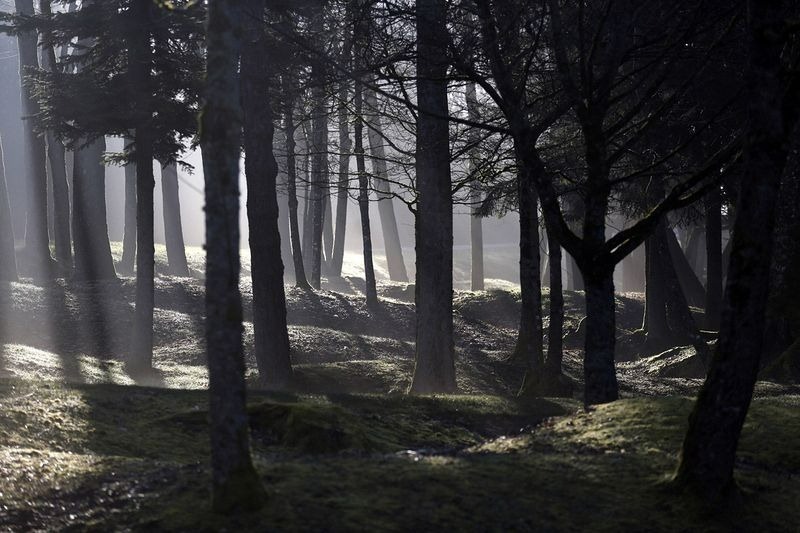
Trees stand where the village of Fleury once stood, near Verdun, on March 5, 2014. Photo credit
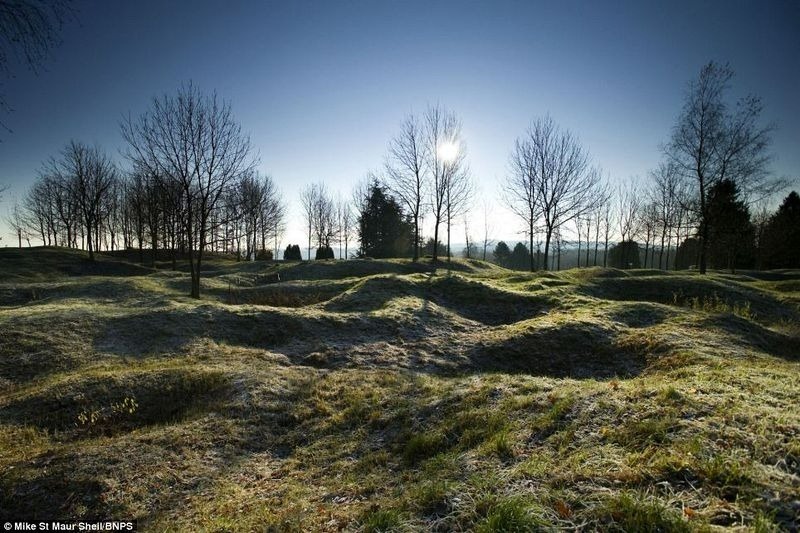
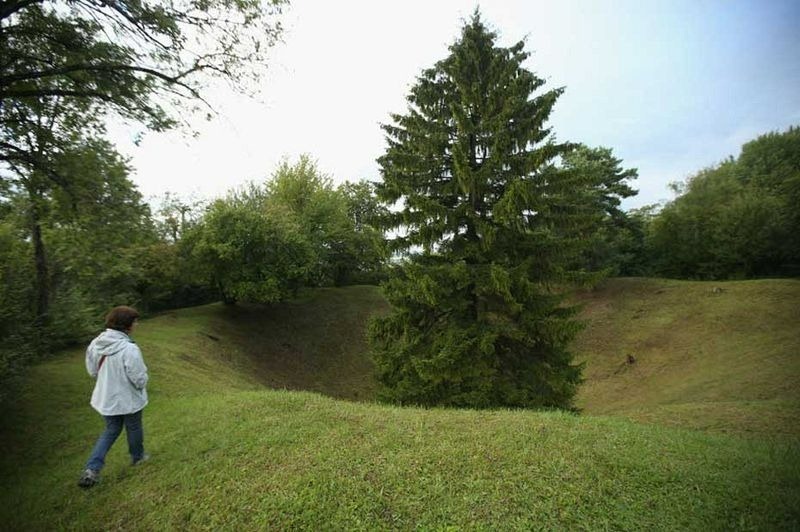
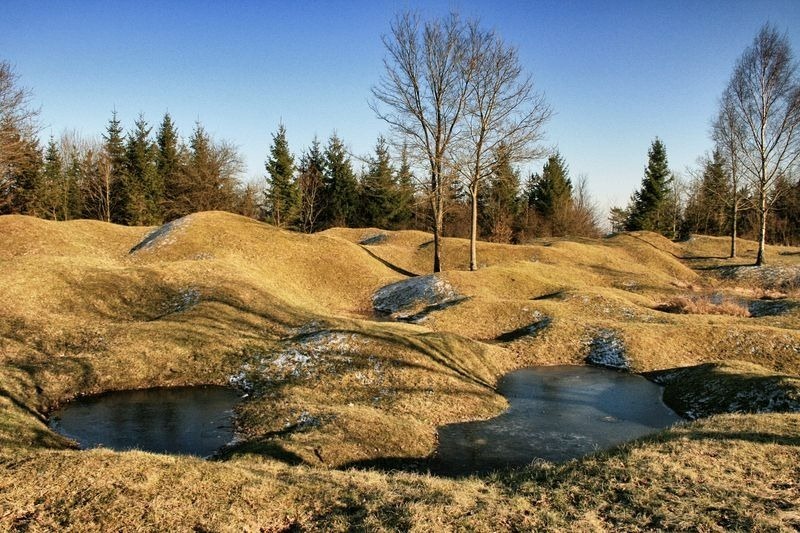
This moonscape of shell holes, still visible a century later, is located at Froideterre on the Verdun battlefield. Photo credit
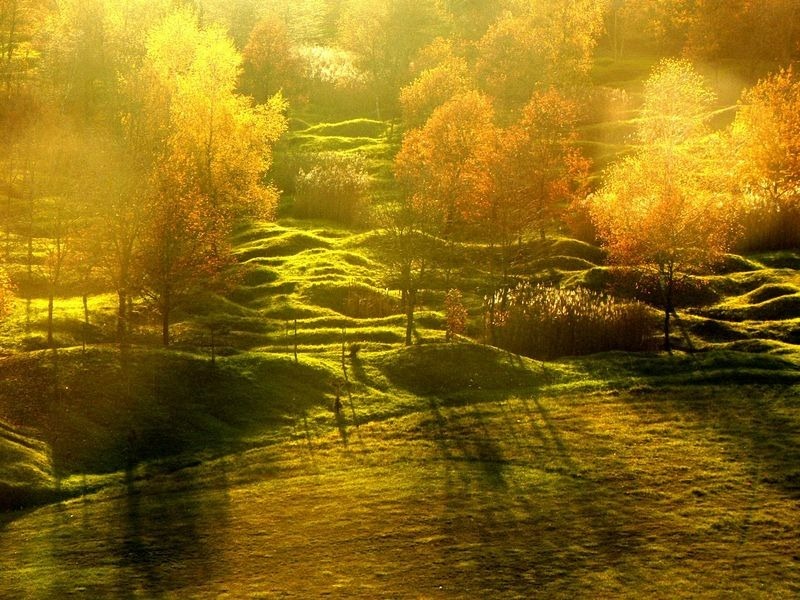
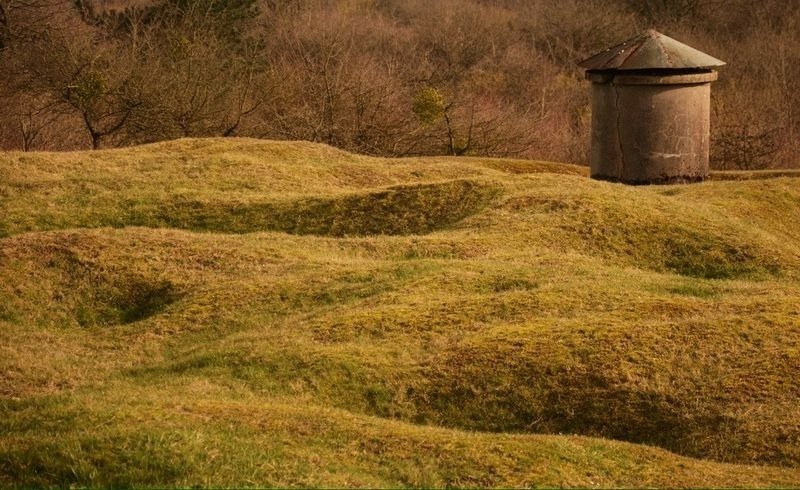
The undulating landscape is not natural but made by artillery shells. Photo credit
Photo credit
One hundred years ago, this land was probably flat. Photo credit
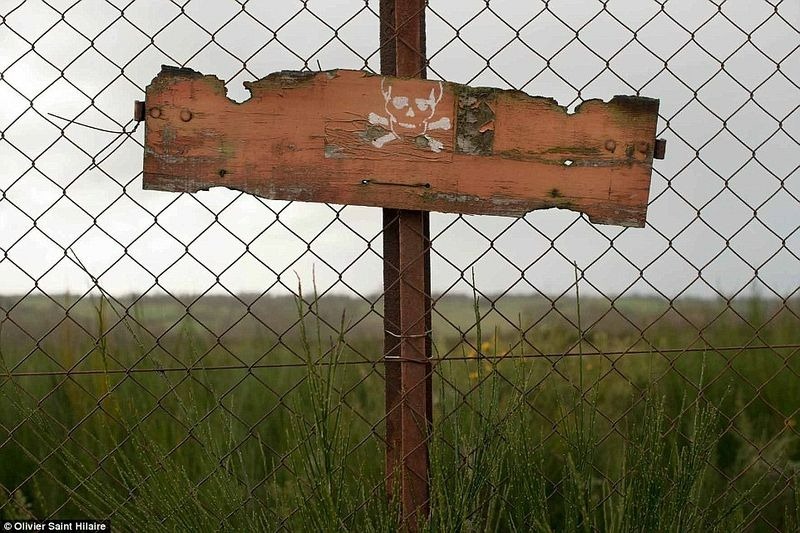
There are still areas which are blocked off because of the high levels of poison still seeping through the land. Photo credit
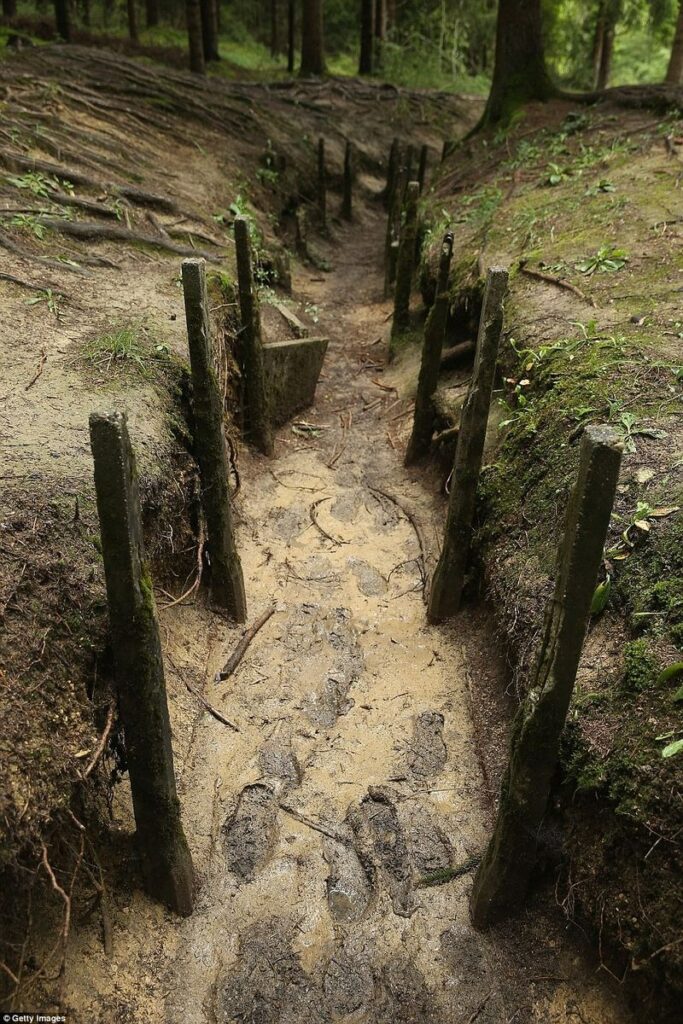
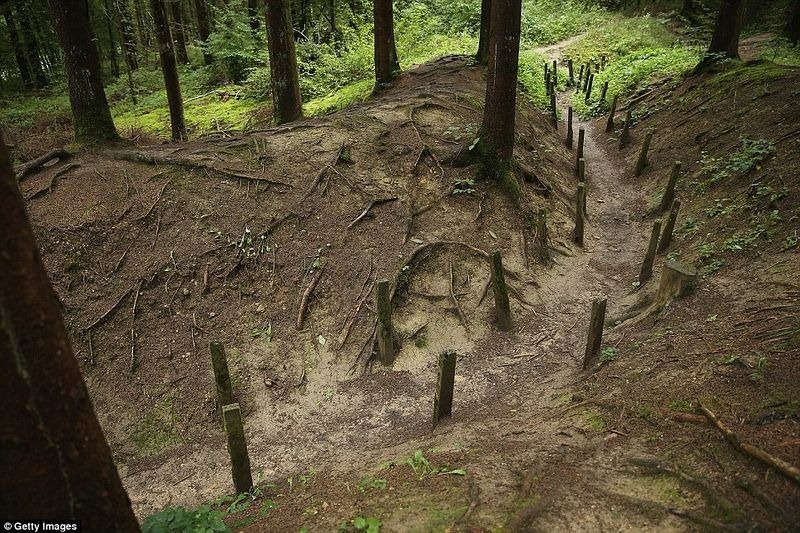
A preserved trench in Verdun. Photo credit
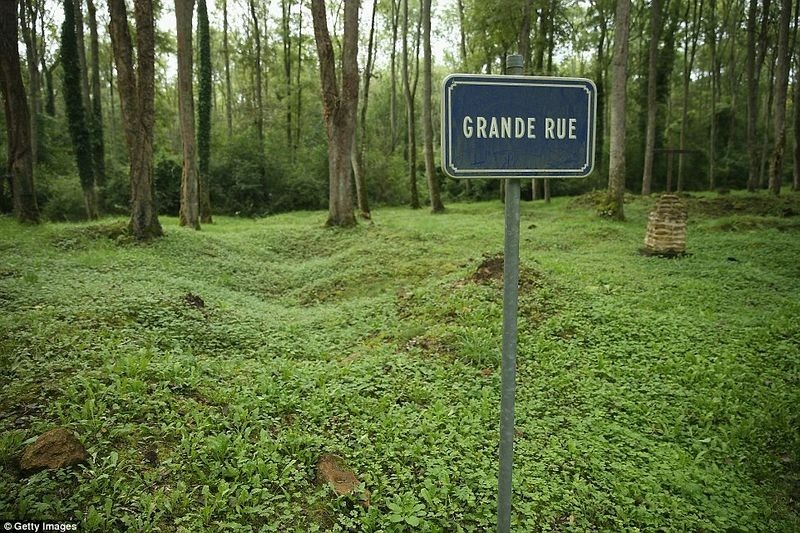
Nine villages were destroyed and never rebuilt, in memory of what had happened here. This sign marks where the main street once passed on the site of the former village of Bezonvaux. Photo credit
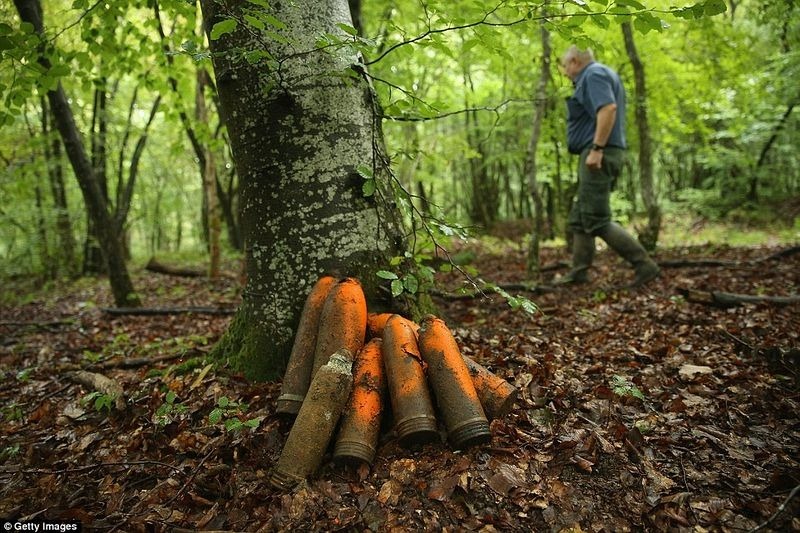
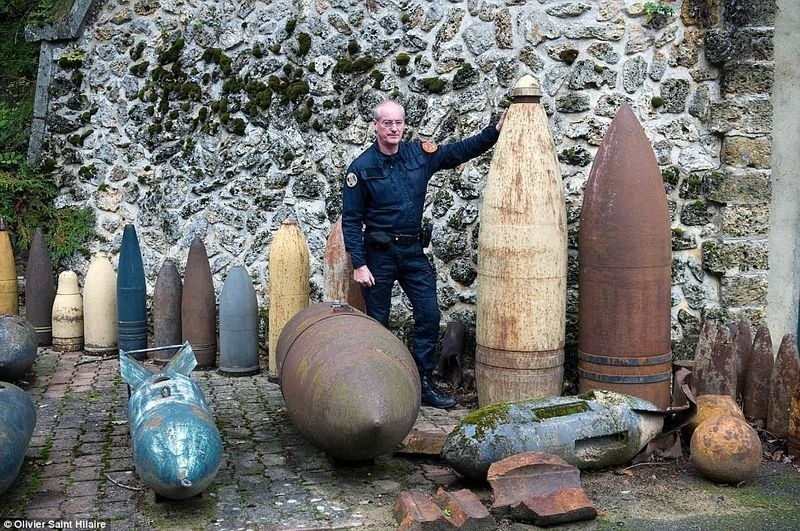
A retired forest services worker walks past German 77mm and 105mm artillery shells which were never fired that he collected and marked in orange paint for later disposal in Bois Azoule forest. Photo credit
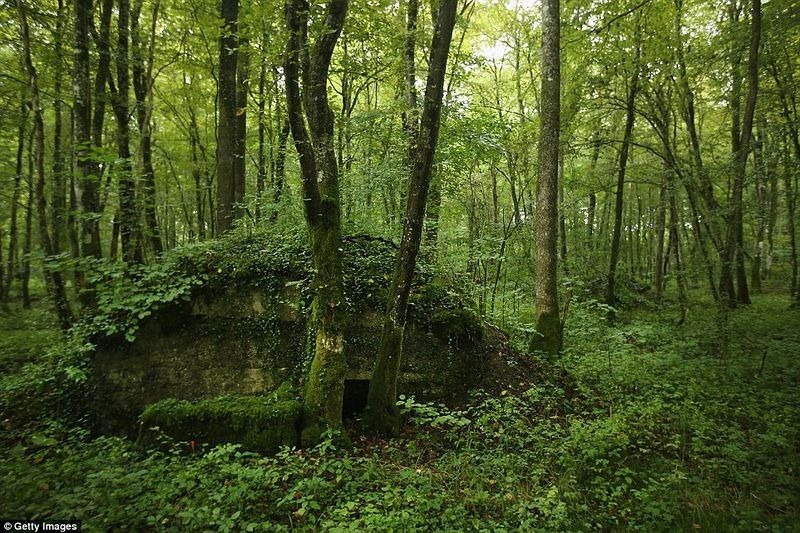
A former First World War German bunker stands in Spincourt forest near Verdun. At least half a dozen of the bunkers still stand in the forest in an area where the German army maintained a hospital, rail connections and command posts during the Battle of Verdun. Photo credit
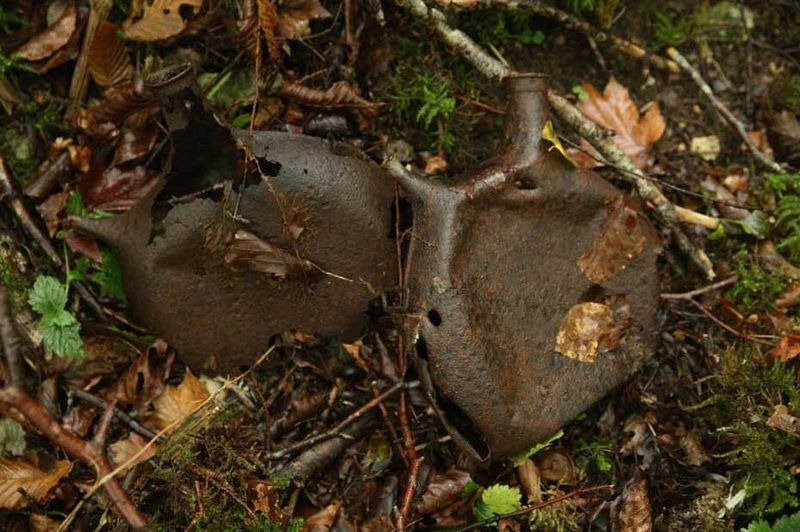
Rusting French water cannisters dating from the First World War lie in Bois Azoule forest near Verdun, France. Photo credit
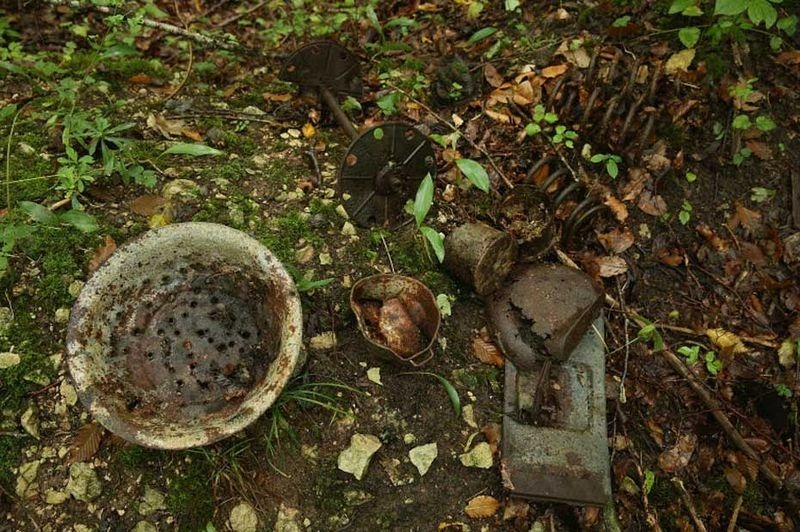
A perforated metal bowl, springs from an artillery gun, a spool for communications wire, the lid of a German ammunition box and other rusting remnants, lie in Bois Azoule forest near Verdun, France. Photo credit
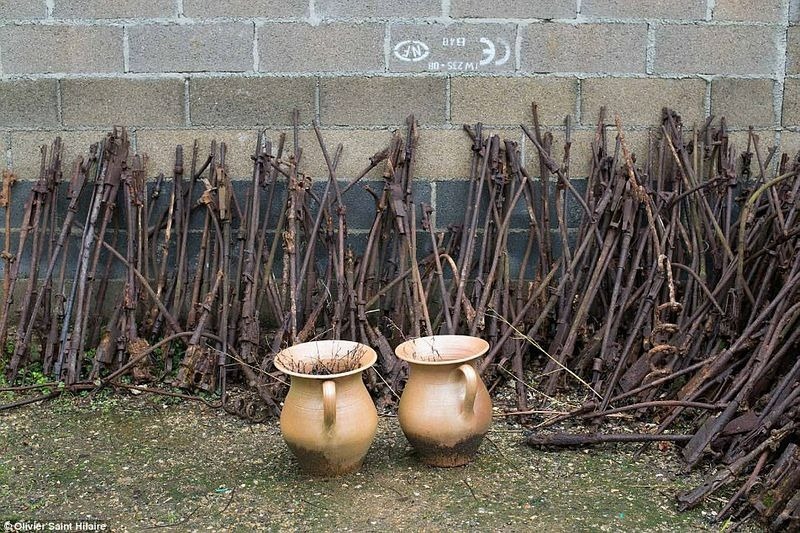
Rusted rifles found in the ground around the French town of Verdun. Photo credit
These are just some of the shells which have been found in the ground around Verdun in the years since. People have been killed by the bombs left behind after the battle as recently as 2007. Photo credit
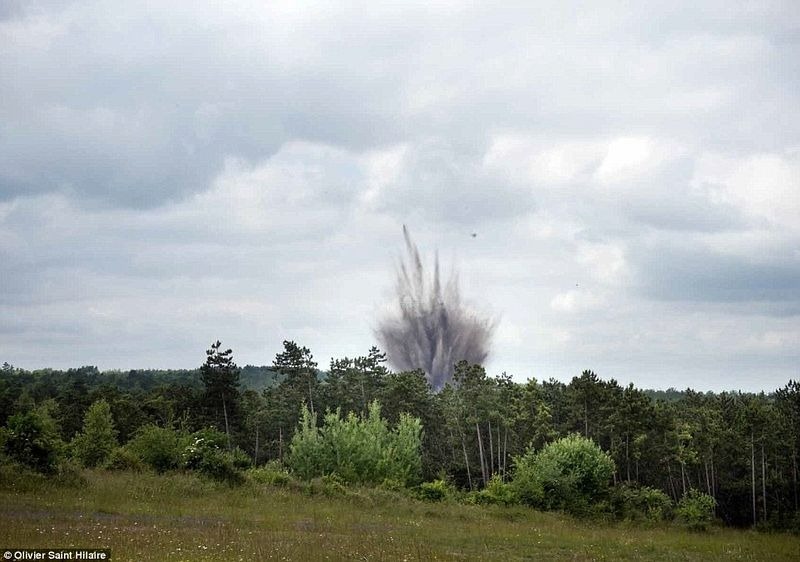
A bomb being safely exploded in the forest. Photo credit
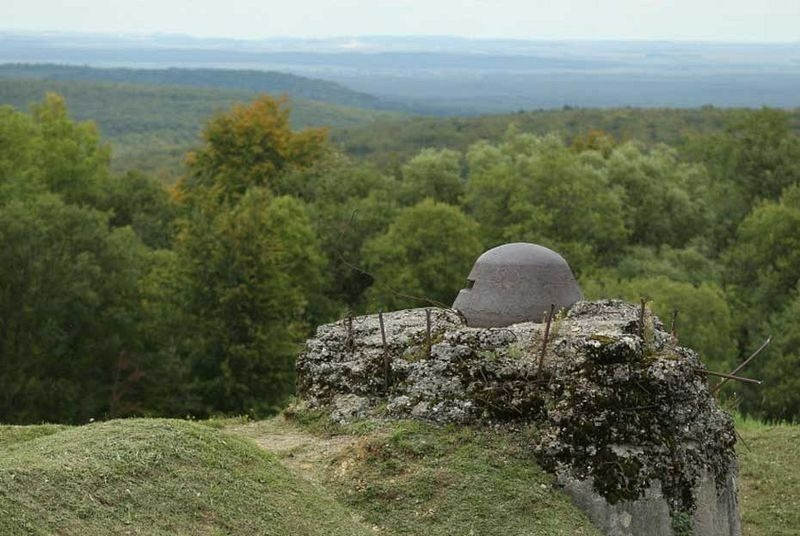
A former steel machine gun turret overlooks the Woevre plain from the top of Fort Douaumont near Verdun. Photo credit
Photo credit
A visitor approaches a crater created by a mine during the fierce battle of Les Eparges hill during the First World War near Verdun. Photo credit
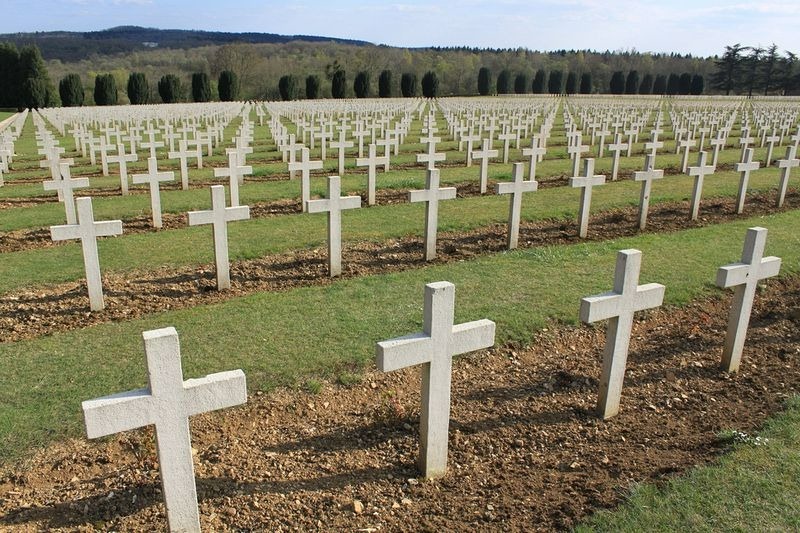
One of the many cemeteries at Verdun. Photo credit

Sources: History Learning Site / Wikipedia / AllKMC / LeMonde

Filed Under: Trends Worldwide

Reader Interactions

Leave a Reply Cancel reply

Your email address will not be published. Required fields are marked *

Primary Sidebar

More to See

A Gardener Is Observed “Talking” And Hugging A White Swan While at Work

By Hasan Jasim Editorial Team

Officer Says Final Goodbye To K9 Dog Who Spent His Entire Life Fighting Crime

By Hasan Jasim Editorial Team

Ageratum conyzoides (Billygoat Weed): 15 Incredible Benefits and How to Use It

By Hasan Jasim Editorial Team

This 3D Crosswalk in Iceland Slows Down Traffic with a Stunning Optical Illusion

By Hasan Jasim Editorial Team

Just as a Meteor Crashes Into Her Bed, The Dog Awakens The Owner

By Hasan Jasim Editorial Team

Senior dog waited 700 days in the shelter — finally gets adopted by senior woman

By Hasan Jasim Editorial Team

When a Shelter Dog is All set to go to a New Home, his Family Calls to Change Their Minds

By Hasan Jasim Editorial Team

Footer

ABOUT HASANJASIM.ONLINE

Hasanjasim.online is a digital platform dedicated to publishing well-researched articles about the animal kingdom, nature, and the environment. Our editorial team works to source stories from credible outlets, scientific research, and verified reports, aiming to inform as much as we entertain. From wildlife conservation and animal behavior to natural wonders and environmental science, we cover the topics that help readers better understand and appreciate the natural world. Whether you're a lifelong nature lover or simply curious about the planet we share, Hasanjasim.online aims to be a trustworthy destination for stories worth reading — and worth citing.

Recent

  • Euphorbia Hirta (“Asthma-Plant”): What Traditional Use and Real Research Actually Show
  • A Mystery Animal Has Been Randomly Attacking People in New Hampshire — Here’s What We Know
  • A Woman Was Filmed Sharing Her Ice Cream With Her Dog — Here’s What Vets Actually Say About It
  • Dolphin Calf Incident in Ceuta Sparks Outrage After Disturbing Beach Footage Emerges
  • Lactuca Serriola Root: Traditional Uses of Prickly Lettuce (Wild Lettuce) Root
  • The Puppy a Firefighter Couldn’t Leave Behind — and the Story Didn’t End There
  • A Mother Dog Dove Into Floodwater Again and Again — Until All 7 of Her Puppies Were Safe

Search