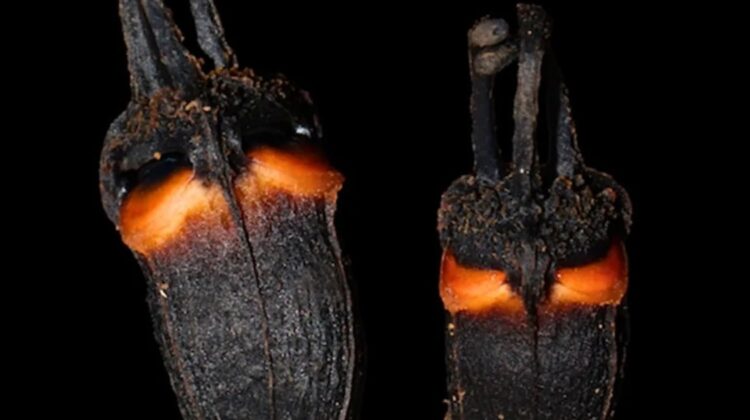
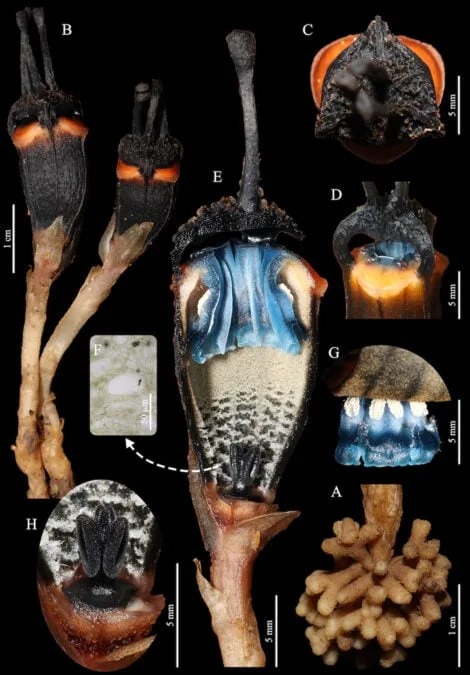
Push aside the leaf litter on a shaded slope in western Thailand’s Thong Pha Phum National Park, and you might find something that looks less like a flower than a small piece of blackened hardware pressed into the soil. Botanists have just given it a name to match: Thismia daemona — the “devil flower.”
A Plant That Broke Its Own Genus’s Rules
The species was formally described in August 2026 by botanists from Chulalongkorn University and Prince of Songkla University, publishing their findings in the peer-reviewed journal PhytoKeys. T. daemona belongs to Thismia, a genus of small, strange plants nicknamed “fairy lanterns” — around 120 species are currently recognized worldwide.
Like its genus relatives, T. daemona contains no chlorophyll and cannot photosynthesize at all. Instead, it survives through mycoheterotrophy: drawing carbon and nutrients directly from underground fungal networks rather than making its own food from sunlight. That arrangement lets it live out almost its entire existence hidden beneath fallen leaves, only pushing up through the forest floor briefly to flower and fruit.
An Appearance That Earned Its Name
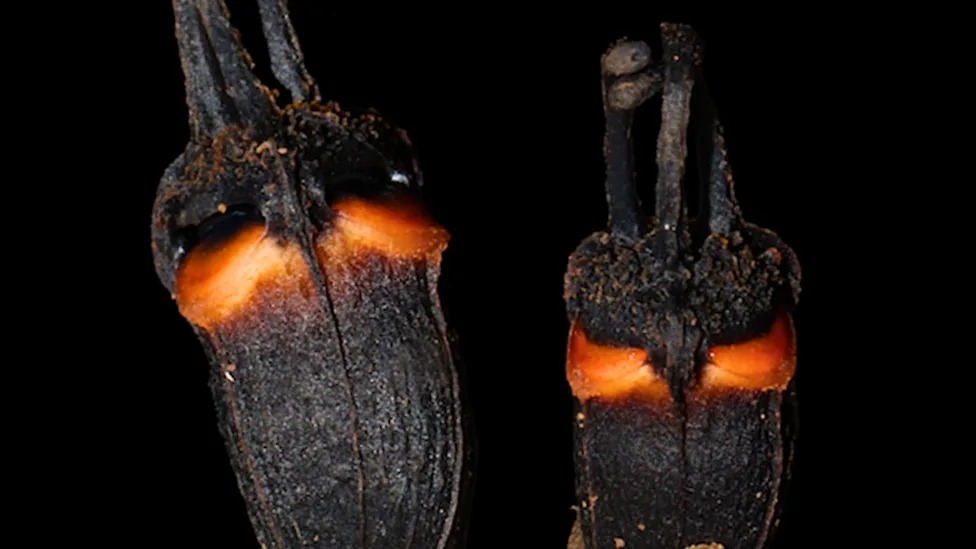
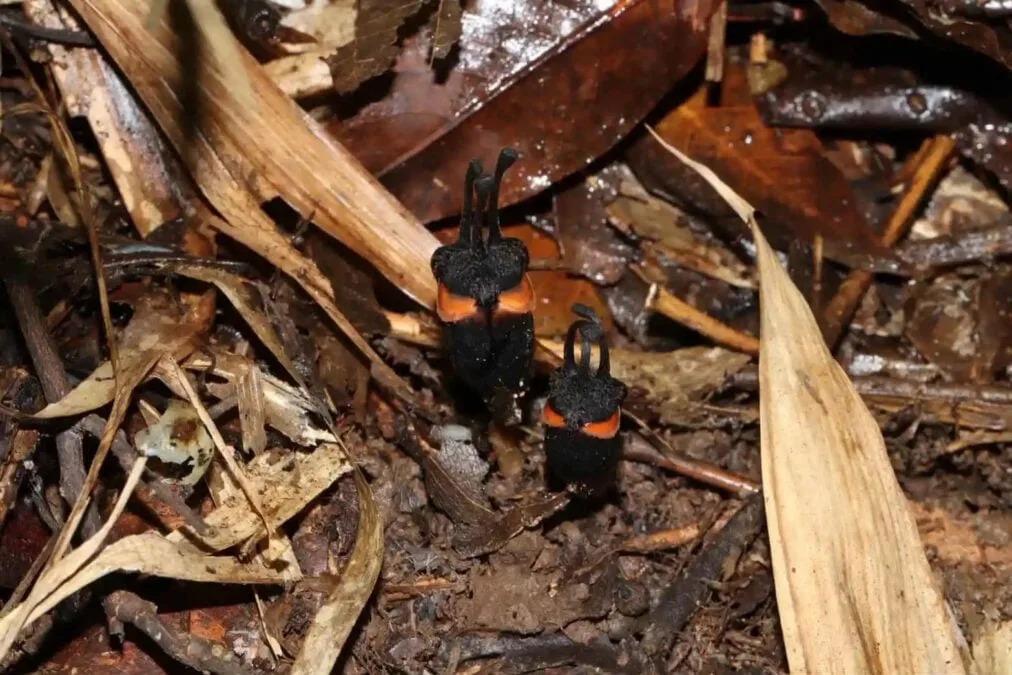
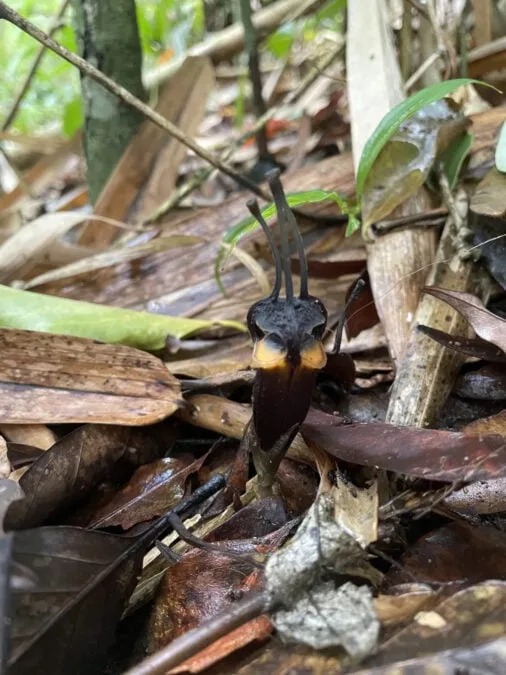
Including its flower, T. daemona reaches only about 12.5 centimeters (5 inches) tall. Its pale, hairy roots resemble small pieces of coral. The flower itself is nearly black, with fleshy reddish-orange sections, translucent blue stamens, and three slender horn-like appendages rising above a dome-shaped hood called a mitre.
“Finding Thismia daemona was indeed a major surprise,” said Prince of Songkla University botanist Sahut Chantanaorrapint, the study’s corresponding author. He said the name was chosen specifically to capture the plant’s “hidden, subterranean, and mysterious lifestyle,” along with its “devil-like essence.”
Found Somewhere Botanists Didn’t Expect
Researchers discovered the species in May 2025, growing among fallen leaves and small bamboo at an elevation of roughly 930 to 970 meters (about 3,000 to 3,200 feet) — a genuinely unexpected habitat, since Thismia species are typically associated with consistently humid, low-elevation rainforest rather than seasonal mountain forest.
The discovery also extends known scientific boundaries in another way: T. daemona belongs to a smaller subgroup called Geomitra, previously documented only in Peninsular Malaysia, Borneo, and Sumatra. Finding a member of that group in western Thailand pushes the subgroup’s known range meaningfully farther north, and brings Thailand’s total documented Thismia species count from 15 to 16.
To confirm it as a genuinely new species — and not simply an unusual specimen of an already known one — researchers combined detailed microscopy and high-resolution photography with genetic analysis across five regions of the plant’s nuclear and mitochondrial DNA, comparing results against other known Thismia species. Its closest known relative turned out to be Thismia betung-kerihunensis, found in Borneo.
A Species That’s Already Critically Rare
The devil flower’s scientific debut came with an immediate warning attached. Researchers know of only a single population, containing fewer than 50 individual plants, confined to an area smaller than 0.05 square kilometers (about 0.02 square miles). Although the site sits within a protected national park, it’s regularly visited by tourists — meaning accidental trampling or disturbance to the forest floor (and the fungal networks the plant depends on) is a real, ongoing risk.
Based on that combination of factors, researchers have provisionally assessed T. daemona as Critically Endangered under IUCN criteria. It’s worth noting this is a preliminary assessment made within the description paper itself, not a formal listing on the IUCN Red List, which follows a separate review process.
Conservation Through Community, Not Just Fences
Rather than proposing to simply restrict access to the site, Chantanaorrapint has pointed to community involvement as the more sustainable path forward, referencing UNESCO’s Man and the Biosphere framework, which aims to balance biodiversity protection with continued human engagement in a landscape. “Inspiring local people to take pride in their natural heritage not only safeguards the microhabitat, but also supports sustainable, community-led ecotourism,” he said.
Why a Discovery Like This Matters Beyond One Odd Plant
Mycoheterotrophic species like T. daemona are often described by botanists as indicators of complex, largely invisible ecological relationships happening beneath the forest floor. A single flowering Thismia plant might look isolated above ground, but its entire survival depends on an intact network of fungal partners and the broader forest ecosystem around it — connections that are easy to overlook when conservation attention focuses mainly on large, visible animals and plants.
The discovery is also a reminder that scientifically undocumented species aren’t necessarily hiding only in remote, hard-to-reach wilderness. This one was found in a national park that people visit regularly — just beneath the leaves, at their feet.
Frequently Asked Questions
Is Thismia daemona poisonous or dangerous to touch? There’s no indication in the published research that the plant poses any toxicity risk to humans; the greater concern is the reverse — that human foot traffic could damage the plant or its fungal partners given how few individuals are known to exist.
Can this plant be grown or cultivated outside its natural habitat? Mycoheterotrophic plants like Thismia species are notoriously difficult to cultivate because their survival depends on a specific relationship with particular fungi in the soil, making them very poor candidates for transplanting or garden cultivation.
How many Thismia species exist in total? Scientists currently recognize around 120 species in the Thismia genus worldwide, with Thismia daemona bringing Thailand’s own documented count to 16.
Sources: PhytoKeys (Seelanan et al., 2026), ScienceDaily, ScienceBlog, and Discover Magazine, cited above.
Leave a Reply