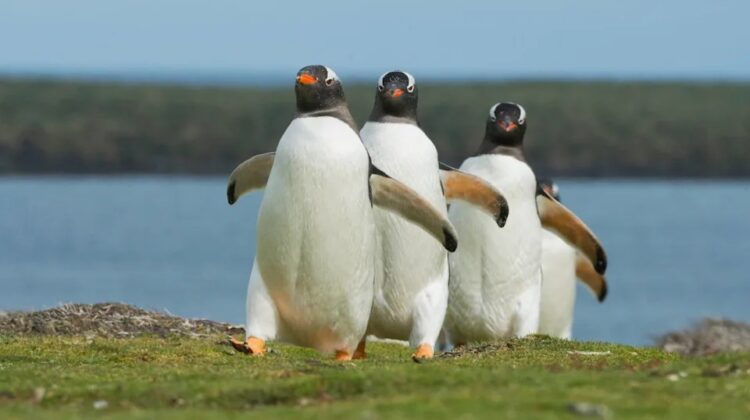
For more than a century, gentoo penguins were treated as a single, widely distributed species spread across the Southern Ocean. New genomic research says that’s wrong — there are actually four separate species, including one that had never been formally described before, according to Smithsonian Magazine.
The new species, named Pygoscelis kerguelensis and dubbed the southeastern gentoo, lives on the remote Kerguelen Islands and likely nearby Heard Island in the southern Indian Ocean. Researchers say it’s the first entirely new penguin species named in over 100 years.
A Century-Long Taxonomic Argument, Finally Settled
“There’s probably no species of penguin where the taxonomy has been more debated than the gentoo penguin,” said Rauri Bowie, a curator at UC Berkeley’s Museum of Vertebrate Zoology and one of the study’s senior authors, per SciTechDaily. “For over 100 years it’s been controversial as to how many species or how many subspecies there are.”
The study, published in the journal Communications Biology, was led by an international team of 22 researchers, including scientists from the University of Chile and UC Berkeley. Researchers sequenced the genomes of 64 penguins from ten breeding colonies spanning the gentoo’s entire geographic range, then combined that genetic data with physical measurements and ecological observations, Smithsonian Magazine reported.
From One Species To Four
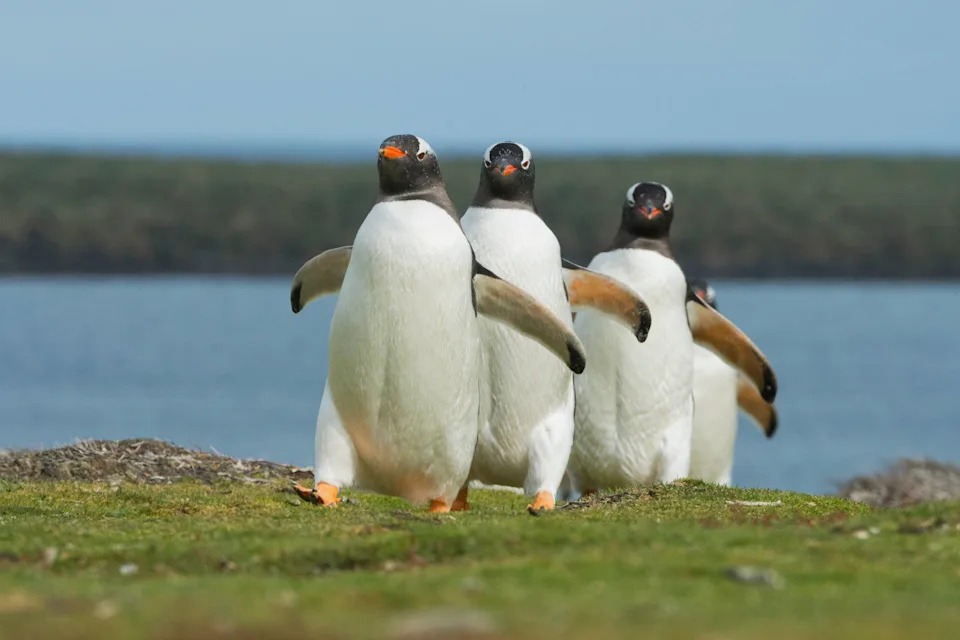
The analysis confirmed four genetically distinct gentoo lineages. Three previously recognized subspecies were elevated to full species status: the northern gentoo (P. papua) in South America and the Falkland Islands, the southern gentoo (P. ellsworthi) in Antarctica and the Antarctic Peninsula, and the eastern gentoo (P. taeniata) on islands including Crozet, Marion and Macquarie.
The fourth, Pygoscelis kerguelensis, was the real surprise — a lineage that had never been formally recognized at any taxonomic level before this study.
The revision also resolved a related debate: a 2020 study had proposed a separate “new” species from South Georgia, Pygoscelis poncetii. The expanded genomic dataset in this study determined that population is actually a subspecies of the southern gentoo rather than its own species, leaving P. kerguelensis as the sole newly described species to hold up under the more rigorous analysis.
A Species Hiding In Plain Sight
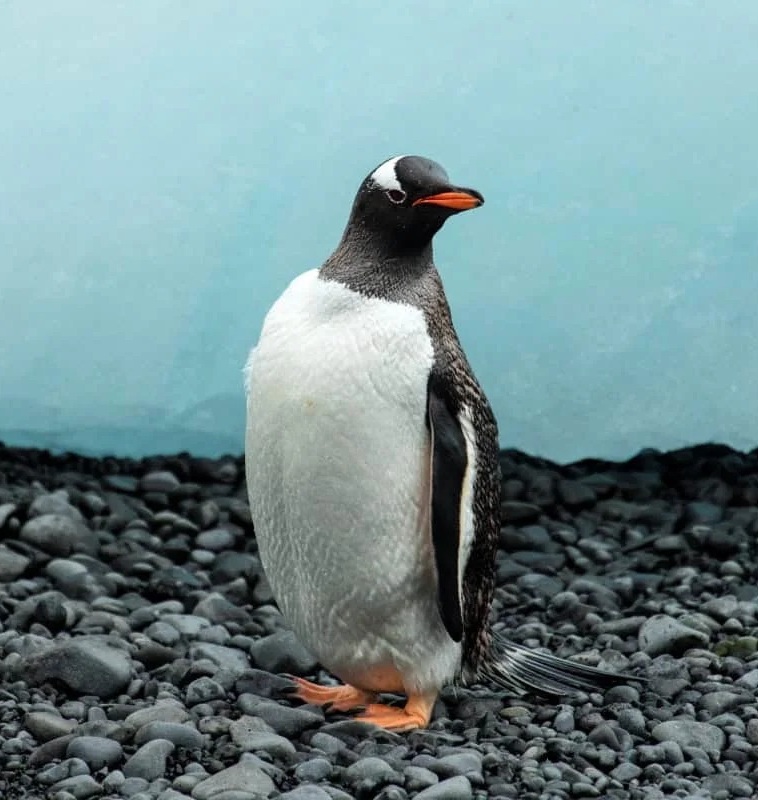
Part of what makes the discovery unusual is that the southeastern gentoo looks almost identical to its relatives. Researchers call this a “cryptic species” — genetically distinct but visually indistinguishable without close analysis of size, vocalizations, genetics, and ecological behavior, ScienceBlog noted.
Scientists believe the gentoo’s flexible diet played an indirect role in the split. Because the birds eat whatever prey is locally available — fish, krill, or squid — they have little need to migrate long distances and tend to return to the same nesting colonies year after year. That loyalty to home sites kept island populations isolated from one another over time, while the Antarctic Polar Front, a natural oceanographic boundary in the Southern Ocean, reinforced the separation further. According to the researchers, the four lineages diverged somewhere between 300,000 and 500,000 years ago.
Why The Split Matters For Conservation
Splitting one widespread species into four isn’t just a naming exercise — it changes how scientists assess risk. Treating all gentoos as a single, abundant species could mask serious declines in smaller, more isolated populations like the newly named southeastern gentoo.
Using climate projections for 2050, the research team found that the northern, eastern, and southeastern gentoo species are likely to lose significant portions of their suitable ocean habitat as temperatures rise, while the southern gentoo, in colder Antarctic waters, may actually benefit from expanding ice-free habitat in the near term, GreekReporter noted. Bowie said recognizing these populations as distinct species should help conservation groups in different countries target protections more precisely.
Frequently Asked Questions
What is the new penguin species called?
Pygoscelis kerguelensis, known as the southeastern gentoo penguin, found on the Kerguelen Islands and likely nearby Heard Island in the southern Indian Ocean.
How is this different from the other gentoo penguins?
It looks nearly identical to other gentoos. The differences only show up through genetic analysis, along with subtle variations in size and vocalizations — making it what scientists call a cryptic species.
Why did it take so long to identify?
Gentoo penguin taxonomy has been debated for more than a century, and the species’ visual similarity to other gentoo lineages meant earlier, less detailed studies weren’t able to separate it out.
How many gentoo penguin species are there now?
Four: the northern gentoo, southern gentoo, eastern gentoo, and the newly described southeastern gentoo.
Why does splitting one species into four matter?
It allows scientists and conservation groups to track population trends and climate risks for each group separately, rather than masking problems in smaller populations behind data from the whole group.
Where was the research published?
In the journal Communications Biology, by an international team of 22 researchers led by scientists from the University of Chile and the University of California, Berkeley.
Sources: Smithsonian Magazine, SciTechDaily, ScienceBlog, BirdGuides, and sci.news coverage of the Communications Biology study “Integrative evidence reveals adaptive divergence and speciation in gentoo penguins.”
Leave a Reply